1-Isopropyl-4-methyl-7-oxabicyclo[2.2.1]heptane
![1-Isopropyl-4-methyl-7-oxabicyclo[2.2.1]heptane Structure](https://image.chemsrc.com/caspic/319/470-67-7.png)
1-Isopropyl-4-methyl-7-oxabicyclo[2.2.1]heptane structure
|
Common Name | 1-Isopropyl-4-methyl-7-oxabicyclo[2.2.1]heptane | ||
|---|---|---|---|---|
| CAS Number | 470-67-7 | Molecular Weight | 154.249 | |
| Density | 1.0±0.1 g/cm3 | Boiling Point | 173.5±8.0 °C at 760 mmHg | |
| Molecular Formula | C10H18O | Melting Point | −46 °C(lit.) | |
| MSDS | Chinese USA | Flash Point | 50.7±15.3 °C | |
| Symbol |

GHS02 |
Signal Word | Warning | |
Use of 1-Isopropyl-4-methyl-7-oxabicyclo[2.2.1]heptane1,4-Cineole is a widely distributed, natural, oxygenated monoterpene[1]. 1,4-Cineole, present in eucalyptus oil, activates both human TRPM8 and human TRPA1[2]. |
Summary: 1-methyl-4-propan-2-yl-7-oxabicyclo[2.2.1]heptane, also known as 1-Isopropyl-4-methyl-7-oxabicyclo[2.2.1]heptane, has a CAS number of 470-67-7, with a molecular formula of C10H18O and a molecular weight of 154.249. It appears as a colorless liquid with a camphor-like aroma. The melting point is -46°C and the boiling point is 173.5±8.0°C. For research-use only, not for medical or clinical usage.
This table lists Chinese names, IUPAC names and various aliases of this chemical substance.
| Name | 1-methyl-4-propan-2-yl-7-oxabicyclo[2.2.1]heptane |
|---|---|
| Synonym | More Synonyms |
This table contains bioactivity, target information and biological‑assay experimental data of this compound.
| Description | 1,4-Cineole is a widely distributed, natural, oxygenated monoterpene[1]. 1,4-Cineole, present in eucalyptus oil, activates both human TRPM8 and human TRPA1[2]. |
|---|---|
| Related Catalog | |
| References |
This table shows physicochemical parameters including melting point, boiling point, density, solubility and optical rotation. Missing data is marked as N/A.
| Density | 1.0±0.1 g/cm3 |
|---|---|
| Boiling Point | 173.5±8.0 °C at 760 mmHg |
| Melting Point | −46 °C(lit.) |
| Molecular Formula | C10H18O |
| Molecular Weight | 154.249 |
| Flash Point | 50.7±15.3 °C |
| Exact Mass | 154.135757 |
| PSA | 9.23000 |
| LogP | 2.58 |
| Vapour Pressure | 1.7±0.3 mmHg at 25°C |
| Index of Refraction | 1.491 |
| InChIKey | RFFOTVCVTJUTAD-UHFFFAOYSA-N |
| SMILES | CC(C)C12CCC(C)(CC1)O2 |
| Storage condition | -20℃ |
This table provides MSDS information including hazard classification, first‑aid, fire‑fighting, spill handling, operation and storage instructions.
This table summarizes toxicological test data, acute & chronic toxicity and ecological hazard parameters for this chemical.
CHEMICAL IDENTIFICATION
HEALTH HAZARD DATAACUTE TOXICITY DATA
|
This table covers safety warnings, protective measures, incompatible substances and disposal guidelines for this compound.
| Symbol |
GHS02 |
|---|---|
| Signal Word | Warning |
| Hazard Statements | H226 |
| Precautionary Statements | P210-P403 + P235 |
| Personal Protective Equipment | Eyeshields;Faceshields;full-face respirator (US);Gloves;multi-purpose combination respirator cartridge (US);type ABEK (EN14387) respirator filter |
| Risk Phrases | R10 |
| Safety Phrases | S16 |
| RIDADR | UN 1993 3/PG 3 |
| WGK Germany | 2 |
| RTECS | OS9274000 |
| Packaging Group | III |
| Hazard Class | 3.2 |
This table presents publicly reported synthetic routes, reaction conditions, reactants and product information of the compound.
This table lists upstream starting materials and downstream derivative products related to this chemical.
| Precursor 9 | |
|---|---|
| DownStream 1 | |
 CAS#:99-86-5
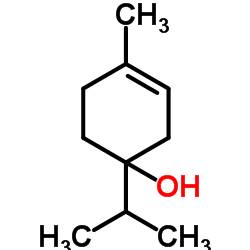
 CAS#:470-82-6
 CAS#:562-74-3
 CAS#:512-85-6
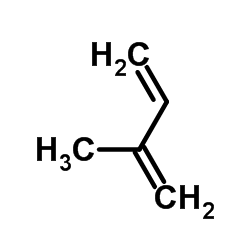 CAS#:78-79-5
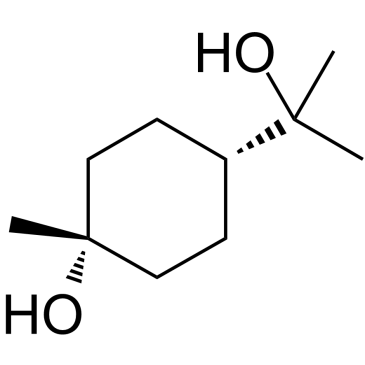 CAS#:565-48-0
 CAS#:7664-93-9
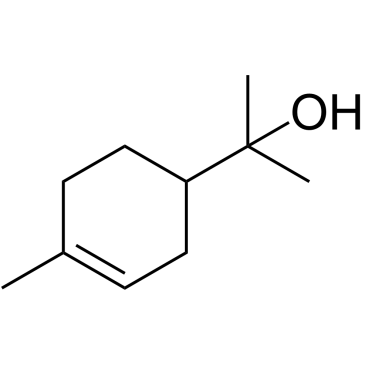 CAS#:98-55-5
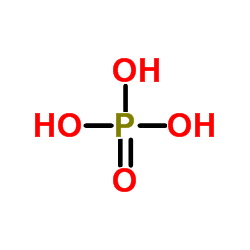 CAS#:7664-38-2
This table lists relevant public references with title, journal and publication metadata for this compound.
|
Inhibition by menthol and its related chemicals of compound action potentials in frog sciatic nerves.
Life Sci. 92(6-7) , 359-67, (2013) Transient receptor potential (TRP) vanilloid-1 (TRPV1) and melastatin-8 (TRPM8) channels play a role in transmitting sensory information in primary-afferent neurons. TRPV1 agonists at high concentrati... |
|
|
1,8-cineole, a TRPM8 agonist, is a novel natural antagonist of human TRPA1.
Mol. Pain 8 , 86, (2012) Essential oils are often used in alternative medicine as analgesic and anti-inflammatory remedies. However, the specific compounds that confer the effects of essential oils and the molecular mechanism... |
|
|
[Analysis of the chemical constituents of essential oil from Chimonanthus zhejiangensis by GC-MS].
Zhong Yao Cai 33(3) , 385-7, (2010) To analyze the chemical constituents of the essential oil from Chimonanthus zhejiangensis.Steam distillation was employed to extract volatile compounds of essential oil from Chimonanthus zhejiangensis... |
This table contains target information, in‑vitro & in‑vivo assay data for this compound.
|
Name: Toxicity to Musca domestica (house fly) applied to pronotum assessed as compound leve...
Source: ChEMBL
Target: Musca domestica
External Id: CHEMBL3069896
|
|
Name: Displacement of [3H]TBOB binding to GABA receptor in Musca domestica (house fly) head...
Source: ChEMBL
Target: Gamma-aminobutyric acid receptor subunit beta
External Id: CHEMBL3070306
|
This table collects all English aliases, systematic names and CAS‑related synonyms of the compound.
| 1-Isopropyl-4-methyl-7-oxabicyclo[2.2.1]heptane |
| Isocineole |
| 1,4-Cineole (natural) |
| MFCD00209502 |
| 1-isopropyl-4-methyl-7-oxa-bicyclo[2.2.1]heptane |
| 1-(2-methylethyl)-4-methyl-7-oxabicyclo[2.2.1]heptane |
| 1,4-EPOXY-P-MENTHANE |
| 1-methyl-4-(propan-2-yl)-7-oxabicyclo[2.2.1]heptane |
| 1,4-Cineol |
| 1,4-Cineole |
| FEMA No. 3658 |
| p-Menthane,1,4-epoxy |
| EINECS 207-428-9 |
| p-Menthane, 1,4-epoxy |
This section contains frequently‑asked‑questions about this compound, including basic parameters, properties, storage conditions and corresponding answers.
| Q: What are the upstream materials of 1-methyl-4-propan-2-yl-7-oxabicyclo[2.2.1]heptane? |
| A: Related upstream materials(CAS) of 1-methyl-4-propan-2-yl-7-oxabicyclo[2.2.1]heptane: 99-86-5;470-82-6;562-74-3;512-85-6;78-79-5;565-48-0;7664-93-9;98-55-5;7664-38-2. |
| Q: What is the boiling point of 1-methyl-4-propan-2-yl-7-oxabicyclo[2.2.1]heptane? |
| A: Boiling point of 1-methyl-4-propan-2-yl-7-oxabicyclo[2.2.1]heptane is 173.5±8.0 °C at 760 mmHg. |
| Q: What are the uses of 1-methyl-4-propan-2-yl-7-oxabicyclo[2.2.1]heptane? |
| A: Main uses of 1-methyl-4-propan-2-yl-7-oxabicyclo[2.2.1]heptane: 1,4-Cineole is a widely distributed, natural, oxygenated monoterpene[1]. 1,4-Cineole, present in eucalyptus oil, activates both human TRPM8 and human TRPA1[2]. |
| Q: What is the CAS number of 1-methyl-4-propan-2-yl-7-oxabicyclo[2.2.1]heptane? |
| A: CAS number of 1-methyl-4-propan-2-yl-7-oxabicyclo[2.2.1]heptane is 470-67-7. |
| Q: What is the melting point of 1-methyl-4-propan-2-yl-7-oxabicyclo[2.2.1]heptane? |
| A: Melting point of 1-methyl-4-propan-2-yl-7-oxabicyclo[2.2.1]heptane is −46 °C(lit.). |
| Q: What are the downstream products of 1-methyl-4-propan-2-yl-7-oxabicyclo[2.2.1]heptane? |
| A: Related downstream products(CAS) of 1-methyl-4-propan-2-yl-7-oxabicyclo[2.2.1]heptane: 562-74-3. |
| Q: What is the safety information for 1-methyl-4-propan-2-yl-7-oxabicyclo[2.2.1]heptane? |
| A: Safety information for 1-methyl-4-propan-2-yl-7-oxabicyclo[2.2.1]heptane: S16. |
| Q: What is the LogP of 1-methyl-4-propan-2-yl-7-oxabicyclo[2.2.1]heptane? |
| A: LogP of 1-methyl-4-propan-2-yl-7-oxabicyclo[2.2.1]heptane is 2.58. |
| Q: What is the English name of 1-methyl-4-propan-2-yl-7-oxabicyclo[2.2.1]heptane? |
| A: The English name of 1-methyl-4-propan-2-yl-7-oxabicyclo[2.2.1]heptane is 1-methyl-4-propan-2-yl-7-oxabicyclo[2.2.1]heptane. |
| Q: What is the molecular formula of 1-methyl-4-propan-2-yl-7-oxabicyclo[2.2.1]heptane? |
| A: Molecular formula of 1-methyl-4-propan-2-yl-7-oxabicyclo[2.2.1]heptane is C10H18O. |
This table lists manufacturers and suppliers of this compound, including vendor names and product supply reference information.
| Shanghai Nianxing Industrial Co., Ltd |
| Dayang Chem (Hangzhou) Co., Ltd. |
| Henan Tianfu Chemical Co., Ltd. |