Trichloroacetonitrile
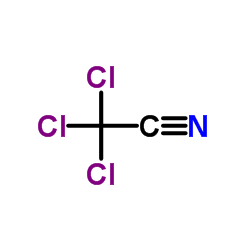
Trichloroacetonitrile structure
|
Common Name | Trichloroacetonitrile | ||
|---|---|---|---|---|
| CAS Number | 545-06-2 | Molecular Weight | 144.387 | |
| Density | 1.6±0.1 g/cm3 | Boiling Point | 85.7±0.0 °C at 760 mmHg | |
| Molecular Formula | C2Cl3N | Melting Point | -42 °C | |
| MSDS | Chinese USA | Flash Point | 10.5±20.2 °C | |
| Symbol |


GHS06, GHS09 |
Signal Word | Danger | |
Use of TrichloroacetonitrileTrichloroacetonitrile is among a number of contaminants found in drinking water produced by reactions of chlorine with background organic material. Trichloroacetonitrile is an efficient activating agent for the ipso-hydroxylation of arylboronic acids to phenolic compounds[1][2]. |
This table lists Chinese names, IUPAC names and various aliases of this chemical substance.
| Name | Trichloroacetonitrile |
|---|---|
| Synonym | More Synonyms |
This table contains bioactivity, target information and biological‑assay experimental data of this compound.
| Description | Trichloroacetonitrile is among a number of contaminants found in drinking water produced by reactions of chlorine with background organic material. Trichloroacetonitrile is an efficient activating agent for the ipso-hydroxylation of arylboronic acids to phenolic compounds[1][2]. |
|---|---|
| Related Catalog | |
| References |
This table shows physicochemical parameters including melting point, boiling point, density, solubility and optical rotation. Missing data is marked as N/A.
| Density | 1.6±0.1 g/cm3 |
|---|---|
| Boiling Point | 85.7±0.0 °C at 760 mmHg |
| Melting Point | -42 °C |
| Molecular Formula | C2Cl3N |
| Molecular Weight | 144.387 |
| Flash Point | 10.5±20.2 °C |
| Exact Mass | 142.909637 |
| PSA | 23.79000 |
| LogP | 2.54 |
| Vapour Pressure | 68.6±0.1 mmHg at 25°C |
| Index of Refraction | 1.489 |
| InChIKey | DRUIESSIVFYOMK-UHFFFAOYSA-N |
| SMILES | N#CC(Cl)(Cl)Cl |
| Stability | Stable, but water sensitive. Incompatible with acids, water, steam. May hydrolyze in alkali or acid conditions. Flammable. |
| Water Solubility | <0.1 g/100 mL at 21.5°C | <0.1 g/100 mL at 21.5 ºC |
This table provides MSDS information including hazard classification, first‑aid, fire‑fighting, spill handling, operation and storage instructions.
This table summarizes toxicological test data, acute & chronic toxicity and ecological hazard parameters for this chemical.
CHEMICAL IDENTIFICATION
HEALTH HAZARD DATAACUTE TOXICITY DATA
MUTATION DATA
|
This table covers safety warnings, protective measures, incompatible substances and disposal guidelines for this compound.
| Symbol |
GHS06, GHS09 |
|---|---|
| Signal Word | Danger |
| Hazard Statements | H301 + H311 + H331-H315-H319-H411 |
| Precautionary Statements | Missing Phrase - N15.00950417-P261-P280-P302 + P352 + P312-P304 + P340 + P312-P403 + P233 |
| Personal Protective Equipment | Faceshields;full-face respirator (US);Gloves;Goggles;multi-purpose combination respirator cartridge (US);type ABEK (EN14387) respirator filter |
| Hazard Codes | T:Toxic |
| Risk Phrases | R23/24/25;R51/53 |
| Safety Phrases | S45-S61 |
| RIDADR | UN 3276 6.1/PG 3 |
| WGK Germany | 3 |
| RTECS | AM2450000 |
| Packaging Group | II |
| Hazard Class | 8 |
| HS Code | 29269095 |
This table presents publicly reported synthetic routes, reaction conditions, reactants and product information of the compound.
This table lists upstream starting materials and downstream derivative products related to this chemical.
| Precursor 9 | |
|---|---|
| DownStream 10 | |
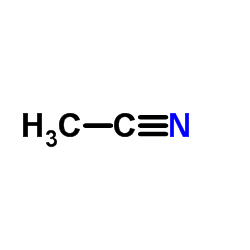 CAS#:75-05-8
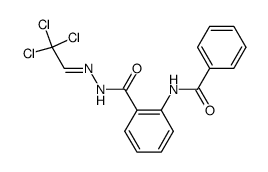 CAS#:76716-10-4
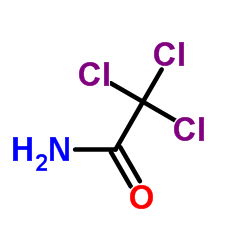 CAS#:594-65-0
 CAS#:107-14-2
![[2,2,2-trichloro-1-[(pentachloroethyl)imino]ethyl]phosphorimidic trichloride Structure](https://image.chemsrc.com/caspic/445/74067-78-0.png) CAS#:74067-78-0
CAS#:74067-78-0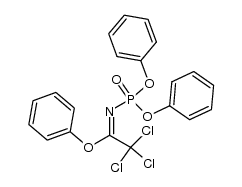 CAS#:111499-29-7
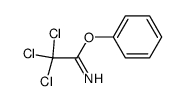 CAS#:409110-43-6
 CAS#:7782-50-5
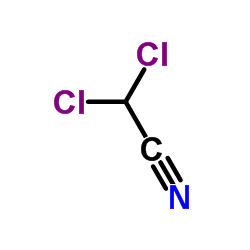 CAS#:3018-12-0
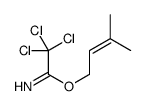 CAS#:104808-44-8
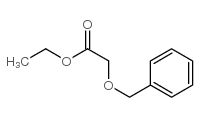 CAS#:32122-09-1
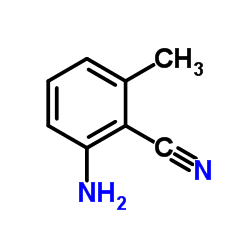 CAS#:56043-01-7
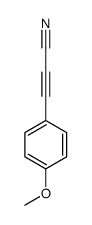 CAS#:14677-99-7
 CAS#:4336-70-3
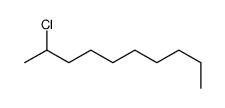 CAS#:1002-56-8
 CAS#:20063-97-2
 CAS#:51479-73-3
 CAS#:39900-63-5
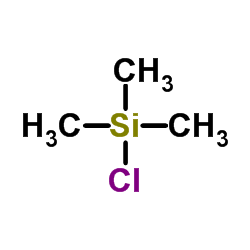 CAS#:75-77-4
This table shows customs‑related data including HS‑code, tariff and regulatory conditions for import and export.
| HS Code | 2926909090 |
|---|---|
| Summary | HS:2926909090 other nitrile-function compounds VAT:17.0% Tax rebate rate:9.0% Supervision conditions:none MFN tariff:6.5% General tariff:30.0% |
This table lists relevant public references with title, journal and publication metadata for this compound.
|
Identification of two urinary metabolites of rats treated with acrylonitrile; influence of several inhibitors on the mutagenicity of those urines.
Toxicol. Lett. 7(4-5) , 321-7, (1981) Urines collected from rats injected with acrylonitrile (ACN) were mutagenic towards Salmonella typhimurium TA1530; this activity was reduced when the animals were pretreated by pyrazole (inhibitor of ... |
|
|
Trichloroacetonitrile.
IARC Monogr. Eval. Carcinog. Risks Hum. 71 Pt 3 , 1533-7, (1999)
|
|
|
Teratogenic effects of trichloroacetonitrile in the Long-Evans rat.
Teratology 38(2) , 113-20, (1988) Trichloroacetonitrile (TCAN) is among a number of contaminants found in drinking water produced by reactions of chlorine with background organic material. Long-Evans rats were intubated with TCAN (0, ... |
This table collects all English aliases, systematic names and CAS‑related synonyms of the compound.
| EINECS 208-885-7 |
| UNII:6397DL8869 |
| Trichloroacetonitrile |
| 2,2,2-trichloroacetonitrile |
| MFCD00001842 |
This section contains frequently‑asked‑questions about this compound, including basic parameters, properties, storage conditions and corresponding answers.
| Q: What is the LogP of Trichloroacetonitrile? |
| A: LogP of Trichloroacetonitrile is 2.54. |
| Q: What is the molecular weight of Trichloroacetonitrile? |
| A: Molecular weight of Trichloroacetonitrile is 144.387. |
| Q: What are the downstream products of Trichloroacetonitrile? |
| A: Related downstream products(CAS) of Trichloroacetonitrile: 104808-44-8;32122-09-1;56043-01-7;14677-99-7;4336-70-3;1002-56-8;20063-97-2;51479-73-3;39900-63-5;75-77-4. |
| Q: What is the melting point of Trichloroacetonitrile? |
| A: Melting point of Trichloroacetonitrile is -42 °C. |
| Q: What are the upstream materials of Trichloroacetonitrile? |
| A: Related upstream materials(CAS) of Trichloroacetonitrile: 75-05-8;76716-10-4;594-65-0;107-14-2;74067-78-0;111499-29-7;409110-43-6;7782-50-5;3018-12-0. |
| Q: What is the SMILES notation of Trichloroacetonitrile? |
| A: SMILES notation of Trichloroacetonitrile is N#CC(Cl)(Cl)Cl. |
| Q: What is the CAS number of Trichloroacetonitrile? |
| A: CAS number of Trichloroacetonitrile is 545-06-2. |
| Q: What is the polar surface area (PSA) of Trichloroacetonitrile? |
| A: Polar surface area (PSA) of Trichloroacetonitrile is 23.79000. |
| Q: What English synonyms does Trichloroacetonitrile have? |
| A: English synonyms of Trichloroacetonitrile: EINECS 208-885-7, UNII:6397DL8869, Trichloroacetonitrile, 2,2,2-trichloroacetonitrile, MFCD00001842. |
| Q: What are the uses of Trichloroacetonitrile? |
| A: Main uses of Trichloroacetonitrile: Trichloroacetonitrile is among a number of contaminants found in drinking water produced by reactions of chlorine with background organic material. Trichloroacetonitrile is an efficient activating agent for the ipso-hydroxylation of arylboronic acids to phenolic compounds[1][2]. |
This table lists manufacturers and suppliers of this compound, including vendor names and product supply reference information.
| Shanghai Nianxing Industrial Co., Ltd |
| Dayang Chem (Hangzhou) Co., Ltd. |
| Henan Tianfu Chemical Co., Ltd. |