TOFA
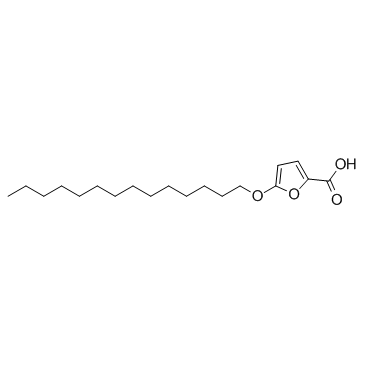
TOFA structure
|
Common Name | TOFA | ||
|---|---|---|---|---|
| CAS Number | 54857-86-2 | Molecular Weight | 324.455 | |
| Density | 1.0±0.1 g/cm3 | Boiling Point | 441.7±25.0 °C at 760 mmHg | |
| Molecular Formula | C19H32O4 | Melting Point | 112-115ºC | |
| MSDS | Chinese USA | Flash Point | 220.9±23.2 °C | |
Use of TOFATOFA (RMI14514;MDL14514) is an allosteric inhibitor of acetyl-CoA carboxylase-α (ACCA ). |
Summary: 5-(tetradecyloxy)-2-furoic acid (TOFA), also known as 5-(十四烷基氧)-2-糠酸, has a CAS number of 54857-86-2 and a molecular formula of C19H32O4, with a molecular weight of 324.455. It is an allosteric inhibitor of acetyl-CoA carboxylase-α (ACCA). For research-use only, not for medical or clinical usage.
This table lists Chinese names, IUPAC names and various aliases of this chemical substance.
| Name | 5-(tetradecyloxy)-2-furoic acid |
|---|---|
| Synonym | More Synonyms |
This table contains bioactivity, target information and biological‑assay experimental data of this compound.
| Description | TOFA (RMI14514;MDL14514) is an allosteric inhibitor of acetyl-CoA carboxylase-α (ACCA ). |
|---|---|
| Related Catalog | |
| In Vitro | TOFA (5-tetradecyloxy-2-furoic acid) is cytotoxic to lung cancer cells NCI-H460 and colon carcinoma cells HCT-8 and HCT-15, with an IC50 at approximately 5.0, 5.0, and 4.5 μg/mL, respectively. TOFA at 1.0–20.0 μg/mL effectively blocks fatty acid synthesis and induces cell death in a dose-dependent manner[1]. TOFA is found to be cytotoxic to COC1 and COC1/DDP cells with IC50 values of ~26.1 and 11.6 µg/mL, respectively. TOFA inhibits the proliferation of the cancer cells examined in a time and dose dependent manner, arrests the cells in the G0/G1 cell cycle phase and induces apoptosis[2]. Acetyl-CoA-carboxylase-α (ACCA) is a key enzyme in the regulation of fatty acids synthesis. Inhibition of ACCA by TOFA decreases fatty acid synthesis and induces caspase activation and cell death in most PCa cell lines[3]. |
| In Vivo | TOFA inhibits COC1/DDP cell growth in ovarian tumor mouse xenografts. The tumor growth rate is signifi¬cantly inhibited by TOFA compared with the DMSO treated control mice (1649±356.3 vs. 5128±390.4 mm3. No toxicity is observed in the heart, liver, spleen, lung, kidney and intestinal tissues. By inhibiting ACC, TOFA may be a promising small molecule agent for ovarian cancer therapy[2]. |
| Cell Assay | NCI-H460, human lung cancer cells, and HCT-8 and HCT-15 cells (5,000/well) are seeded in 96-well plates overnight and then exposed to TOFA at indicated concentrations (0, 1, 5, 10, 20, 50 µg/mL) for 72 hours. Viable cells are detected using MTT assay[1]. |
| Animal Admin | Mice: Mice are treated with 50 μL DMSO (control group) or treated with TOFA (50 mg/kg). The drugs are injected intraperitoneally daily for two weeks. Tumor volumes are recorded every two days by measuring dimensions (length and width) with Vernier calipers. The mice are sacrificed four weeks after the final treatment. Tumor weights are measured by a scale[2]. |
| References |
This table shows physicochemical parameters including melting point, boiling point, density, solubility and optical rotation. Missing data is marked as N/A.
| Density | 1.0±0.1 g/cm3 |
|---|---|
| Boiling Point | 441.7±25.0 °C at 760 mmHg |
| Melting Point | 112-115ºC |
| Molecular Formula | C19H32O4 |
| Molecular Weight | 324.455 |
| Flash Point | 220.9±23.2 °C |
| Exact Mass | 324.230072 |
| PSA | 59.67000 |
| LogP | 7.82 |
| Vapour Pressure | 0.0±1.1 mmHg at 25°C |
| Index of Refraction | 1.483 |
| InChIKey | CZRCFAOMWRAFIC-UHFFFAOYSA-N |
| SMILES | CCCCCCCCCCCCCCOc1ccc(C(=O)O)o1 |
| Storage condition | 2-8℃ |
This table provides MSDS information including hazard classification, first‑aid, fire‑fighting, spill handling, operation and storage instructions.
This table summarizes toxicological test data, acute & chronic toxicity and ecological hazard parameters for this chemical.
CHEMICAL IDENTIFICATION
HEALTH HAZARD DATAACUTE TOXICITY DATA
|
This table covers safety warnings, protective measures, incompatible substances and disposal guidelines for this compound.
| Personal Protective Equipment | Eyeshields;Gloves;type N95 (US);type P1 (EN143) respirator filter |
|---|---|
| RIDADR | NONH for all modes of transport |
| HS Code | 2932190090 |
This table presents publicly reported synthetic routes, reaction conditions, reactants and product information of the compound.
|
~%
TOFA CAS#:54857-86-2 |
| Literature: Journal of Pharmaceutical Sciences, , vol. 70, # 10 p. 1095 - 1100 |
|
~%
TOFA CAS#:54857-86-2 |
| Literature: Journal of Pharmaceutical Sciences, , vol. 70, # 10 p. 1095 - 1100 |
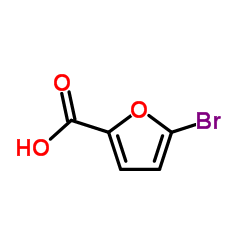
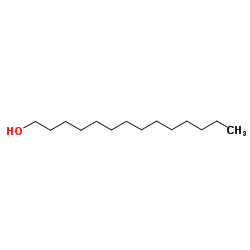
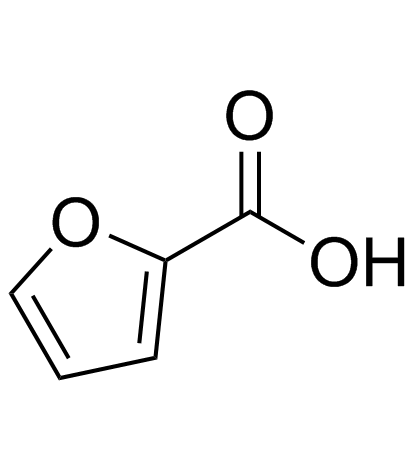
This table lists upstream starting materials and downstream derivative products related to this chemical.
| Precursor 3 | |
|---|---|
| DownStream 1 | |
 CAS#:62443-38-3
This table shows customs‑related data including HS‑code, tariff and regulatory conditions for import and export.
| HS Code | 2932190090 |
|---|---|
| Summary | 2932190090 other compounds containing an unfused furan ring (whether or not hydrogenated) in the structure VAT:17.0% Tax rebate rate:9.0% Supervision conditions:none MFN tariff:6.5% General tariff:20.0% |
This table lists relevant public references with title, journal and publication metadata for this compound.
|
Pregnane X receptor activation and silencing promote steatosis of human hepatic cells by distinct lipogenic mechanisms.
Arch. Toxicol. 89 , 2089-103, (2015) In addition to its well-characterized role in the regulation of drug metabolism and transport by xenobiotics, pregnane X receptor (PXR) critically impacts on lipid homeostasis. In mice, both ligand-de... |
|
|
AMPK activation promotes lipid droplet dispersion on detyrosinated microtubules to increase mitochondrial fatty acid oxidation.
Nat. Commun. 6 , 7176, (2015) Lipid droplets (LDs) are intracellular organelles that provide fatty acids (FAs) to cellular processes including synthesis of membranes and production of metabolic energy. While known to move bidirect... |
|
|
De novo fatty acid biosynthesis contributes significantly to establishment of a bioenergetically favorable environment for vaccinia virus infection.
PLoS Pathog. 10(3) , e1004021, (2014) The poxvirus life cycle, although physically autonomous from the host nucleus, is nevertheless dependent upon cellular functions. A requirement for de novo fatty acid biosynthesis was implied by our p... |
This table contains target information, in‑vitro & in‑vivo assay data for this compound.
This table collects all English aliases, systematic names and CAS‑related synonyms of the compound.
| 5-Tetradecyloxy-2-furonic acid |
| TOFA |
| 5-tetradecoxyfuran-2-carboxylic acid |
| 5-(Tetradecyloxy)-2-furoic acid |
| MFCD01726059 |
This section contains frequently‑asked‑questions about this compound, including basic parameters, properties, storage conditions and corresponding answers.
| Q: What are the uses of 5-(tetradecyloxy)-2-furoic acid? |
| A: Main uses of 5-(tetradecyloxy)-2-furoic acid: TOFA (RMI14514;MDL14514) is an allosteric inhibitor of acetyl-CoA carboxylase-α (ACCA ). |
| Q: What is the InChIKey of 5-(tetradecyloxy)-2-furoic acid? |
| A: InChIKey of 5-(tetradecyloxy)-2-furoic acid is CZRCFAOMWRAFIC-UHFFFAOYSA-N. |
| Q: What are the upstream materials of 5-(tetradecyloxy)-2-furoic acid? |
| A: Related upstream materials(CAS) of 5-(tetradecyloxy)-2-furoic acid: 585-70-6;112-72-1;88-14-2. |
| Q: What is the polar surface area (PSA) of 5-(tetradecyloxy)-2-furoic acid? |
| A: Polar surface area (PSA) of 5-(tetradecyloxy)-2-furoic acid is 59.67000. |
| Q: What are the downstream products of 5-(tetradecyloxy)-2-furoic acid? |
| A: Related downstream products(CAS) of 5-(tetradecyloxy)-2-furoic acid: 62443-38-3. |
| Q: What English synonyms does 5-(tetradecyloxy)-2-furoic acid have? |
| A: English synonyms of 5-(tetradecyloxy)-2-furoic acid: 5-Tetradecyloxy-2-furonic acid, TOFA, 5-tetradecoxyfuran-2-carboxylic acid, 5-(Tetradecyloxy)-2-furoic acid, MFCD01726059. |
| Q: What is the CAS number of 5-(tetradecyloxy)-2-furoic acid? |
| A: CAS number of 5-(tetradecyloxy)-2-furoic acid is 54857-86-2. |
| Q: What is the LogP of 5-(tetradecyloxy)-2-furoic acid? |
| A: LogP of 5-(tetradecyloxy)-2-furoic acid is 7.82. |
| Q: What are the storage conditions for 5-(tetradecyloxy)-2-furoic acid? |
| A: Storage conditions for 5-(tetradecyloxy)-2-furoic acid: 2-8℃. |
| Q: What is the molecular weight of 5-(tetradecyloxy)-2-furoic acid? |
| A: Molecular weight of 5-(tetradecyloxy)-2-furoic acid is 324.455. |
This table lists manufacturers and suppliers of this compound, including vendor names and product supply reference information.
| Shanghai Nianxing Industrial Co., Ltd |
| Dayang Chem (Hangzhou) Co., Ltd. |