Dipyridamole
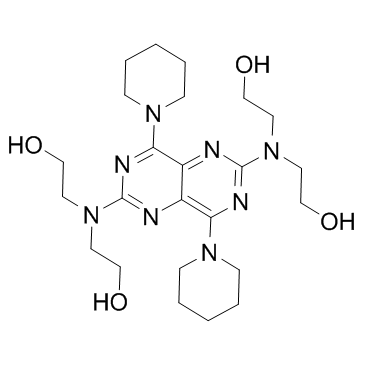
Dipyridamole structure
|
Common Name | Dipyridamole | ||
|---|---|---|---|---|
| CAS Number | 58-32-2 | Molecular Weight | 504.626 | |
| Density | 1.4±0.1 g/cm3 | Boiling Point | 806.5±75.0 °C at 760 mmHg | |
| Molecular Formula | C24H40N8O4 | Melting Point | 165-166ºC | |
| MSDS | Chinese USA | Flash Point | 441.5±37.1 °C | |
| Symbol |

GHS07 |
Signal Word | Warning | |
Use of DipyridamoleDipyridamole (Persantine) is a phosphodiesterase inhibitor that blocks uptake and metabolism of adenosine by erythrocytes and vascular endothelial cells.Target: Phosphodiesterase (PDE)Dipyridamole concentrations of 1 nmol/ml blood caused 90% inhibition of adenosine metabolism. Dipyridamole at therapeutic concentrations causes significant inhibition of adenosine metabolism in whole blood [1]. Dipyridamole has a dose-dependent inhibitory effect on thromboxane synthesis which was independent of aggregation. Dipyridamole also inhibited malonyldialdehyde production in response to both thrombin and arachidonic acid [2]. Dipyridamole enhances platelet inhibition by amplifying the signaling of the NO donor sodium nitroprusside. These data support the concept that enhancement of endothelium-dependent NO/cGMP-mediated signaling may be an important in vivo component of dipyridamole action [3]. |
This table lists Chinese names, IUPAC names and various aliases of this chemical substance.
| Name | dipyridamole |
|---|---|
| Synonym | More Synonyms |
This table contains bioactivity, target information and biological‑assay experimental data of this compound.
| Description | Dipyridamole (Persantine) is a phosphodiesterase inhibitor that blocks uptake and metabolism of adenosine by erythrocytes and vascular endothelial cells.Target: Phosphodiesterase (PDE)Dipyridamole concentrations of 1 nmol/ml blood caused 90% inhibition of adenosine metabolism. Dipyridamole at therapeutic concentrations causes significant inhibition of adenosine metabolism in whole blood [1]. Dipyridamole has a dose-dependent inhibitory effect on thromboxane synthesis which was independent of aggregation. Dipyridamole also inhibited malonyldialdehyde production in response to both thrombin and arachidonic acid [2]. Dipyridamole enhances platelet inhibition by amplifying the signaling of the NO donor sodium nitroprusside. These data support the concept that enhancement of endothelium-dependent NO/cGMP-mediated signaling may be an important in vivo component of dipyridamole action [3]. |
|---|---|
| Related Catalog | |
| References |
This table shows physicochemical parameters including melting point, boiling point, density, solubility and optical rotation. Missing data is marked as N/A.
| Density | 1.4±0.1 g/cm3 |
|---|---|
| Boiling Point | 806.5±75.0 °C at 760 mmHg |
| Melting Point | 165-166ºC |
| Molecular Formula | C24H40N8O4 |
| Molecular Weight | 504.626 |
| Flash Point | 441.5±37.1 °C |
| Exact Mass | 504.317261 |
| PSA | 145.44000 |
| LogP | -1.22 |
| Vapour Pressure | 0.0±3.0 mmHg at 25°C |
| Index of Refraction | 1.670 |
| InChIKey | IZEKFCXSFNUWAM-UHFFFAOYSA-N |
| SMILES | OCCN(CCO)c1nc(N2CCCCC2)c2nc(N(CCO)CCO)nc(N3CCCCC3)c2n1 |
| Storage condition | −20°C |
| Water Solubility | DMSO: soluble |
This table provides MSDS information including hazard classification, first‑aid, fire‑fighting, spill handling, operation and storage instructions.
This table summarizes toxicological test data, acute & chronic toxicity and ecological hazard parameters for this chemical.
CHEMICAL IDENTIFICATION
HEALTH HAZARD DATAACUTE TOXICITY DATA
MUTATION DATA
|
This table covers safety warnings, protective measures, incompatible substances and disposal guidelines for this compound.
| Symbol |
GHS07 |
|---|---|
| Signal Word | Warning |
| Hazard Statements | H315-H319-H335 |
| Precautionary Statements | P305 + P351 + P338 |
| Personal Protective Equipment | dust mask type N95 (US);Eyeshields;Gloves |
| Hazard Codes | Xi:Irritant |
| Risk Phrases | R36/37/38 |
| Safety Phrases | S26-S36 |
| RIDADR | NONH for all modes of transport |
| WGK Germany | 2 |
| RTECS | KK7450000 |
| HS Code | 2933990090 |
This table lists upstream starting materials and downstream derivative products related to this chemical.
| Precursor 5 | |
|---|---|
| DownStream 0 | |
![2,6-DICHLORO-4,8-DIPIPERIDINOPYRIMIDINO[5,4-D]PYRIMIDINE Structure](https://image.chemsrc.com/caspic/334/7139-02-8.png) CAS#:7139-02-8
CAS#:7139-02-8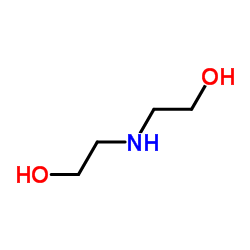 CAS#:111-42-2
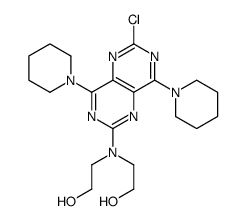 CAS#:54093-92-4
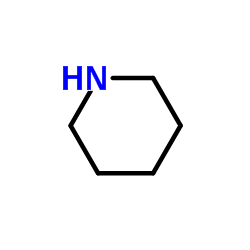 CAS#:110-89-4
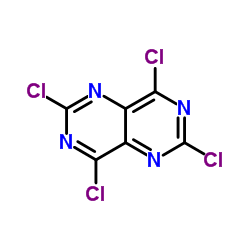 CAS#:32980-71-5
This table shows customs‑related data including HS‑code, tariff and regulatory conditions for import and export.
| HS Code | 2933990090 |
|---|---|
| Summary | 2933990090. heterocyclic compounds with nitrogen hetero-atom(s) only. VAT:17.0%. Tax rebate rate:13.0%. . MFN tariff:6.5%. General tariff:20.0% |
This table lists relevant public references with title, journal and publication metadata for this compound.
|
Hypoxanthine uptake by skeletal muscle microvascular endothelial cells from equilibrative nucleoside transporter 1 (ENT1)-null mice: effect of oxidative stress.
Microvasc. Res. 98 , 16-22, (2015) Adenosine is an endogenous regulator of vascular tone. This activity of adenosine is terminated by its uptake and metabolism by microvascular endothelial cells (MVEC). The predominant transporter invo... |
|
|
Oxidative stress modulates nucleobase transport in microvascular endothelial cells
Microvasc. Res. 95 , 68-75, (2014) Purine nucleosides and nucleobases play key roles in the physiological response to vascular ischemia/reperfusion events. The intra- and extracellular concentrations of these compounds are controlled, ... |
|
|
Cheminformatics analysis of assertions mined from literature that describe drug-induced liver injury in different species.
Chem. Res. Toxicol. 23 , 171-83, (2010) Drug-induced liver injury is one of the main causes of drug attrition. The ability to predict the liver effects of drug candidates from their chemical structures is critical to help guide experimental... |
This table contains target information, in‑vitro & in‑vivo assay data for this compound.
This table collects all English aliases, systematic names and CAS‑related synonyms of the compound.
| 2,2',2'',2'''-[(4,8-Dipiperidin-1-ylpyrimido[5,4-d]pyrimidin-2,6-diyl)dinitrilo]tetraethanol |
| RA 8 |
| Piroan |
| EINECS 200-374-7 |
| Dipyridamole |
| Coridil |
| Dypyridamole |
| Apricor |
| Anginal |
| Natyl |
| 2,2',2'',2'''-{[4,8-Di(piperidin-1-yl)pyrimido[5,4-d]pyrimidine-2,6-diyl]dinitrilo}tetraethanol |
| 2,2',2'',2'''-{[4,8-Di(1-piperidinyl)pyrimido[5,4-d]pyrimidine-2,6-diyl]dinitrilo}tetraethanol |
| Corosan |
| Coroxin |
| MFCD00010555 |
| Coribon |
This section contains frequently‑asked‑questions about this compound, including basic parameters, properties, storage conditions and corresponding answers.
| Q: What is the molecular formula of dipyridamole? |
| A: Molecular formula of dipyridamole is C24H40N8O4. |
| Q: What is the safety information for dipyridamole? |
| A: Safety information for dipyridamole: S26-S36. |
| Q: What is the SMILES notation of dipyridamole? |
| A: SMILES notation of dipyridamole is OCCN(CCO)c1nc(N2CCCCC2)c2nc(N(CCO)CCO)nc(N3CCCCC3)c2n1. |
| Q: What English synonyms does dipyridamole have? |
| A: English synonyms of dipyridamole: 2,2',2'',2'''-[(4,8-Dipiperidin-1-ylpyrimido[5,4-d]pyrimidin-2,6-diyl)dinitrilo]tetraethanol, RA 8, Piroan, EINECS 200-374-7, Dipyridamole, Coridil, Dypyridamole, Apricor, Anginal, Natyl, 2,2',2'',2'''-{[4,8-Di(piperidin-1-yl)pyrimido[5,4-d]pyrimidine-2,6-diyl]dinitrilo}tetraethanol, 2,2',2'',2'''-{[4,8-Di(1-piperidinyl)pyrimido[5,4-d]pyrimidine-2,6-diyl]dinitrilo}tetraethanol, Corosan, Coroxin, MFCD00010555, Coribon. |
| Q: What is the InChIKey of dipyridamole? |
| A: InChIKey of dipyridamole is IZEKFCXSFNUWAM-UHFFFAOYSA-N. |
| Q: What is the boiling point of dipyridamole? |
| A: Boiling point of dipyridamole is 806.5±75.0 °C at 760 mmHg. |
| Q: What are the upstream materials of dipyridamole? |
| A: Related upstream materials(CAS) of dipyridamole: 7139-02-8;111-42-2;54093-92-4;110-89-4;32980-71-5. |
| Q: What is the melting point of dipyridamole? |
| A: Melting point of dipyridamole is 165-166ºC. |
| Q: What is the English name of dipyridamole? |
| A: The English name of dipyridamole is dipyridamole. |
| Q: How is the water solubility of dipyridamole? |
| A: Water solubility of dipyridamole: DMSO: soluble. |
This table lists manufacturers and suppliers of this compound, including vendor names and product supply reference information.
| Shanghai Nianxing Industrial Co., Ltd |
| Dayang Chem (Hangzhou) Co., Ltd. |
| Henan Tianfu Chemical Co., Ltd. |