promethazine hydrochloride

promethazine hydrochloride structure
|
Common Name | promethazine hydrochloride | ||
|---|---|---|---|---|
| CAS Number | 58-33-3 | Molecular Weight | 320.880 | |
| Density | 1.131 g/cm3 | Boiling Point | 403.7ºC at 760 mmHg | |
| Molecular Formula | C17H21ClN2S | Melting Point | 230-232°C | |
| MSDS | Chinese USA | Flash Point | 198ºC | |
| Symbol |


GHS07, GHS09 |
Signal Word | Warning | |
Use of promethazine hydrochloridePromethazine Hcl(NSC-231688) is the first-generation antihistamine; strong antagonist of the H1 receptor and moderate mACh receptor antagonist, moderate affinity for 5-HT2A, 5-HT2C, D2 and α1-adrenergic receptors. |
This table lists Chinese names, IUPAC names and various aliases of this chemical substance.
| Name | promethazine hydrochloride |
|---|---|
| Synonym | More Synonyms |
This table contains bioactivity, target information and biological‑assay experimental data of this compound.
| Description | Promethazine Hcl(NSC-231688) is the first-generation antihistamine; strong antagonist of the H1 receptor and moderate mACh receptor antagonist, moderate affinity for 5-HT2A, 5-HT2C, D2 and α1-adrenergic receptors. |
|---|---|
| Related Catalog | |
| References |
This table shows physicochemical parameters including melting point, boiling point, density, solubility and optical rotation. Missing data is marked as N/A.
| Density | 1.131 g/cm3 |
|---|---|
| Boiling Point | 403.7ºC at 760 mmHg |
| Melting Point | 230-232°C |
| Molecular Formula | C17H21ClN2S |
| Molecular Weight | 320.880 |
| Flash Point | 198ºC |
| Exact Mass | 320.111389 |
| PSA | 31.78000 |
| LogP | 5.10640 |
| InChIKey | XXPDBLUZJRXNNZ-UHFFFAOYSA-N |
| SMILES | CC(CN1c2ccccc2Sc2ccccc21)N(C)C.Cl |
| Storage condition | Refrigerator |
This table provides MSDS information including hazard classification, first‑aid, fire‑fighting, spill handling, operation and storage instructions.
This table summarizes toxicological test data, acute & chronic toxicity and ecological hazard parameters for this chemical.
CHEMICAL IDENTIFICATION
HEALTH HAZARD DATAACUTE TOXICITY DATA
|
This table covers safety warnings, protective measures, incompatible substances and disposal guidelines for this compound.
| Symbol |
GHS07, GHS09 |
|---|---|
| Signal Word | Warning |
| Hazard Statements | H302 + H332-H315-H317-H319-H335-H411 |
| Precautionary Statements | P261-P273-P280-P304 + P340 + P312-P333 + P313-P337 + P313 |
| Personal Protective Equipment | dust mask type N95 (US);Eyeshields;Faceshields;Gloves |
| Hazard Codes | Xn:Harmful; |
| Risk Phrases | R22;R36/37/38 |
| Safety Phrases | S26-S36 |
| RIDADR | UN 2811 6.1/PG 3 |
| WGK Germany | 3 |
| RTECS | SO8225000 |
| Packaging Group | III |
| Hazard Class | 6.1(b) |
| HS Code | 2933699090 |
This table lists upstream starting materials and downstream derivative products related to this chemical.
| Precursor 0 | |
|---|---|
| DownStream 5 | |
 CAS#:37707-23-6
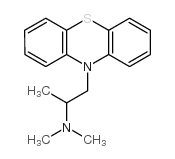 CAS#:60-87-7
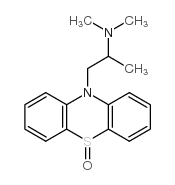 CAS#:7640-51-9
 CAS#:82489-47-2
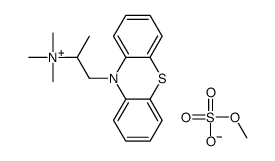 CAS#:58-34-4
This table shows customs‑related data including HS‑code, tariff and regulatory conditions for import and export.
| HS Code | 2933699090 |
|---|---|
| Summary | 2933699090 other compounds containing an unfused triazine ring (whether or not hydrogenated) in the structure。Supervision conditions:None。VAT:17.0%。Tax rebate rate:9.0%。MFN tariff:6.5%。General tariff:20.0% |
This table lists relevant public references with title, journal and publication metadata for this compound.
|
Probiotic properties of lactic acid bacteria isolated from water-buffalo mozzarella cheese.
Probiotics Antimicrob Proteins 6 , 141-56, (2014) This study evaluated the probiotic properties (stability at different pH values and bile salt concentration, auto-aggregation and co-aggregation, survival in the presence of antibiotics and commercial... |
|
|
The EpiOcular Eye Irritation Test (EIT) for hazard identification and labelling of eye irritating chemicals: protocol optimisation for solid materials and the results after extended shipment.
Altern. Lab. Anim. 43 , 101-27, (2015) The 7th Amendment to the EU Cosmetics Directive and the EU REACH Regulation have reinforced the need for in vitro ocular test methods. Validated in vitro ocular toxicity tests that can predict the hum... |
|
|
Developing structure-activity relationships for the prediction of hepatotoxicity.
Chem. Res. Toxicol. 23 , 1215-22, (2010) Drug-induced liver injury is a major issue of concern and has led to the withdrawal of a significant number of marketed drugs. An understanding of structure-activity relationships (SARs) of chemicals ... |
This table collects all English aliases, systematic names and CAS‑related synonyms of the compound.
| 10H-Phenothiazine-10-ethanamine, N,N,α-trimethyl-, hydrochloride (1:1) |
| 10-(2-Dimethylamino-2-methylethyl)phenothiazine Hydrochloride |
| 10H-phenothiazine-10-ethanamine, N,N,a-trimethyl-, hydrochloride (1:1) |
| N,N-diméthyl-1-(10H-phénothiazin-10-yl)propan-2-amine chlorhydrate |
| Genphen |
| N,N-Dimethyl-1-(10H-phenothiazin-10-yl)propan-2-aminhydrochlorid |
| Phenothiazine, 10-[2-(dimethylamino)-propyl]-, hydrochloride |
| N,N-Dimethyl-1-(10H-phenothiazin-10-yl)-2-propanamine hydrochloride (1:1) |
| UNII:R61ZEH7I1I |
| EINECS 200-375-2 |
| N,N-Dimethyl-1-(10H-phenothiazin-10-yl)propan-2-amine hydrochloride (1:1) |
| Thiergan |
| MFCD00012652 |
| N,N,a-Trimethyl-10H-phenothiazine-10-ethanamine Monohydrochloride |
| (±)-Promethazine Hydrochloride |
| N-(2'-Dimethylamino-2'-methyl)ethylphenothiazine Monohydrochloride |
| Phenothiazine, 10-[2- (dimethylamino)propyl]-, monohydrochloride |
| Protazine |
| Promethazine Hydrochloride |
This section contains frequently‑asked‑questions about this compound, including basic parameters, properties, storage conditions and corresponding answers.
| Q: What is the LogP of promethazine hydrochloride? |
| A: LogP of promethazine hydrochloride is 5.10640. |
| Q: What are the uses of promethazine hydrochloride? |
| A: Main uses of promethazine hydrochloride: Promethazine Hcl(NSC-231688) is the first-generation antihistamine; strong antagonist of the H1 receptor and moderate mACh receptor antagonist, moderate affinity for 5-HT2A, 5-HT2C, D2 and α1-adrenergic receptors. |
| Q: What are the storage conditions for promethazine hydrochloride? |
| A: Storage conditions for promethazine hydrochloride: Refrigerator. |
| Q: What is the molecular formula of promethazine hydrochloride? |
| A: Molecular formula of promethazine hydrochloride is C17H21ClN2S. |
| Q: What is the SMILES notation of promethazine hydrochloride? |
| A: SMILES notation of promethazine hydrochloride is CC(CN1c2ccccc2Sc2ccccc21)N(C)C.Cl. |
| Q: What is the boiling point of promethazine hydrochloride? |
| A: Boiling point of promethazine hydrochloride is 403.7ºC at 760 mmHg. |
| Q: What is the melting point of promethazine hydrochloride? |
| A: Melting point of promethazine hydrochloride is 230-232°C. |
| Q: What is the polar surface area (PSA) of promethazine hydrochloride? |
| A: Polar surface area (PSA) of promethazine hydrochloride is 31.78000. |
| Q: What is the InChIKey of promethazine hydrochloride? |
| A: InChIKey of promethazine hydrochloride is XXPDBLUZJRXNNZ-UHFFFAOYSA-N. |
| Q: What is the molecular weight of promethazine hydrochloride? |
| A: Molecular weight of promethazine hydrochloride is 320.880. |
This table lists manufacturers and suppliers of this compound, including vendor names and product supply reference information.
| Shanghai Nianxing Industrial Co., Ltd |
| Henan Tianfu Chemical Co., Ltd. |