Ethyl 2-Chloroacetoacetate
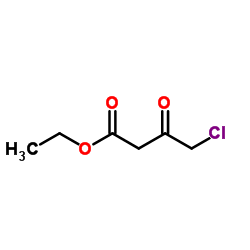
Ethyl 2-Chloroacetoacetate structure
|
Common Name | Ethyl 2-Chloroacetoacetate | ||
|---|---|---|---|---|
| CAS Number | 638-07-3 | Molecular Weight | 164.587 | |
| Density | 1.2±0.1 g/cm3 | Boiling Point | 235.5±0.0 °C at 760 mmHg | |
| Molecular Formula | C6H9ClO3 | Melting Point | -8 °C | |
| MSDS | Chinese USA | Flash Point | 96.7±0.0 °C | |
| Symbol |


GHS05, GHS06 |
Signal Word | Danger | |
This table lists Chinese names, IUPAC names and various aliases of this chemical substance.
| Name | Ethyl 4-chloroacetoacetate |
|---|---|
| Synonym | More Synonyms |
This table shows physicochemical parameters including melting point, boiling point, density, solubility and optical rotation. Missing data is marked as N/A.
| Density | 1.2±0.1 g/cm3 |
|---|---|
| Boiling Point | 235.5±0.0 °C at 760 mmHg |
| Melting Point | -8 °C |
| Molecular Formula | C6H9ClO3 |
| Molecular Weight | 164.587 |
| Flash Point | 96.7±0.0 °C |
| Exact Mass | 164.024017 |
| PSA | 43.37000 |
| LogP | 1.54 |
| Vapour Pressure | 0.1±0.4 mmHg at 25°C |
| Index of Refraction | 1.436 |
| InChIKey | OHLRLMWUFVDREV-UHFFFAOYSA-N |
| SMILES | CCOC(=O)CC(=O)CCl |
| Storage condition | 2-8°C |
| Water Solubility | 47.5 g/L (20 ºC) |
This table provides MSDS information including hazard classification, first‑aid, fire‑fighting, spill handling, operation and storage instructions.
This table summarizes toxicological test data, acute & chronic toxicity and ecological hazard parameters for this chemical.
CHEMICAL IDENTIFICATION
HEALTH HAZARD DATAACUTE TOXICITY DATA
|
This table covers safety warnings, protective measures, incompatible substances and disposal guidelines for this compound.
| Symbol |
GHS05, GHS06 |
|---|---|
| Signal Word | Danger |
| Hazard Statements | H301-H314 |
| Precautionary Statements | P280-P301 + P310-P305 + P351 + P338-P310 |
| Personal Protective Equipment | Faceshields;full-face respirator (US);Gloves;Goggles;multi-purpose combination respirator cartridge (US);type ABEK (EN14387) respirator filter |
| Hazard Codes | T:Toxic;N:Dangerousfortheenvironment; |
| Risk Phrases | R24/25;R34;R51/53 |
| Safety Phrases | S26-S36-S45-S61-S36/37/39 |
| RIDADR | UN 2922 8/PG 2 |
| WGK Germany | 3 |
| RTECS | AK5110000 |
| Packaging Group | II |
| Hazard Class | 8 |
| HS Code | 2918990090 |
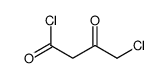
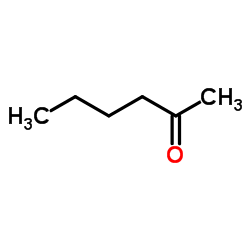
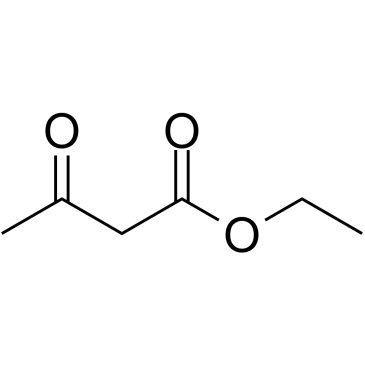
This table presents publicly reported synthetic routes, reaction conditions, reactants and product information of the compound.
|
~66%
Ethyl 2-Chloroa... CAS#:638-07-3 |
| Literature: Terent'ev; Vasil'eva; Mysova; Chakhovskaya Russian Journal of Organic Chemistry, 2004 , vol. 40, # 7 p. 924 - 927 |
|
~%
Ethyl 2-Chloroa... CAS#:638-07-3 |
| Literature: EP2518043 A1, ; Page/Page column 10; 11 ; |
|
~40%
Ethyl 2-Chloroa... CAS#:638-07-3
Learn More
|
| Literature: Russian Journal of Organic Chemistry, , vol. 40, # 7 p. 924 - 927 |
|
~71%
Ethyl 2-Chloroa... CAS#:638-07-3
Learn More
|
| Literature: Terent'ev; Vasil'eva; Mysova; Chakhovskaya Russian Journal of Organic Chemistry, 2004 , vol. 40, # 7 p. 924 - 927 |


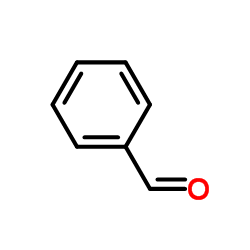
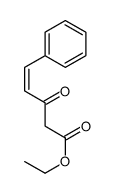
This table lists upstream starting materials and downstream derivative products related to this chemical.
| Precursor 5 | |
|---|---|
| DownStream 9 | |
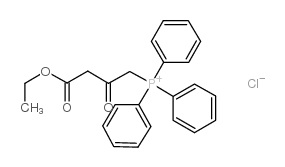 CAS#:106302-03-8
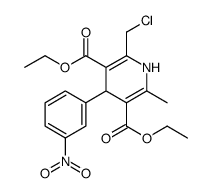 CAS#:105435-14-1
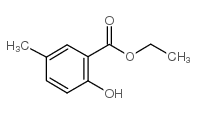 CAS#:34265-58-2
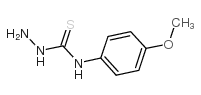 CAS#:40207-03-2
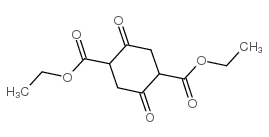 CAS#:787-07-5
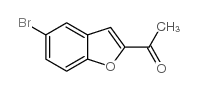 CAS#:38220-75-6
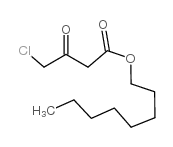 CAS#:41051-21-2
![Ethyl (6-chloroimidazo[1,2-a]pyridin-2-yl)acetate structure](https://image.chemsrc.com/caspic/495/59128-02-8.png) CAS#:59128-02-8
CAS#:59128-02-8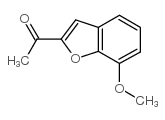 CAS#:43071-52-9
This table shows customs‑related data including HS‑code, tariff and regulatory conditions for import and export.
| HS Code | 2918300090 |
|---|---|
| Summary | 2918300090 other carboxylic acids with aldehyde or ketone function but without other oxygen function, their anhydrides, halides, peroxides, peroxyacids and their derivatives。Supervision conditions:None。VAT:17.0%。Tax rebate rate:9.0%。MFN tariff:6.5%。General tariff:30.0% |
This table lists relevant public references with title, journal and publication metadata for this compound.
|
Construction of a two-strain system for asymmetric reduction of ethyl 4-chloro-3-oxobutanoate to (S)-4-chloro-3-hydroxybutanoate ethyl ester.
Appl. Microbiol. Biotechnol. 70(1) , 40-6, (2006) Escherichia coli M15 (pQE30-car0210) was constructed to express carbonyl reductase (CAR) by cloning the car gene from Candida magnoliae and inserting it into pQE30. By cultivating E. coli M15 (pQE30-c... |
|
|
Purification and characterization of an alpha-haloketone-resistant formate dehydrogenase from Thiobacillus sp. strain KNK65MA, and cloning of the gene.
Biosci. Biotechnol. Biochem. 67(10) , 2145-53, (2003) Thiobacillus sp. strain KNK65MA, which produced an NAD-dependent formate dehydrogenase (FDH) highly resistant to alpha-haloketones, was newly isolated, i.e., the enzyme showed no loss of activity afte... |
|
|
A novel carbonyl reductase from Pichia stipitis for the production of ethyl (S)-4-chloro-3-hydroxybutanoate.
Biotechnol. Lett. 31(4) , 537-42, (2009) An NADPH-dependent carbonyl reductase (PsCR) gene from Pichia stipitis was cloned. It contains an open reading frame of 849 bp encoding 283 amino acids whose sequence had less than 60% identity to kno... |
This table contains target information, in‑vitro & in‑vivo assay data for this compound.
This table collects all English aliases, systematic names and CAS‑related synonyms of the compound.
| 4-chloro ethyl acetoacetate |
| Ethyl4-chloroacetoacetate |
| Ethyl (chloroacetyl)acetate |
| Butanoic acid, 4-chloro-3-oxo-, ethyl ester |
| Butanoic acid, 4-chloro-3-oxo-ethylester |
| Ethyl g-chloroacetoacetate |
| Ethyl-4-chloracetoacetat |
| Ethyl 4-chloroacetoa |
| Ethyl 4-chloro-3-oxobutyrate |
| 4-Chloro-acetoacetic |
| ethyl 2-chloro-acetoacetate |
| Ethyl 4-chloro-3-oxobutanoate |
| MFCD00000939 |
| Ethyl-4chloroacetaacetate |
| Ethyl 2-Chloroacetoacetate |
| Ethyl α-chloroacetoacetate |
| 2-Chloroacetoacetic acid ethyl ester |
| Ethyl 4-chloroacetoacetate |
| EINECS 211-317-0 |
This section contains frequently‑asked‑questions about this compound, including basic parameters, properties, storage conditions and corresponding answers.
| Q: What is the melting point of Ethyl 4-chloroacetoacetate? |
| A: Melting point of Ethyl 4-chloroacetoacetate is -8 °C. |
| Q: What is the LogP of Ethyl 4-chloroacetoacetate? |
| A: LogP of Ethyl 4-chloroacetoacetate is 1.54. |
| Q: What is the polar surface area (PSA) of Ethyl 4-chloroacetoacetate? |
| A: Polar surface area (PSA) of Ethyl 4-chloroacetoacetate is 43.37000. |
| Q: What is the safety information for Ethyl 4-chloroacetoacetate? |
| A: Safety information for Ethyl 4-chloroacetoacetate: S26-S36-S45-S61-S36/37/39. |
| Q: What is the English name of Ethyl 4-chloroacetoacetate? |
| A: The English name of Ethyl 4-chloroacetoacetate is Ethyl 4-chloroacetoacetate. |
| Q: How is the water solubility of Ethyl 4-chloroacetoacetate? |
| A: Water solubility of Ethyl 4-chloroacetoacetate: 47.5 g/L (20 ºC). |
| Q: What are the storage conditions for Ethyl 4-chloroacetoacetate? |
| A: Storage conditions for Ethyl 4-chloroacetoacetate: 2-8°C. |
| Q: What are the downstream products of Ethyl 4-chloroacetoacetate? |
| A: Related downstream products(CAS) of Ethyl 4-chloroacetoacetate: 106302-03-8;105435-14-1;34265-58-2;40207-03-2;787-07-5;38220-75-6;41051-21-2;59128-02-8;43071-52-9. |
| Q: What is the molecular formula of Ethyl 4-chloroacetoacetate? |
| A: Molecular formula of Ethyl 4-chloroacetoacetate is C6H9ClO3. |
| Q: What is the boiling point of Ethyl 4-chloroacetoacetate? |
| A: Boiling point of Ethyl 4-chloroacetoacetate is 235.5±0.0 °C at 760 mmHg. |
This table lists manufacturers and suppliers of this compound, including vendor names and product supply reference information.
| Shanghai Nianxing Industrial Co., Ltd |
| Dayang Chem (Hangzhou) Co., Ltd. |
| Henan Tianfu Chemical Co., Ltd. |
| Zhongshan Xingrui Chemical Co. , Ltd. |
The content on this webpage is sourced from various professional data sources. If you have any questions or concerns regarding the content, please feel free to contact service1@chemsrc.com.
- Shanghai Nianxing Industrial Co., Ltd
- China
- Product Name: Ethyl 2-Chloroacetoacetate
- Price: Check
- Purity: 98.0%
- Delivery: 10 Day
- Contact: Yang
- Email: sales@echemcloud.com
- Dayang Chem (Hangzhou) Co., Ltd.
- China
- Product Name: Ethyl 4-chloroacetoacetate
- Price: $Inquiry/100g $Inquiry/1kg $Inquiry/100kg $Inquiry/1000kg
- Purity: 98.0%
- Delivery: Inquiry
- Contact: Ms Wang
- Email: enquiry@dycnchem.com
- Henan Tianfu Chemical Co., Ltd.
- China
- Product Name: Ethyl 4-Chloroacetoacetate
- Price: $Inquiry/1kg $Inquiry/25kg $Inquiry/1000kg $Inquiry/10ton
- Purity: 99.0%
- Delivery: Inquiry
- Contact: Anson
- Email: info@tianfuchem.com
- Zhongshan Xingrui Chemical Co. , Ltd.
- China
- Product Name: Ethyl 2-Chloroacetoacetate
- Price: ¥Inquiry/25kg
- Purity: 99.0%
- Delivery: Inquiry
- Contact: Wang Jie

- Email: 3096638339@qq.com
Get all suppliers and price by the below link: