Pivalic acid

Pivalic acid structure
|
Common Name | Pivalic acid | ||
|---|---|---|---|---|
| CAS Number | 75-98-9 | Molecular Weight | 102.132 | |
| Density | 0.905 | Boiling Point | 163-164 ºC | |
| Molecular Formula | C5H10O2 | Melting Point | 32-35 °C(lit.) | |
| MSDS | Chinese USA | Flash Point | 63 ºC | |
| Symbol |


GHS05, GHS07 |
Signal Word | Danger | |
This table lists Chinese names, IUPAC names and various aliases of this chemical substance.
| Name | pivalic acid |
|---|---|
| Synonym | More Synonyms |
This table shows physicochemical parameters including melting point, boiling point, density, solubility and optical rotation. Missing data is marked as N/A.
| Density | 0.905 |
|---|---|
| Boiling Point | 163-164 ºC |
| Melting Point | 32-35 °C(lit.) |
| Molecular Formula | C5H10O2 |
| Molecular Weight | 102.132 |
| Flash Point | 63 ºC |
| Exact Mass | 102.068077 |
| PSA | 37.30000 |
| LogP | 0.94 |
| Vapour density | 3.6 (vs air) |
| Vapour Pressure | 0.9±0.6 mmHg at 25°C |
| Index of Refraction | 1.420 |
| InChIKey | IUGYQRQAERSCNH-UHFFFAOYSA-N |
| SMILES | CC(C)(C)C(=O)O |
| Storage condition | 2-8°C |
| Water Solubility | 25 g/L (20 ºC) |
This table provides MSDS information including hazard classification, first‑aid, fire‑fighting, spill handling, operation and storage instructions.
This table summarizes toxicological test data, acute & chronic toxicity and ecological hazard parameters for this chemical.
CHEMICAL IDENTIFICATION
HEALTH HAZARD DATAACUTE TOXICITY DATA
|
This table covers safety warnings, protective measures, incompatible substances and disposal guidelines for this compound.
| Symbol |
GHS05, GHS07 |
|---|---|
| Signal Word | Danger |
| Hazard Statements | H302 + H312-H314 |
| Precautionary Statements | P280-P305 + P351 + P338-P310 |
| Personal Protective Equipment | Eyeshields;Faceshields;full-face particle respirator type N100 (US);Gloves;respirator cartridge type N100 (US);type P1 (EN143) respirator filter;type P3 (EN 143) respirator cartridges |
| Hazard Codes | C:Corrosive |
| Risk Phrases | R21/22;R34 |
| Safety Phrases | S26-S36/37/39-S45 |
| RIDADR | UN 3261 8/PG 2 |
| WGK Germany | 1 |
| RTECS | TO7700000 |
| Packaging Group | II |
| Hazard Class | 8 |
| HS Code | 2915600000 |
This table presents publicly reported synthetic routes, reaction conditions, reactants and product information of the compound.
This table lists upstream starting materials and downstream derivative products related to this chemical.
| Precursor 10 | |
|---|---|
| DownStream 10 | |
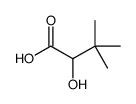 CAS#:4026-20-4
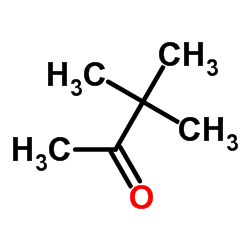 CAS#:75-97-8
 CAS#:630-19-3
 CAS#:75-84-3
 CAS#:590-50-1
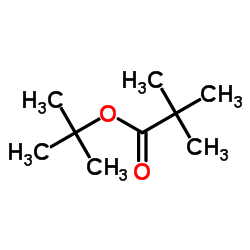 CAS#:16474-43-4
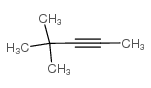 CAS#:999-78-0
 CAS#:630-18-2
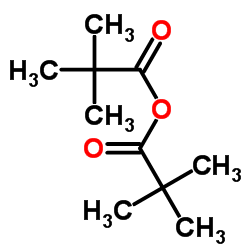 CAS#:1538-75-6
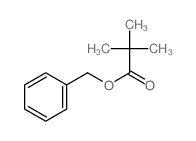 CAS#:2094-69-1
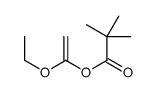 CAS#:111072-04-9
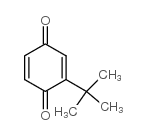 CAS#:3602-55-9
 CAS#:55107-14-7
 CAS#:598-98-1
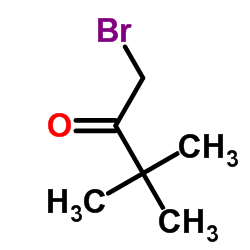 CAS#:5469-26-1
 CAS#:3377-92-2
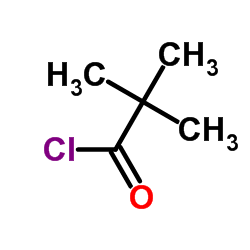 CAS#:3282-30-2
 CAS#:877675-72-4
 CAS#:55561-02-9
This table shows customs‑related data including HS‑code, tariff and regulatory conditions for import and export.
| HS Code | 2915900090 |
|---|---|
| Summary | 2915900090 other saturated acyclic monocarboxylic acids and their anhydrides, halides, peroxides and peroxyacids; their halogenated, sulphonated, nitrated or nitrosated derivatives VAT:17.0% Tax rebate rate:9.0% Supervision conditions:AB(certificate of inspection for goods inward,certificate of inspection for goods outward) MFN tariff:5.5% General tariff:30.0% |
This table lists relevant public references with title, journal and publication metadata for this compound.
|
Fat and starch as additive risk factors for milk fat depression in dairy diets containing corn dried distillers grains with solubles.
J. Dairy Sci. 98(3) , 1903-14, (2015) Two experiments were conducted to evaluate the additive effects of starch and fat as risk factors associated with milk fat depression in dairy diets containing corn dried distillers grains with solubl... |
|
|
5(6)-carboxyfluorescein revisited: new protecting group, separation of isomers, and their spectral properties on oligonucleotides.
Bioconjug. Chem. 18(5) , 1691-6, (2007) Pentafluorophenyl esters of 5- and 6-carboxyfluorescein-3',6'-O-dipivalate can be easily separated in multigram quantities by column chromatography. The individual isomers were converted into stable p... |
|
|
Chemically engineering ligand selectivity at the free fatty acid receptor 2 based on pharmacological variation between species orthologs.
FASEB J. 26 , 4951-65, (2012) When it is difficult to develop selective ligands within a family of related G-protein-coupled receptors (GPCRs), chemically engineered receptors activated solely by synthetic ligands (RASSLs) are use... |
This table contains target information, in‑vitro & in‑vivo assay data for this compound.
This table collects all English aliases, systematic names and CAS‑related synonyms of the compound.
| tert-Pentanoic acid |
| a,a-Dimethylpropionic Acid |
| Propanoic acid,2,2-dimethyl |
| 2,2-dimethylpropionic acid |
| EINECS 200-922-5 |
| Acetic acid,trimethyl |
| MFCD00004194 |
| trimethyl-acetic acid |
| 2,2-Dimethylpropanoic acid |
| Neopentanoic acid |
| Pivalic acid |
| trimethylacetic acid |
| 2,2,2-trimethylacetic acid |
| 2, 2-Dimethylpropanoic acid |
This section contains frequently‑asked‑questions about this compound, including basic parameters, properties, storage conditions and corresponding answers.
| Q: What English synonyms does pivalic acid have? |
| A: English synonyms of pivalic acid: tert-Pentanoic acid, a,a-Dimethylpropionic Acid, Propanoic acid,2,2-dimethyl, 2,2-dimethylpropionic acid, EINECS 200-922-5, Acetic acid,trimethyl, MFCD00004194, trimethyl-acetic acid, 2,2-Dimethylpropanoic acid, Neopentanoic acid, Pivalic acid, trimethylacetic acid, 2,2,2-trimethylacetic acid, 2, 2-Dimethylpropanoic acid. |
| Q: How is the water solubility of pivalic acid? |
| A: Water solubility of pivalic acid: 25 g/L (20 ºC). |
| Q: What is the boiling point of pivalic acid? |
| A: Boiling point of pivalic acid is 163-164 ºC. |
| Q: What is the CAS number of pivalic acid? |
| A: CAS number of pivalic acid is 75-98-9. |
| Q: What is the molecular weight of pivalic acid? |
| A: Molecular weight of pivalic acid is 102.132. |
| Q: What is the English name of pivalic acid? |
| A: The English name of pivalic acid is pivalic acid. |
| Q: What is the InChIKey of pivalic acid? |
| A: InChIKey of pivalic acid is IUGYQRQAERSCNH-UHFFFAOYSA-N. |
| Q: What are the storage conditions for pivalic acid? |
| A: Storage conditions for pivalic acid: 2-8°C. |
| Q: What is the LogP of pivalic acid? |
| A: LogP of pivalic acid is 0.94. |
| Q: What are the upstream materials of pivalic acid? |
| A: Related upstream materials(CAS) of pivalic acid: 4026-20-4;75-97-8;630-19-3;75-84-3;590-50-1;16474-43-4;999-78-0;630-18-2;1538-75-6;2094-69-1. |
This table lists manufacturers and suppliers of this compound, including vendor names and product supply reference information.
| Shanghai Nianxing Industrial Co., Ltd |
| Dayang Chem (Hangzhou) Co., Ltd. |
| Henan Tianfu Chemical Co., Ltd. |