Ethane,1,1,1,2,2-pentachloro
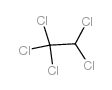
Ethane,1,1,1,2,2-pentachloro structure
|
Common Name | Ethane,1,1,1,2,2-pentachloro | ||
|---|---|---|---|---|
| CAS Number | 76-01-7 | Molecular Weight | 202.29400 | |
| Density | 1.68 g/mL at 25 °C(lit.) | Boiling Point | 161-162 °C(lit.) | |
| Molecular Formula | C2HCl5 | Melting Point | -29--22°C | |
| MSDS | Chinese USA | Flash Point | 162°C | |
| Symbol |


GHS07, GHS08, GHS09 |
Signal Word | Danger | |
This table lists Chinese names, IUPAC names and various aliases of this chemical substance.
| Name | pentachloroethane |
|---|---|
| Synonym | More Synonyms |
This table shows physicochemical parameters including melting point, boiling point, density, solubility and optical rotation. Missing data is marked as N/A.
| Density | 1.68 g/mL at 25 °C(lit.) |
|---|---|
| Boiling Point | 161-162 °C(lit.) |
| Melting Point | -29--22°C |
| Molecular Formula | C2HCl5 |
| Molecular Weight | 202.29400 |
| Flash Point | 162°C |
| Exact Mass | 199.85200 |
| LogP | 3.16030 |
| Index of Refraction | n20/D 1.502(lit.) |
| InChIKey | BNIXVQGCZULYKV-UHFFFAOYSA-N |
| SMILES | ClC(Cl)C(Cl)(Cl)Cl |
| Stability | Stable. Non-flammable. Incompatible with strong oxidizing agents. May react violently with alkalies or metals. |
This table provides MSDS information including hazard classification, first‑aid, fire‑fighting, spill handling, operation and storage instructions.
This table summarizes toxicological test data, acute & chronic toxicity and ecological hazard parameters for this chemical.
CHEMICAL IDENTIFICATION
HEALTH HAZARD DATAACUTE TOXICITY DATA
MUTATION DATA
|
This table covers safety warnings, protective measures, incompatible substances and disposal guidelines for this compound.
| Symbol |
GHS07, GHS08, GHS09 |
|---|---|
| Signal Word | Danger |
| Hazard Statements | H302-H351-H372-H411 |
| Precautionary Statements | P273-P301 + P312 + P330-P314-P391-P501 |
| Personal Protective Equipment | Eyeshields;Faceshields;full-face respirator (US);Gloves;multi-purpose combination respirator cartridge (US);type ABEK (EN14387) respirator filter |
| Hazard Codes | T,N |
| Risk Phrases | R40;R48/23;R51/53 |
| Safety Phrases | S23-S36/37-S45-S61-S26 |
| RIDADR | UN 1669 6.1/PG 2 |
| WGK Germany | 2 |
| RTECS | KI6300000 |
| Packaging Group | II |
| Hazard Class | 6.1 |
This table presents publicly reported synthetic routes, reaction conditions, reactants and product information of the compound.
This table lists upstream starting materials and downstream derivative products related to this chemical.
| Precursor 10 | |
|---|---|
| DownStream 10 | |
 CAS#:71-55-6
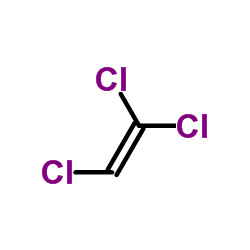 CAS#:79-01-6
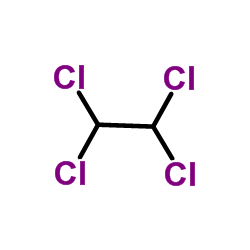 CAS#:79-34-5
 CAS#:156-60-5
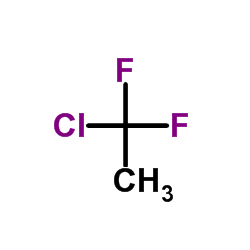 CAS#:75-68-3
 CAS#:505-60-2
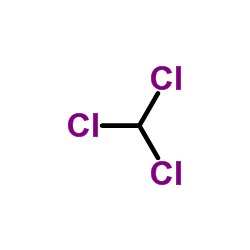 CAS#:67-66-3
 CAS#:74-86-2
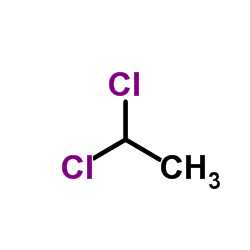 CAS#:75-34-3
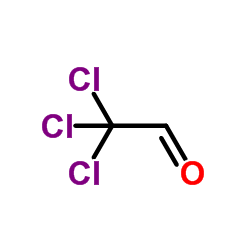 CAS#:75-87-6
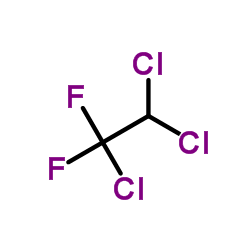 CAS#:354-21-2
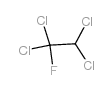 CAS#:354-14-3
 CAS#:354-23-4
 CAS#:354-25-6
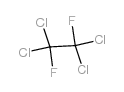 CAS#:76-12-0
 CAS#:14049-36-6
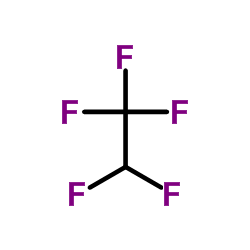 CAS#:354-33-6
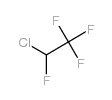 CAS#:2837-89-0
 CAS#:18356-71-3
 CAS#:14965-52-7
This table lists relevant public references with title, journal and publication metadata for this compound.
|
QSPR modeling of octanol/water partition coefficient for vitamins by optimal descriptors calculated with SMILES.
Eur. J. Med. Chem. 43 , 714-40, (2008) Simplified molecular input line entry system (SMILES) has been utilized in constructing quantitative structure-property relationships (QSPR) for octanol/water partition coefficient of vitamins and org... |
|
|
Development of QSAR models for predicting hepatocarcinogenic toxicity of chemicals.
Eur. J. Med. Chem. 44 , 3658-64, (2009) A dataset comprising 55 chemicals with hepatocarcinogenic potency indices was collected from the Carcinogenic Potency Database with the aim of developing QSAR models enabling prediction of the above u... |
|
|
Enzyme-catalyzed dehalogenation of pentachloroethane: why F87W-cytochrome P450cam is faster than wild type.
Protein Eng. 8(8) , 801-7, (1995) Under anaerobic conditions, cytochromes P450 can reductively dehalogenate heavily halogenated hydrocarbons, such as one- and two-carbon organic solvents. This catalytic capacity has drawn attention to... |
This table contains target information, in‑vitro & in‑vivo assay data for this compound.
This table collects all English aliases, systematic names and CAS‑related synonyms of the compound.
| MFCD00000846 |
| Pentachloroethane |
| EINECS 200-925-1 |
This section contains frequently‑asked‑questions about this compound, including basic parameters, properties, storage conditions and corresponding answers.
| Q: What are the upstream materials of pentachloroethane? |
| A: Related upstream materials(CAS) of pentachloroethane: 71-55-6;79-01-6;79-34-5;156-60-5;75-68-3;505-60-2;67-66-3;74-86-2;75-34-3;75-87-6. |
| Q: What is the boiling point of pentachloroethane? |
| A: Boiling point of pentachloroethane is 161-162 °C(lit.). |
| Q: What is the LogP of pentachloroethane? |
| A: LogP of pentachloroethane is 3.16030. |
| Q: What is the molecular weight of pentachloroethane? |
| A: Molecular weight of pentachloroethane is 202.29400. |
| Q: What is the safety information for pentachloroethane? |
| A: Safety information for pentachloroethane: S23-S36/37-S45-S61-S26. |
| Q: What is the English name of pentachloroethane? |
| A: The English name of pentachloroethane is pentachloroethane. |
| Q: What is the melting point of pentachloroethane? |
| A: Melting point of pentachloroethane is -29--22°C. |
| Q: What is the InChIKey of pentachloroethane? |
| A: InChIKey of pentachloroethane is BNIXVQGCZULYKV-UHFFFAOYSA-N. |
| Q: What are the downstream products of pentachloroethane? |
| A: Related downstream products(CAS) of pentachloroethane: 354-21-2;354-14-3;354-23-4;354-25-6;76-12-0;14049-36-6;354-33-6;2837-89-0;18356-71-3;14965-52-7. |
| Q: What is the SMILES notation of pentachloroethane? |
| A: SMILES notation of pentachloroethane is ClC(Cl)C(Cl)(Cl)Cl. |
This table lists manufacturers and suppliers of this compound, including vendor names and product supply reference information.
| Dayang Chem (Hangzhou) Co., Ltd. |