hexestrol

hexestrol structure
|
Common Name | hexestrol | ||
|---|---|---|---|---|
| CAS Number | 84-16-2 | Molecular Weight | 270.366 | |
| Density | 1.1±0.1 g/cm3 | Boiling Point | 399.5±22.0 °C at 760 mmHg | |
| Molecular Formula | C18H22O2 | Melting Point | 186 °C | |
| MSDS | Chinese USA | Flash Point | 181.6±16.9 °C | |
| Symbol |

GHS08 |
Signal Word | Danger | |
Use of hexestrolHexestrol is a nonsteroidal synthetic estrogen. Hexestrol can be used for the research of the diseases caused by estrogen deficiencym, and it also can increase the weight of cattle[1][2]. |
This table lists Chinese names, IUPAC names and various aliases of this chemical substance.
| Name | hexestrol |
|---|---|
| Synonym | More Synonyms |
This table contains bioactivity, target information and biological‑assay experimental data of this compound.
| Description | Hexestrol is a nonsteroidal synthetic estrogen. Hexestrol can be used for the research of the diseases caused by estrogen deficiencym, and it also can increase the weight of cattle[1][2]. |
|---|---|
| Related Catalog | |
| In Vivo | Hexestrol (3 and 6 mg/kg; i.p. once daily for 30 days) has a not significant influence in the ovaries from mice at the dose of 3 mg/kg[2]. Animal Model: Mus musculus (90-120 days, 25-50 g)[2] Dosage: 3, 6 mg/kg (adopted the same dose used to increase weight gain in cattle) Administration: I.p. once daily for 30 days Result: Numerous follicles in different stages of development were found at the dose of 3 mg/kg in the ovaries. Not detected the corpora lutea (CL) at the dose of 6 mg/kg. |
| References |
This table shows physicochemical parameters including melting point, boiling point, density, solubility and optical rotation. Missing data is marked as N/A.
| Density | 1.1±0.1 g/cm3 |
|---|---|
| Boiling Point | 399.5±22.0 °C at 760 mmHg |
| Melting Point | 186 °C |
| Molecular Formula | C18H22O2 |
| Molecular Weight | 270.366 |
| Flash Point | 181.6±16.9 °C |
| Exact Mass | 270.161987 |
| PSA | 40.46000 |
| LogP | 4.98 |
| Vapour Pressure | 0.0±1.0 mmHg at 25°C |
| Index of Refraction | 1.582 |
| InChIKey | PBBGSZCBWVPOOL-HDICACEKSA-N |
| SMILES | CCC(c1ccc(O)cc1)C(CC)c1ccc(O)cc1 |
This table provides MSDS information including hazard classification, first‑aid, fire‑fighting, spill handling, operation and storage instructions.
This table summarizes toxicological test data, acute & chronic toxicity and ecological hazard parameters for this chemical.
CHEMICAL IDENTIFICATION
HEALTH HAZARD DATAACUTE TOXICITY DATA
MUTATION DATA
|
This table covers safety warnings, protective measures, incompatible substances and disposal guidelines for this compound.
| Symbol |
GHS08 |
|---|---|
| Signal Word | Danger |
| Hazard Statements | H350 |
| Precautionary Statements | P201-P308 + P313 |
| Personal Protective Equipment | Eyeshields;full-face particle respirator type N100 (US);Gloves;respirator cartridge type N100 (US);type P1 (EN143) respirator filter;type P3 (EN 143) respirator cartridges |
| Hazard Codes | T: Toxic; |
| Risk Phrases | 45 |
| Safety Phrases | S53-S45 |
| RIDADR | NONH for all modes of transport |
| WGK Germany | 2 |
| RTECS | SL0560850 |
This table presents publicly reported synthetic routes, reaction conditions, reactants and product information of the compound.
This table lists upstream starting materials and downstream derivative products related to this chemical.
| Precursor 8 | |
|---|---|
| DownStream 6 | |
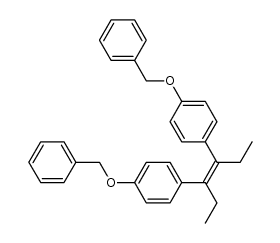 CAS#:1160112-09-3
![Phenol,4-[(1R,2S)-1-ethyl-2-(4-methoxyphenyl)butyl]-, rel Structure](https://image.chemsrc.com/caspic/483/13026-26-1.png) CAS#:13026-26-1
CAS#:13026-26-1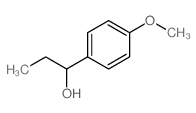 CAS#:5349-60-0
 CAS#:56-53-1
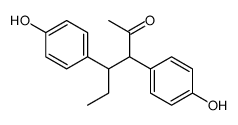 CAS#:101564-54-9
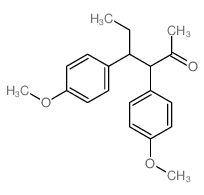 CAS#:5424-88-4
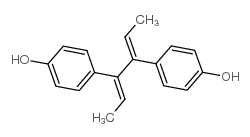 CAS#:13029-44-2
 CAS#:24705-61-1
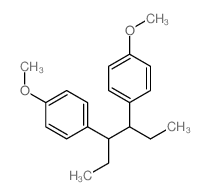 CAS#:130-78-9
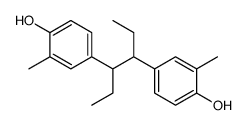 CAS#:130-73-4
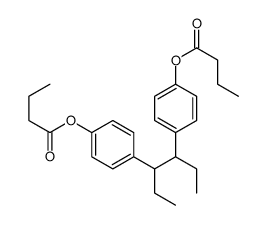 CAS#:36557-18-3
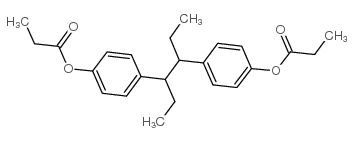 CAS#:4825-53-0
![2-amino-4-[4-(3-amino-4-hydroxy-phenyl)hexan-3-yl]phenol structure](https://image.chemsrc.com/caspic/175/41172-52-5.png) CAS#:41172-52-5
CAS#:41172-52-5This table lists relevant public references with title, journal and publication metadata for this compound.
|
Steatohepatitis-inducing drugs trigger cytokeratin cross-links in hepatocytes. Possible contribution to Mallory-Denk body formation.
Toxicol. In Vitro 22(6) , 1511-9, (2008) Mallory-Denk bodies (MDB) are hepatocyte inclusions containing cytokeratin 8 (CK8) which can develop, along with other steatohepatitis lesions, in patients treated with amiodarone, perhexiline maleate... |
|
|
Effects of hexestrol on mouse ovarian morphology and ovulation.
Maturitas 60(2) , 153-7, (2008) To analyze histological aspects of ovaries as well as the ovulation of adult mice treated with the anabolic agent hexestrol.Thirty adult mice were divided into three groups of 10 animals each: (GI) th... |
|
|
Positive and negative discrimination of estrogen receptor agonists and antagonists using site-specific DNA recombinase fusion proteins.
Mol. Endocrinol. 12(8) , 1120-32, (1998) Activation of the estrogen receptor (ER) by hormone involves at least two steps. First, hormone binding initially relieves repression, a property imposed on ER in cis by its ligand-binding domain (EBD... |
This table contains target information, in‑vitro & in‑vivo assay data for this compound.
This table collects all English aliases, systematic names and CAS‑related synonyms of the compound.
| Synestrol |
| meso-3,4-Bis-(4-hydroxy-phenyl)-hexan |
| Hexoestrolum |
| hexestrol |
| Synthovo |
| Hexron |
| (R*,S*)-4,4'-(1,2-diethyl-1,2-ethanediyl)bis-phenol |
| Extra-Plex |
| Vitestrol |
| Estronal |
| Sinestrol |
| Estrifar |
| EINECS 201-518-1 |
| 4,4'-(3,4-Hexanediyl)diphenol |
| MFCD00068996 |
| (R*,S*)-4,4'-(1,2-Diethyl-1,2-ethanediyl)bisphenol |
| 4,4'-(1,2-Diethylethylene)diphenol |
| meso-3,4-bis-(4-hydroxyphenyl)hexane |
| Estra-Plex |
| 4,4'-hexane-3,4-diyldiphenol |
| γ,δ-Di(p-hydroxyphenyl)-hexane |
This section contains frequently‑asked‑questions about this compound, including basic parameters, properties, storage conditions and corresponding answers.
| Q: What is the CAS number of hexestrol? |
| A: CAS number of hexestrol is 84-16-2. |
| Q: What are the downstream products of hexestrol? |
| A: Related downstream products(CAS) of hexestrol: 13026-26-1;130-78-9;130-73-4;36557-18-3;4825-53-0;41172-52-5. |
| Q: What are the upstream materials of hexestrol? |
| A: Related upstream materials(CAS) of hexestrol: 1160112-09-3;13026-26-1;5349-60-0;56-53-1;101564-54-9;5424-88-4;13029-44-2;24705-61-1. |
| Q: What are the uses of hexestrol? |
| A: Main uses of hexestrol: Hexestrol is a nonsteroidal synthetic estrogen. Hexestrol can be used for the research of the diseases caused by estrogen deficiencym, and it also can increase the weight of cattle[1][2]. |
| Q: What is the English name of hexestrol? |
| A: The English name of hexestrol is hexestrol. |
| Q: What is the boiling point of hexestrol? |
| A: Boiling point of hexestrol is 399.5±22.0 °C at 760 mmHg. |
| Q: What is the LogP of hexestrol? |
| A: LogP of hexestrol is 4.98. |
| Q: What is the InChIKey of hexestrol? |
| A: InChIKey of hexestrol is PBBGSZCBWVPOOL-HDICACEKSA-N. |
| Q: What is the molecular formula of hexestrol? |
| A: Molecular formula of hexestrol is C18H22O2. |
| Q: What is the melting point of hexestrol? |
| A: Melting point of hexestrol is 186 °C. |
This table lists manufacturers and suppliers of this compound, including vendor names and product supply reference information.
| Shanghai Nianxing Industrial Co., Ltd |