Diisobutyl phthalate

Diisobutyl phthalate structure
|
Common Name | Diisobutyl phthalate | ||
|---|---|---|---|---|
| CAS Number | 84-69-5 | Molecular Weight | 278.344 | |
| Density | 1.0±0.1 g/cm3 | Boiling Point | 295.3±8.0 °C at 760 mmHg | |
| Molecular Formula | C16H22O4 | Melting Point | -64 °C | |
| MSDS | Chinese USA | Flash Point | 153.9±7.9 °C | |
| Symbol |


GHS08, GHS09 |
Signal Word | Danger | |
This table lists Chinese names, IUPAC names and various aliases of this chemical substance.
| Name | diisobutyl phthalate |
|---|---|
| Synonym | More Synonyms |
This table shows physicochemical parameters including melting point, boiling point, density, solubility and optical rotation. Missing data is marked as N/A.
| Density | 1.0±0.1 g/cm3 |
|---|---|
| Boiling Point | 295.3±8.0 °C at 760 mmHg |
| Melting Point | -64 °C |
| Molecular Formula | C16H22O4 |
| Molecular Weight | 278.344 |
| Flash Point | 153.9±7.9 °C |
| Exact Mass | 278.151794 |
| PSA | 52.60000 |
| LogP | 4.46 |
| Vapour Pressure | 0.0±0.6 mmHg at 25°C |
| Index of Refraction | 1.497 |
| InChIKey | MGWAVDBGNNKXQV-UHFFFAOYSA-N |
| SMILES | CC(C)COC(=O)c1ccccc1C(=O)OCC(C)C |
| Water Solubility | Insoluble |
| Freezing Point | -50℃ |
This table provides MSDS information including hazard classification, first‑aid, fire‑fighting, spill handling, operation and storage instructions.
This table summarizes toxicological test data, acute & chronic toxicity and ecological hazard parameters for this chemical.
CHEMICAL IDENTIFICATION
HEALTH HAZARD DATAACUTE TOXICITY DATA
|
This table covers safety warnings, protective measures, incompatible substances and disposal guidelines for this compound.
| Symbol |
GHS08, GHS09 |
|---|---|
| Signal Word | Danger |
| Hazard Statements | H360Df-H410 |
| Precautionary Statements | P201-P273-P308 + P313-P391-P501 |
| Hazard Codes | Xn:Harmful |
| Risk Phrases | R50/53;R62;R63 |
| Safety Phrases | S60-S61-S36/37 |
| RIDADR | UN 3082 9/PG 3 |
| WGK Germany | 2 |
| RTECS | TI1225000 |
| Packaging Group | III |
| Hazard Class | 9 |
| HS Code | 29173400 |
This table presents publicly reported synthetic routes, reaction conditions, reactants and product information of the compound.
|
~%
Diisobutyl phthalate CAS#:84-69-5 |
| Literature: US2091241 , ; |
|
~%
Diisobutyl phthalate CAS#:84-69-5 |
| Literature: Archiv der Pharmazie (Weinheim, Germany), , vol. 287, p. 457 |
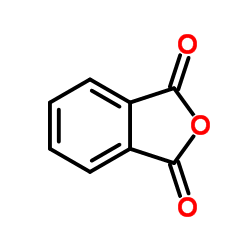
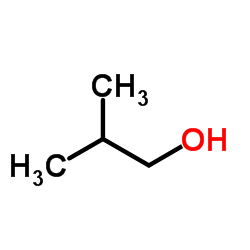

This table lists upstream starting materials and downstream derivative products related to this chemical.
| Precursor 3 | |
|---|---|
| DownStream 1 | |
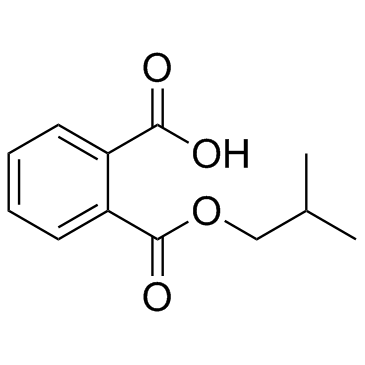 CAS#:30833-53-5
This table shows customs‑related data including HS‑code, tariff and regulatory conditions for import and export.
| HS Code | 2917349000 |
|---|---|
| Summary | 2917349000 other esters of orthophthalic acid。Supervision conditions:None。VAT:17.0%。Tax rebate rate:9.0%。MFN tariff:6.5%。General tariff:30.0% |
This table lists relevant public references with title, journal and publication metadata for this compound.
|
Analysis of phthalates in milk and milk products by liquid chromatography coupled to quadrupole Orbitrap high-resolution mass spectrometry.
J. Chromatogr. A. 1362 , 110-8, (2014) A new analytical method was developed and validated for simultaneous analysis of 27 phthalates in milk and milk products. Response surface methodology was employed to optimize a quick, easy, cheap, ef... |
|
|
Rapid screening and identification of multi-class substances of very high concern in textiles using liquid chromatography-hybrid linear ion trap orbitrap mass spectrometry.
J. Chromatogr. A. 1386 , 22-30, (2015) A new analytical method was established and validated for the analysis of 19 substances of very high concern (SVHCs) in textiles, including phthalic acid esters (PAEs), organotins (OTs), perfluorochem... |
|
|
Development and application of a non-targeted extraction method for the analysis of migrating compounds from plastic baby bottles by GC-MS.
Food Addit. Contam. Part A. Chem. Anal. Control. Expo. Risk Assess. 31(12) , 2090-102, (2014) In 2011, the European Union prohibited the production of polycarbonate (PC) baby bottles due to the toxic effects of the PC monomer bisphenol-A. Therefore, baby bottles made of alternative materials, ... |
This table contains target information, in‑vitro & in‑vivo assay data for this compound.
|
Name: Luminescence-based cell-based primary high throughput screening assay to identify ago...
Source: The Scripps Research Institute Molecular Screening Center
Target: mu-type opioid receptor isoform MOR-1 [Homo sapiens]
External Id: OPRM1-OPRD1_AG_LUMI_1536_1X%ACT PRUN
|
|
Name: Cell Viability Profiling of Human Lymphoblast Cell Lines
Source: NCGC
Target: N/A
External Id: HAPV101
|
|
Name: Caspase-3/7 Activation Profiling of Human Lymphoblast Cell Lines
Source: NCGC
Target: N/A
External Id: HAPC101
|
|
Name: Fluorescence-based cell-based primary high throughput screening assay to identify ago...
Source: The Scripps Research Institute Molecular Screening Center
Target: muscarinic acetylcholine receptor M1 [Homo sapiens]
External Id: CHRM1_AG_FLUO8_1536_1X%ACT PRUN
|
|
Name: Cytochrome P450 Family 1 Subfamily A Member 2 (CYP1A2) small molecule antagonists: lu...
Source: 824
External Id: CYP273
|
|
Name: Primary Screen Inhibitors of CD40 Signaling in BL2 Cells Measured in Cell-Based Syste...
Source: Broad Institute
Target: N/A
External Id: 7124-01_Inhibitor_SinglePoint_HTS_Activity
|
|
Name: Fluorescence-based cell-based primary high throughput screening assay to identify pos...
Source: The Scripps Research Institute Molecular Screening Center
Target: muscarinic acetylcholine receptor M1 [Homo sapiens]
External Id: CHRM1_PAM_FLUO8_1536_1X%ACT PRUN
|
|
Name: Fluorescence polarization-based biochemical high throughput primary assay to identify...
Source: The Scripps Research Institute Molecular Screening Center
Target: RecName: Full=Sialate O-acetylesterase; AltName: Full=H-Lse; AltName: Full=Sialic acid-specific 9-O-acetylesterase; Flags: Precursor [Homo sapiens]
External Id: SIAE_INH_FP_1536_1X%INH PRUN
|
|
Name: p53 small molecule agonists, cell-based qHTS assay: qHTS cell viability counter scree...
Source: 824
Target: N/A
External Id: P53600
|
|
Name: p53 small molecule agonists, cell-based qHTS assay with rat liver microsomes: qHTS ce...
Source: 824
Target: N/A
External Id: P53MS958
|
This table collects all English aliases, systematic names and CAS‑related synonyms of the compound.
| Phthaloyl dichloride |
| MFCD01861606 |
| EINECS 201-553-2 |
| Phthalyl chloride |
| bis(2-methylpropyl) benzene-1,2-dicarboxylate |
| Phthalic dichloride |
| 1,2-Benzenedicarbonyl dichloride |
| tetraphthaloyl chloride |
| Phthalic acid dichloride |
| diisobutyl 1,2-benzenedicarboxylate |
| 1,2-Benzenedicarboxylic acid, bis(2-methylpropyl) ester |
| di-l-butyl phthalate (DIBP) |
| Diisobutyl phthalate |
| phthaloyl chloride |
| Phthalyl dichloride |
| benzene-1,2-dicarbonyl dichloride |
| Phthalic chloride |
This section contains frequently‑asked‑questions about this compound, including basic parameters, properties, storage conditions and corresponding answers.
| Q: What is the English name of diisobutyl phthalate? |
| A: The English name of diisobutyl phthalate is diisobutyl phthalate. |
| Q: What is the InChIKey of diisobutyl phthalate? |
| A: InChIKey of diisobutyl phthalate is MGWAVDBGNNKXQV-UHFFFAOYSA-N. |
| Q: What are the downstream products of diisobutyl phthalate? |
| A: Related downstream products(CAS) of diisobutyl phthalate: 30833-53-5. |
| Q: What is the safety information for diisobutyl phthalate? |
| A: Safety information for diisobutyl phthalate: S60-S61-S36/37. |
| Q: What is the CAS number of diisobutyl phthalate? |
| A: CAS number of diisobutyl phthalate is 84-69-5. |
| Q: What is the melting point of diisobutyl phthalate? |
| A: Melting point of diisobutyl phthalate is -64 °C. |
| Q: What is the molecular weight of diisobutyl phthalate? |
| A: Molecular weight of diisobutyl phthalate is 278.344. |
| Q: What are the upstream materials of diisobutyl phthalate? |
| A: Related upstream materials(CAS) of diisobutyl phthalate: 85-44-9;78-83-1;84-66-2. |
| Q: What is the polar surface area (PSA) of diisobutyl phthalate? |
| A: Polar surface area (PSA) of diisobutyl phthalate is 52.60000. |
| Q: What is the LogP of diisobutyl phthalate? |
| A: LogP of diisobutyl phthalate is 4.46. |
This table lists manufacturers and suppliers of this compound, including vendor names and product supply reference information.
| Shanghai Nianxing Industrial Co., Ltd |
| Dayang Chem (Hangzhou) Co., Ltd. |
| Henan Tianfu Chemical Co., Ltd. |