Chitosan
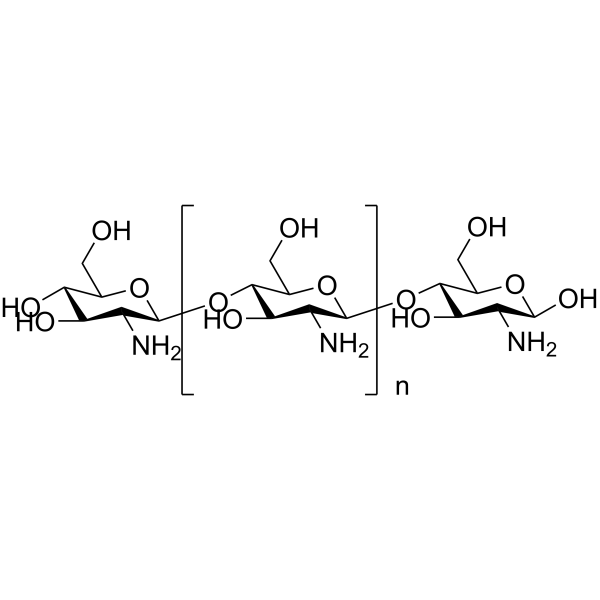
Chitosan structure
|
Common Name | Chitosan | ||
|---|---|---|---|---|
| CAS Number | 9012-76-4 | Molecular Weight | 161.16 (monomer) | |
| Density | 1.75g/cm3 | Boiling Point | N/A | |
| Molecular Formula | (C6H13NO5)n | Melting Point | 88ºC | |
| MSDS | Chinese USA | Flash Point | N/A | |
Use of ChitosanChitosan is a natural polycationic linear polysaccharide derived from chitin. |
This table lists Chinese names, IUPAC names and various aliases of this chemical substance.
| Name | chitosan |
|---|---|
| Synonym | More Synonyms |
This table contains bioactivity, target information and biological‑assay experimental data of this compound.
| Description | Chitosan is a natural polycationic linear polysaccharide derived from chitin. |
|---|---|
| Related Catalog | |
| In Vitro | Chitosans are recognized as versatile biomaterials because of their non-toxicity, low allergenicity, biocompatibility and biodegradability. Chitosan is reported to have other biological properties, such as antitumor, antimicrobial, and antioxidant activities. It can be used in water treatment, wound-healing materials, pharmaceutical excipient or drug carrier, obesity treatment and as a scaffold for tissue engineering[1]. Antimicrobial activity of chitosan has been demonstrated against many bacteria, filamentous fungi and yeasts. Chitosan has wide spectrum of activity and high killing rate against Gram-positive and Gram-negative bacteria, but lower toxicity toward mammalian cells[2]. Chitosan exhibits antitumor activity against different types of cancer. For example, chitosan decreases adhesion of primary melanoma A375 cell line and decreases proliferation of primary melanoma SKMEL28 cell line, it has potent pro-apoptotic effects against RPMI7951, a metastatic melanoma cell line[3]. Chitosan and its derivatives act as antioxidants by scavenging oxygen radicals such as hydroxyl, superoxide, alkyl as well as highly stable DPPH radicals in vitro[4]. |
| In Vivo | Chitosan treatment dramatically increases lifespan and inhibits tumor metastasis especially in treatment groups of the low-molecular weight compound[5]. Chitosan has some apparent treatment effects on rat PCP by reducing HSP70 mRNA expression and lung inflammation, increasing the concentrations of IL-10 and IFN-γ as well as CD4(+) T-lymphocyte numbers, reducing the CD8(+) T-lymphocyte numbers and the concentration of TNF-α and inducing significant ultrastructural damage to P. carinii[6]. |
| References |
This table shows physicochemical parameters including melting point, boiling point, density, solubility and optical rotation. Missing data is marked as N/A.
| Density | 1.75g/cm3 |
|---|---|
| Melting Point | 88ºC |
| Molecular Formula | (C6H13NO5)n |
| Molecular Weight | 161.16 (monomer) |
| Index of Refraction | 1.7 |
| InChIKey | FLASNYPZGWUPSU-SICDJOISSA-N |
| SMILES | COC(=O)NC1C(OC2C(CO)OC(OC3C(CO)OC(O)C(N)C3O)C(N)C2O)OC(CO)C(OC2OC(CO)C(OC3OC(CO)C(OC4OC(CO)C(OC5OC(CO)C(OC6OC(CO)C(OC7OC(CO)C(O)C(O)C7N)C(O)C6N)C(O)C5N)C(O)C4N)C(O)C3N)C(O)C2N)C1O |
| Storage condition | room temp |
| Stability | Stable. Incompatible with strong oxidizing agents. |
| Water Solubility | dilute aqueous acid (pH <6.5).: soluble |
This table provides MSDS information including hazard classification, first‑aid, fire‑fighting, spill handling, operation and storage instructions.
This table summarizes toxicological test data, acute & chronic toxicity and ecological hazard parameters for this chemical.
CHEMICAL IDENTIFICATION
HEALTH HAZARD DATAACUTE TOXICITY DATA
|
This table covers safety warnings, protective measures, incompatible substances and disposal guidelines for this compound.
| Personal Protective Equipment | Eyeshields;Gloves;type N95 (US);type P1 (EN143) respirator filter |
|---|---|
| Hazard Codes | Xn |
| Risk Phrases | 20/21/22-36/37/38 |
| Safety Phrases | S24/25 |
| RIDADR | NONH for all modes of transport |
| WGK Germany | - |
| RTECS | FM6300000 |
| HS Code | 2932999099 |
This table presents publicly reported synthetic routes, reaction conditions, reactants and product information of the compound.
|
~%
Chitosan CAS#:9012-76-4 |
| Literature: Journal of Agricultural and Food Chemistry, , vol. 48, # 6 p. 2625 - 2627 |
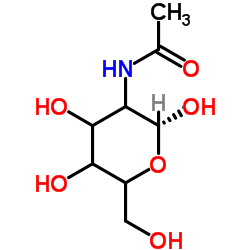
This table lists upstream starting materials and downstream derivative products related to this chemical.
| Precursor 1 | |
|---|---|
| DownStream 1 | |
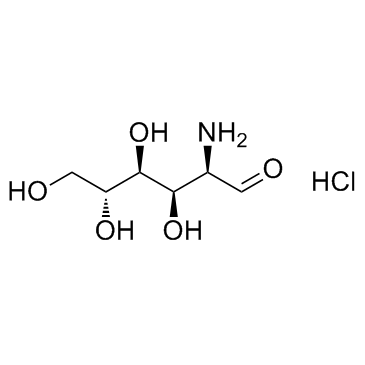 CAS#:66-84-2
This table shows customs‑related data including HS‑code, tariff and regulatory conditions for import and export.
| HS Code | 2932999099 |
|---|---|
| Summary | 2932999099. other heterocyclic compounds with oxygen hetero-atom(s) only. VAT:17.0%. Tax rebate rate:13.0%. . MFN tariff:6.5%. General tariff:20.0% |
This table lists relevant public references with title, journal and publication metadata for this compound.
|
Chitosan oligosaccharides prevented retinal ischemia and reperfusion injury via reduced oxidative stress and inflammation in rats.
Exp. Eye Res. 130 , 38-50, (2015) The purpose of the present study was to investigate the protective effect and mechanism of chitosan oligonucleotides (COS) on retinal ischemia and reperfusion (I/R) injury. Rats pretreated with PBS, l... |
|
|
Cell–scaffold interaction within engineered tissue
Exp. Cell Res. 323(2) , 346-51, (2014) The structure of a tissue engineering scaffold plays an important role in modulating tissue growth. A novel gelatin–chitosan (Gel–Cs) scaffold with a unique structure produced by three-dimensional pri... |
|
|
Structural insights into the substrate-binding mechanism for a novel chitosanase.
Biochem. J. 461(2) , 335-45, (2014) Chitosanase is able to specifically cleave β-1,4-glycosidic bond linkages in chitosan to produce a chito-oligomer product, which has found a variety of applications in many areas, including functional... |
This table collects all English aliases, systematic names and CAS‑related synonyms of the compound.
| EINECS 222-311-2 |
| Poly(beta-(1,4)-D-glucosamine) |
| Poly(beta-(1,4)-2-amino-2-deoxy-D-glucose) |
| MFCD00161512 |
| Chitosan |
This section contains frequently‑asked‑questions about this compound, including basic parameters, properties, storage conditions and corresponding answers.
| Q: How is the water solubility of chitosan? |
| A: Water solubility of chitosan: dilute aqueous acid (pH <6.5).: soluble. |
| Q: What is the melting point of chitosan? |
| A: Melting point of chitosan is 88ºC. |
| Q: What are the upstream materials of chitosan? |
| A: Related upstream materials(CAS) of chitosan: 1398-61-4. |
| Q: What is the CAS number of chitosan? |
| A: CAS number of chitosan is 9012-76-4. |
| Q: What is the safety information for chitosan? |
| A: Safety information for chitosan: S24/25. |
| Q: What is the molecular formula of chitosan? |
| A: Molecular formula of chitosan is (C6H13NO5)n. |
| Q: What English synonyms does chitosan have? |
| A: English synonyms of chitosan: EINECS 222-311-2, Poly(beta-(1,4)-D-glucosamine), Poly(beta-(1,4)-2-amino-2-deoxy-D-glucose), MFCD00161512, Chitosan. |
| Q: What are the uses of chitosan? |
| A: Main uses of chitosan: Chitosan is a natural polycationic linear polysaccharide derived from chitin. |
| Q: What is the SMILES notation of chitosan? |
| A: SMILES notation of chitosan is COC(=O)NC1C(OC2C(CO)OC(OC3C(CO)OC(O)C(N)C3O)C(N)C2O)OC(CO)C(OC2OC(CO)C(OC3OC(CO)C(OC4OC(CO)C(OC5OC(CO)C(OC6OC(CO)C(OC7OC(CO)C(O)C(O)C7N)C(O)C6N)C(O)C5N)C(O)C4N)C(O)C3N)C(O)C2N)C1O. |
| Q: What are the downstream products of chitosan? |
| A: Related downstream products(CAS) of chitosan: 66-84-2. |
This table lists manufacturers and suppliers of this compound, including vendor names and product supply reference information.
| Shanghai Nianxing Industrial Co., Ltd |
| Henan Tianfu Chemical Co., Ltd. |