Ditolylguanidine
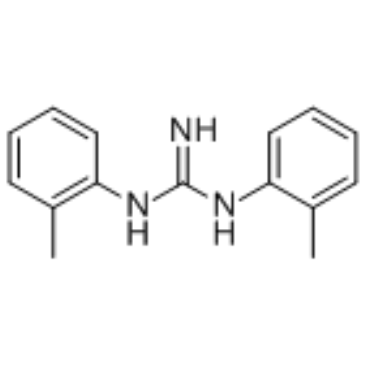
Ditolylguanidine structure
|
Common Name | Ditolylguanidine | ||
|---|---|---|---|---|
| CAS Number | 97-39-2 | Molecular Weight | 239.32 | |
| Density | 1.1±0.1 g/cm3 | Boiling Point | 396.1±45.0 °C at 760 mmHg | |
| Molecular Formula | C15H17N3 | Melting Point | 176-178 °C(lit.) | |
| MSDS | Chinese USA | Flash Point | 193.3±28.7 °C | |
| Symbol |

GHS07 |
Signal Word | Warning | |
Use of DitolylguanidineDitolylguanidine (1,3-Di-o-tolylguanidine; DTG) is an agonist of sigma receptor (σ1/σ2 receptor)[1]. |
This table lists Chinese names, IUPAC names and various aliases of this chemical substance.
| Name | 1,3-Di-o-tolylguanidine |
|---|---|
| Synonym | More Synonyms |
This table contains bioactivity, target information and biological‑assay experimental data of this compound.
| Description | Ditolylguanidine (1,3-Di-o-tolylguanidine; DTG) is an agonist of sigma receptor (σ1/σ2 receptor)[1]. |
|---|---|
| Related Catalog | |
| Target |
Sigma receptor[1] |
| References |
This table shows physicochemical parameters including melting point, boiling point, density, solubility and optical rotation. Missing data is marked as N/A.
| Density | 1.1±0.1 g/cm3 |
|---|---|
| Boiling Point | 396.1±45.0 °C at 760 mmHg |
| Melting Point | 176-178 °C(lit.) |
| Molecular Formula | C15H17N3 |
| Molecular Weight | 239.32 |
| Flash Point | 193.3±28.7 °C |
| Exact Mass | 239.142242 |
| PSA | 47.91000 |
| LogP | 3.77 |
| Vapour Pressure | 0.0±0.9 mmHg at 25°C |
| Index of Refraction | 1.585 |
| InChIKey | OPNUROKCUBTKLF-UHFFFAOYSA-N |
| SMILES | Cc1ccccc1N=C(N)Nc1ccccc1C |
| Storage condition | Store at RT |
This table provides MSDS information including hazard classification, first‑aid, fire‑fighting, spill handling, operation and storage instructions.
This table summarizes toxicological test data, acute & chronic toxicity and ecological hazard parameters for this chemical.
CHEMICAL IDENTIFICATION
HEALTH HAZARD DATAACUTE TOXICITY DATA
|
This table covers safety warnings, protective measures, incompatible substances and disposal guidelines for this compound.
| Symbol |
GHS07 |
|---|---|
| Signal Word | Warning |
| Hazard Statements | H302 |
| Personal Protective Equipment | dust mask type N95 (US);Eyeshields;Faceshields;Gloves |
| Hazard Codes | Xn:Harmful |
| Risk Phrases | R22 |
| Safety Phrases | S26-S36 |
| RIDADR | UN 2811 |
| WGK Germany | 3 |
| RTECS | MF1400000 |
| Packaging Group | III |
| Hazard Class | 6.1(b) |
| HS Code | 2925290090 |
This table presents publicly reported synthetic routes, reaction conditions, reactants and product information of the compound.
This table lists upstream starting materials and downstream derivative products related to this chemical.
| Precursor 10 | |
|---|---|
| DownStream 3 | |
 CAS#:615-37-2
 CAS#:506-93-4
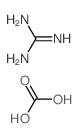 CAS#:124-46-9
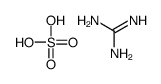 CAS#:646-34-4
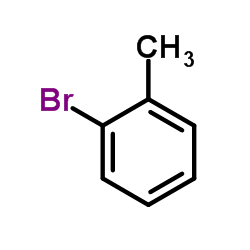 CAS#:95-46-5
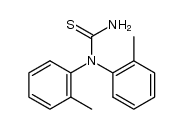 CAS#:22695-18-7
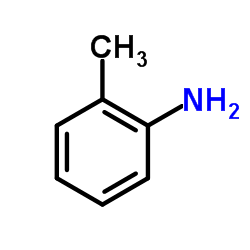 CAS#:95-53-4
 CAS#:506-77-4
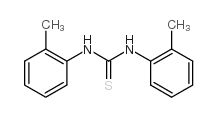 CAS#:137-97-3
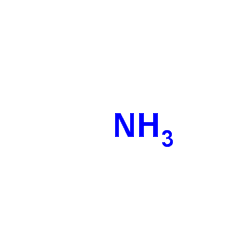 CAS#:7664-41-7
 CAS#:3467-29-6
 CAS#:4132-53-0
 CAS#:7783-06-4
This table shows customs‑related data including HS‑code, tariff and regulatory conditions for import and export.
| HS Code | 2925290090 |
|---|---|
| Summary | 2925290090 other imines and their derivatives; salts thereof。Supervision conditions:None。VAT:17.0%。Tax rebate rate:9.0%。MFN tariff:6.5%。General tariff:30.0% |
This table lists relevant public references with title, journal and publication metadata for this compound.
|
GABA and its B-receptor are present at the node of Ranvier in a small population of sensory fibers, implicating a role in myelination.
J. Neurosci. Res. 93(2) , 285-95, (2014) The γ-aminobutyric acid (GABA) type B receptor has been implicated in glial cell development in the peripheral nervous system (PNS), although the exact function of GABA signaling is not known. To inve... |
|
|
Apolipoprotein D modulates amyloid pathology in APP/PS1 Alzheimer's disease mice.
Neurobiol. Aging 36 , 1820-33, (2015) Apolipoprotein D (apoD) is expressed in the brain and levels are increased in affected brain regions in Alzheimer's disease (AD). The role that apoD may play in regulating AD pathology has not been ad... |
|
|
Monodisperse silica nanoparticles coated with gold nanoparticles as a sorbent for the extraction of phenol and dihydroxybenzenes from water samples based on dispersive micro-solid-phase extraction: Response surface methodology.
J. Sep. Sci. 38 , 2804-12, (2015) A selective and sensitive method was developed based on dispersive micro-solid-phase extraction for the extraction of hydroquinone, resorcinol, pyrocatechol and phenol from water samples prior to high... |
This table contains target information, in‑vitro & in‑vivo assay data for this compound.
This table collects all English aliases, systematic names and CAS‑related synonyms of the compound.
| MFCD00008513 |
| 1,3-Bis(o-tolyl)guanidine |
| N,N'-Di-o-tolylguanidine |
| EINECS 202-577-6 |
| N,N'-Bis(2-methylphenyl)guanidine |
| Di-o-tolylguanidine |
| 1R BMYUM&MR B1 |
| 1,2-Bis(2-methylphenyl)guanidine |
This section contains frequently‑asked‑questions about this compound, including basic parameters, properties, storage conditions and corresponding answers.
| Q: What English synonyms does 1,3-Di-o-tolylguanidine have? |
| A: English synonyms of 1,3-Di-o-tolylguanidine: MFCD00008513, 1,3-Bis(o-tolyl)guanidine, N,N'-Di-o-tolylguanidine, EINECS 202-577-6, N,N'-Bis(2-methylphenyl)guanidine, Di-o-tolylguanidine, 1R BMYUM&MR B1, 1,2-Bis(2-methylphenyl)guanidine. |
| Q: What is the LogP of 1,3-Di-o-tolylguanidine? |
| A: LogP of 1,3-Di-o-tolylguanidine is 3.77. |
| Q: What are the upstream materials of 1,3-Di-o-tolylguanidine? |
| A: Related upstream materials(CAS) of 1,3-Di-o-tolylguanidine: 615-37-2;506-93-4;124-46-9;646-34-4;95-46-5;22695-18-7;95-53-4;506-77-4;137-97-3;7664-41-7. |
| Q: What is the molecular weight of 1,3-Di-o-tolylguanidine? |
| A: Molecular weight of 1,3-Di-o-tolylguanidine is 239.32. |
| Q: What is the InChIKey of 1,3-Di-o-tolylguanidine? |
| A: InChIKey of 1,3-Di-o-tolylguanidine is OPNUROKCUBTKLF-UHFFFAOYSA-N. |
| Q: What is the safety information for 1,3-Di-o-tolylguanidine? |
| A: Safety information for 1,3-Di-o-tolylguanidine: S26-S36. |
| Q: What is the boiling point of 1,3-Di-o-tolylguanidine? |
| A: Boiling point of 1,3-Di-o-tolylguanidine is 396.1±45.0 °C at 760 mmHg. |
| Q: What are the downstream products of 1,3-Di-o-tolylguanidine? |
| A: Related downstream products(CAS) of 1,3-Di-o-tolylguanidine: 3467-29-6;4132-53-0;7783-06-4. |
| Q: What is the SMILES notation of 1,3-Di-o-tolylguanidine? |
| A: SMILES notation of 1,3-Di-o-tolylguanidine is Cc1ccccc1N=C(N)Nc1ccccc1C. |
| Q: What are the storage conditions for 1,3-Di-o-tolylguanidine? |
| A: Storage conditions for 1,3-Di-o-tolylguanidine: Store at RT. |
This table lists manufacturers and suppliers of this compound, including vendor names and product supply reference information.
| Shanghai Nianxing Industrial Co., Ltd |
| Dayang Chem (Hangzhou) Co., Ltd. |
| Henan Tianfu Chemical Co., Ltd. |
| Zhongshan Xingrui Chemical Co. , Ltd. |
The content on this webpage is sourced from various professional data sources. If you have any questions or concerns regarding the content, please feel free to contact service1@chemsrc.com.
- Shanghai Nianxing Industrial Co., Ltd
- China
- Product Name: Ditolylguanidine
- Price: Check
- Purity: 98.0%
- Delivery: 10 Day
- Contact: Yang
- Email: sales@echemcloud.com
- Dayang Chem (Hangzhou) Co., Ltd.
- China
- Product Name: Di-o-tolylguanidine
- Price: $Inquiry/100g $Inquiry/1kg $Inquiry/100kg $Inquiry/1000kg
- Purity: 98.0%
- Delivery: Inquiry
- Contact: Ms Wang
- Email: enquiry@dycnchem.com
- Henan Tianfu Chemical Co., Ltd.
- China
- Product Name: Di-o-tolylguanidine
- Price: $Inquiry/1kg $Inquiry/25kg $Inquiry/1000kg $Inquiry/10ton
- Purity: 99.0%
- Delivery: Inquiry
- Contact: Anson
- Email: info@tianfuchem.com
- Zhongshan Xingrui Chemical Co. , Ltd.
- China
- Product Name: Ditolylguanidine
- Price: ¥Inquiry/25kg
- Purity: 99.0%
- Delivery: Inquiry
- Contact: Wang Jie

- Email: 3096638339@qq.com
Get all suppliers and price by the below link:
Reference only. check more Ditolylguanidine price