4-tert-Butylcyclohexanone

4-tert-Butylcyclohexanone structure
|
Common Name | 4-tert-Butylcyclohexanone | ||
|---|---|---|---|---|
| CAS Number | 98-53-3 | Molecular Weight | 154.249 | |
| Density | 0.9±0.1 g/cm3 | Boiling Point | 225.1±0.0 °C at 760 mmHg | |
| Molecular Formula | C10H18O | Melting Point | 47-50 °C(lit.) | |
| MSDS | Chinese USA | Flash Point | 96.1±0.0 °C | |
| Symbol |

GHS07 |
Signal Word | Warning | |
This table lists Chinese names, IUPAC names and various aliases of this chemical substance.
| Name | 4-tert-Butylcyclohexanone |
|---|---|
| Synonym | More Synonyms |
This table shows physicochemical parameters including melting point, boiling point, density, solubility and optical rotation. Missing data is marked as N/A.
| Density | 0.9±0.1 g/cm3 |
|---|---|
| Boiling Point | 225.1±0.0 °C at 760 mmHg |
| Melting Point | 47-50 °C(lit.) |
| Molecular Formula | C10H18O |
| Molecular Weight | 154.249 |
| Flash Point | 96.1±0.0 °C |
| Exact Mass | 154.135757 |
| PSA | 17.07000 |
| LogP | 2.48 |
| Vapour Pressure | 0.1±0.4 mmHg at 25°C |
| Index of Refraction | 1.456 |
| InChIKey | YKFKEYKJGVSEIX-UHFFFAOYSA-N |
| SMILES | CC(C)(C)C1CCC(=O)CC1 |
This table provides MSDS information including hazard classification, first‑aid, fire‑fighting, spill handling, operation and storage instructions.
This table summarizes toxicological test data, acute & chronic toxicity and ecological hazard parameters for this chemical.
CHEMICAL IDENTIFICATION
HEALTH HAZARD DATAACUTE TOXICITY DATA
|
This table covers safety warnings, protective measures, incompatible substances and disposal guidelines for this compound.
| Symbol |
GHS07 |
|---|---|
| Signal Word | Warning |
| Hazard Statements | H315-H319-H335 |
| Precautionary Statements | P261-P305 + P351 + P338 |
| Personal Protective Equipment | dust mask type N95 (US);Eyeshields;Gloves |
| Hazard Codes | Xi:Irritant; |
| Risk Phrases | R36/37/38 |
| Safety Phrases | S26-S36 |
| RIDADR | NONH for all modes of transport |
| WGK Germany | 2 |
| RTECS | GW1140000 |
| HS Code | 2914299000 |
This table presents publicly reported synthetic routes, reaction conditions, reactants and product information of the compound.
This table lists upstream starting materials and downstream derivative products related to this chemical.
| Precursor 8 | |
|---|---|
| DownStream 9 | |
![9-(1,1-dimethylethyl)-1,5-dithiaspiro[5.5]undecane Structure](https://image.chemsrc.com/caspic/275/118817-77-9.png) CAS#:118817-77-9
CAS#:118817-77-9 CAS#:98-52-2
![9-(1,1-dimethylethyl)-1,5-dioxaspiro[5.5]undecane Structure](https://image.chemsrc.com/caspic/407/65156-97-0.png) CAS#:65156-97-0
CAS#:65156-97-0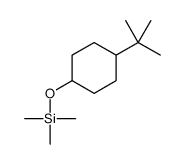 CAS#:167489-85-2
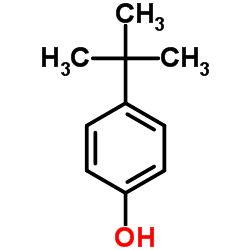 CAS#:98-54-4
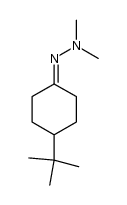 CAS#:58911-63-0
 CAS#:13294-73-0
 CAS#:937-05-3
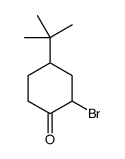 CAS#:1076-82-0
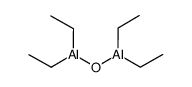 CAS#:1069-83-6
 CAS#:105669-73-6
 CAS#:3178-22-1
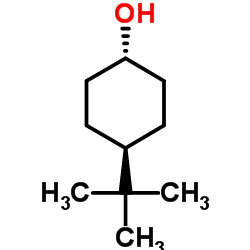 CAS#:21862-63-5
 CAS#:1900-58-9
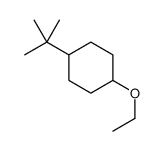 CAS#:1900-57-8
This table shows customs‑related data including HS‑code, tariff and regulatory conditions for import and export.
| HS Code | 2914299000 |
|---|---|
| Summary | 2914299000. other cyclanic, cyclenic or cyclotherpenic ketones without other oxygen function. VAT:17.0%. Tax rebate rate:13.0%. . MFN tariff:5.5%. General tariff:30.0% |
This table lists relevant public references with title, journal and publication metadata for this compound.
|
On the synergistic catalytic properties of bimetallic mesoporous materials containing aluminum and zirconium: the Prins cyclisation of citronellal.
Chemistry 17 , 2077-88, (2011) Bimetallic three-dimensional amorphous mesoporous materials, Al-Zr-TUD-1 materials, were synthesised by using a surfactant-free, one-pot procedure employing triethanolamine (TEA) as a complexing reage... |
|
|
Defect-Engineered Metal-Organic Frameworks.
Angew. Chem. Int. Ed. Engl. 54 , 7234-54, (2015) Defect engineering in metal-organic frameworks (MOFs) is an exciting concept for tailoring material properties, which opens up novel opportunities not only in sorption and catalysis, but also in contr... |
This table contains target information, in‑vitro & in‑vivo assay data for this compound.
This table collects all English aliases, systematic names and CAS‑related synonyms of the compound.
| 4-(tert-butyl)cyclohexanone |
| 4-t-Butylcyclohexanone |
| 4-tert-butyl-cyclohexanone |
| L6VTJ DX1&1&1 |
| 4-(tert-butyl)cyclohexan-1-one |
| 4-(2-Methyl-2-propanyl)cyclohexanone |
| 4-tert-butylcyclohexan-1-one |
| EINECS 202-678-5 |
| 4-(t-Butyl)cyclohexanone |
| p-tert-Butylcyclohexanone |
| MFCD00001642 |
This section contains frequently‑asked‑questions about this compound, including basic parameters, properties, storage conditions and corresponding answers.
| Q: What is the boiling point of 4-tert-Butylcyclohexanone? |
| A: Boiling point of 4-tert-Butylcyclohexanone is 225.1±0.0 °C at 760 mmHg. |
| Q: What is the CAS number of 4-tert-Butylcyclohexanone? |
| A: CAS number of 4-tert-Butylcyclohexanone is 98-53-3. |
| Q: What are the upstream materials of 4-tert-Butylcyclohexanone? |
| A: Related upstream materials(CAS) of 4-tert-Butylcyclohexanone: 118817-77-9;98-52-2;65156-97-0;167489-85-2;98-54-4;58911-63-0;13294-73-0;937-05-3. |
| Q: What English synonyms does 4-tert-Butylcyclohexanone have? |
| A: English synonyms of 4-tert-Butylcyclohexanone: 4-(tert-butyl)cyclohexanone, 4-t-Butylcyclohexanone, 4-tert-butyl-cyclohexanone, L6VTJ DX1&1&1, 4-(tert-butyl)cyclohexan-1-one, 4-(2-Methyl-2-propanyl)cyclohexanone, 4-tert-butylcyclohexan-1-one, EINECS 202-678-5, 4-(t-Butyl)cyclohexanone, p-tert-Butylcyclohexanone, MFCD00001642. |
| Q: What is the LogP of 4-tert-Butylcyclohexanone? |
| A: LogP of 4-tert-Butylcyclohexanone is 2.48. |
| Q: What is the melting point of 4-tert-Butylcyclohexanone? |
| A: Melting point of 4-tert-Butylcyclohexanone is 47-50 °C(lit.). |
| Q: What is the polar surface area (PSA) of 4-tert-Butylcyclohexanone? |
| A: Polar surface area (PSA) of 4-tert-Butylcyclohexanone is 17.07000. |
| Q: What is the safety information for 4-tert-Butylcyclohexanone? |
| A: Safety information for 4-tert-Butylcyclohexanone: S26-S36. |
| Q: What is the SMILES notation of 4-tert-Butylcyclohexanone? |
| A: SMILES notation of 4-tert-Butylcyclohexanone is CC(C)(C)C1CCC(=O)CC1. |
| Q: What is the molecular formula of 4-tert-Butylcyclohexanone? |
| A: Molecular formula of 4-tert-Butylcyclohexanone is C10H18O. |
This table lists manufacturers and suppliers of this compound, including vendor names and product supply reference information.
| Shanghai Nianxing Industrial Co., Ltd |
| Dayang Chem (Hangzhou) Co., Ltd. |
| Henan Tianfu Chemical Co., Ltd. |