3-苯丙酸
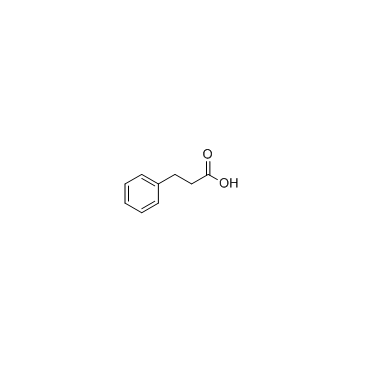
3-苯丙酸结构式

|
常用名 | 3-苯丙酸 | 英文名 | Hydrocinnamic acid |
|---|---|---|---|---|
| CAS号 | 501-52-0 | 分子量 | 150.174 | |
| 密度 | 1.07 | 沸点 | 279-281 ºC | |
| 分子式 | C9H10O2 | 熔点 | 47-50 ºC | |
| MSDS | 中文版 美版 | 闪点 | 170.0±13.9 °C |
|
Metabolomic profiles delineate potential role for sarcosine in prostate cancer progression.
Nature 457(7231) , 910-4, (2009) Multiple, complex molecular events characterize cancer development and progression. Deciphering the molecular networks that distinguish organ-confined disease from metastatic disease may lead to the identification of critical biomarkers for cancer invasion an... |
|
|
A metabolite profiling approach to identify biomarkers of flavonoid intake in humans.
J. Nucl. Med. 139 , 2309-14, (2009) Flavonoids are phytochemicals that are widespread in the human diet. Despite limitations in their bioavailability, experimental and epidemiological data suggest health benefits of flavonoid consumption. Valid biomarkers of flavonoid intake may be useful for e... |
|
|
High gastrointestinal permeability and local metabolism of naringenin: influence of antibiotic treatment on absorption and metabolism.
Br. J. Nutr. 114 , 169-80, (2015) The present study aims to determine the permeability of naringenin in the stomach, small intestine and colon, to evaluate intestinal and hepatic first-pass metabolism, and to study the influence of the microbiota on the absorption and disposition of naringeni... |
|
|
Adhesive barrier/directional controlled release for cartilage repair by endogenous progenitor cell recruitment.
Biomaterials 39 , 173-81, (2015) A new design concept in controlled release chemistry is reported in this study. Unlike current depots that release drugs in all direction by an isotropic way, we demonstrate that directional release only to a clinically beneficial direction results in improve... |
|
|
Identification of Echinacoside Metabolites Produced by Human Intestinal Bacteria Using Ultraperformance Liquid Chromatography-Quadrupole Time-of-Flight Mass Spectrometry.
J. Agric. Food Chem. 63 , 6764-71, (2015) Echinacoside (ECH) is one of the representative phenylethanoid glycosides. It is widely present in plants and exhibits various bioactivities. However, the extremely low oral bioavailability of ECH in rats implies that ECH may go through multiple hydrolysis st... |
|
|
Effects of phytochemicals on in vitro anti-inflammatory activity of Bifidobacterium adolescentis.
Biosci. Biotechnol. Biochem. 79 , 799-807, (2015) Probiotics have been shown to improve the condition of not only the human gastrointestinal tract but also the entire body. We found that quercetin enhances the anti-inflammatory activity of Bifidobacterium adolescentis, which is abundant in human intestines. ... |
|
|
Dietary supplementation with cocoa flavanols does not alter colon tissue profiles of native flavanols and their microbial metabolites established during habitual dietary exposure in C57BL/6J mice.
J. Agric. Food Chem. 62(46) , 11190-9, (2014) Metabolism of flavanols (catechins, procyanidins) by gut microbiota has been extensively characterized. Comparatively little is known about accumulation of flavanols and their metabolites in the colon tissues, particularly during chronic exposure to low doses... |
|
|
Human fecal water inhibits COX-2 in colonic HT-29 cells: role of phenolic compounds.
J. Nutr. 135(10) , 2343-9, (2005) The inducible enzyme cyclooxygenase-2 (COX-2) plays a major role in the regulation of inflammation and possibly in the development of colon cancer. The aim of the present study was to screen for COX-2 inhibitors in samples of fecal water (the aqueous phase of... |
|
|
Human fecal water content of phenolics: the extent of colonic exposure to aromatic compounds.
Free Radic. Biol. Med. 38(6) , 763-72, (2005) Phenolic compounds are not completely absorbed in the small intestine and so enter the colon, where they might exert physiological effects. To identify phenolics that are present in normal human colon, fecal water was prepared from 5 free-living volunteers wi... |
|
|
Hyperactivation of D1 and A2A receptors contributes to cognitive dysfunction in Huntington's disease.
Neurobiol. Dis. 74 , 41-57, (2015) Stimulation of dopamine D1 receptor (D1R) and adenosine A2A receptor (A2AR) increases cAMP-dependent protein kinase (PKA) activity in the brain. In Huntington's disease, by essentially unknown mechanisms, PKA activity is increased in the hippocampus of mouse ... |