硫蒽酮
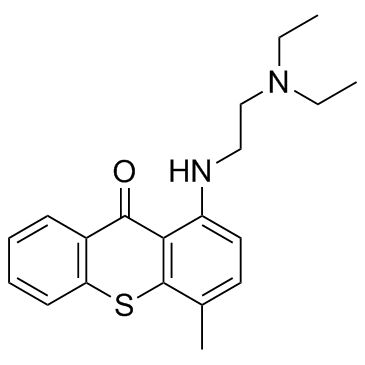
硫蒽酮结构式

|
常用名 | 硫蒽酮 | 英文名 | Lucanthone |
|---|---|---|---|---|
| CAS号 | 479-50-5 | 分子量 | 340.48200 | |
| 密度 | 1.184g/cm3 | 沸点 | 512.4ºC at 760 mmHg | |
| 分子式 | C20H24N2OS | 熔点 | 195-196ºC | |
| MSDS | N/A | 闪点 | 263.7ºC |
硫蒽酮用途Lucanthone 是 Apurinic 内切核酸酶-1 (APE-1) 的内切核酸酶抑制剂。 |

本表展示该化学物质的中文名称、英文系统名、各类中文与英文别名信息。
| 中文名 | 硫坎酮 |
|---|---|
| 英文名 | lucanthone |
| 中文别名 | 1-((2-(二乙基氨基)乙基)氨基)-4-甲基硫杂蒽-9-酮 | 硫蒽酮 |
| 英文别名 | 更多 |
本表记录该化合物相关生物活性、作用靶点、活性说明与生物实验相关数据。
| 描述 | Lucanthone 是 Apurinic 内切核酸酶-1 (APE-1) 的内切核酸酶抑制剂。 |
|---|---|
| 相关类别 | |
| 靶点实验 |
APE-1[1] |
| 体外研究 | 硫蒽酮是一种新的自噬抑制剂,可诱导组织蛋白酶D介导的细胞凋亡。为了研究硫蒽酮的抗癌活性,通过MTT测定法测量细胞活力。硫蒽酮在一组七种乳腺癌细胞系中以相似程度降低细胞活力。此外,直接比较显示,氯喹酮在降低乳腺癌细胞存活率方面明显比氯喹(CQ)更有效,平均IC50为7.2μM,而CQ为66μM。通过ATPlite测定和台盼蓝排除测量两种代表性细胞系(MDA-MB-231和BT-20)中的细胞活力揭示了可比较的结果[2]。 |
| 细胞实验 | 通过MTT测定评估细胞活力。将细胞以每孔10,000个细胞接种到96孔微量培养板中并使其附着24小时。然后用硫蒽酮(0,0.5,1,5,10,20和40μM),氯喹,伏立诺他或其组合处理细胞72小时。药物处理后,加入MTT并使用BioTek酶标仪定量细胞活力。还通过使用ATPlite测定系统和台盼蓝排除法测量ATP水平来确定对细胞活力的影响。体外药物暴露后的促细胞凋亡效应通过碘化丙啶(PI)染色和亚G0 / G1 DNA含量的荧光激活细胞分选(FACS)分析来量化[2]。 |
| 参考文献 |
本表包含该物质理化参数,如熔点、沸点、密度、溶解度、旋光性等理化指标,无数据项标记为N/A。
| 密度 | 1.184g/cm3 |
|---|---|
| 沸点 | 512.4ºC at 760 mmHg |
| 熔点 | 195-196ºC |
| 分子式 | C20H24N2OS |
| 分子量 | 340.48200 |
| 闪点 | 263.7ºC |
| 精确质量 | 340.16100 |
| PSA | 60.58000 |
| LogP | 4.54980 |
| InChIKey | FBQPGGIHOFZRGH-UHFFFAOYSA-N |
| SMILES | CCN(CC)CCNc1ccc(C)c2sc3ccccc3c(=O)c12 |
| 蒸汽压 | 1.3E-10mmHg at 25°C |
| 折射率 | 1.638 |
| 储存条件 | 2-8℃ |
本表汇总该化学品毒理试验数据、急性慢性毒性以及环境生态危害相关参数。
本表提供该化合物公开报道的合成路线、反应条件、反应物与产物参考信息。
本表列出该化学品对应的上游起始原料以及下游衍生产物清单。
| 硫蒽酮上游产品 10 | |
|---|---|
| 硫蒽酮下游产品 0 | |
![1-chloro-4-methyldibenzo[b,e]thiin-10-one结构式](https://image.chemsrc.com/caspic/205/57450-55-2.png) CAS号57450-55-2
CAS号57450-55-2 CAS号100-36-7
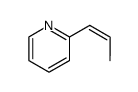 CAS号54236-49-6
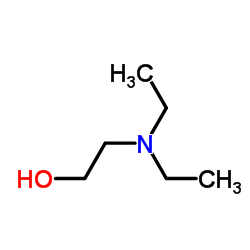 CAS号100-37-8
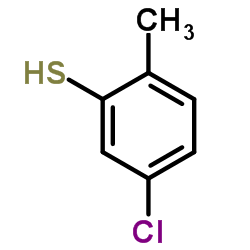 CAS号18858-06-5
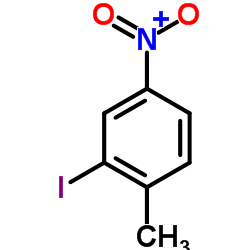 CAS号7745-92-8
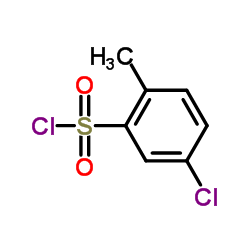 CAS号34981-38-9
 CAS号412339-71-0
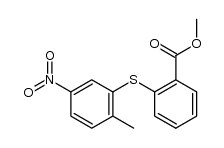 CAS号108620-60-6
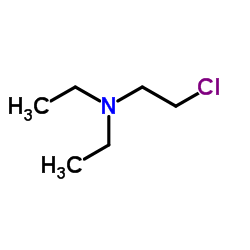 CAS号100-35-6
本表记录该化合物靶点、体外体内实验、生物测定实验相关实验数据。
本表罗列该化合物全部英文别名、系统命名、CAS别名等英文名称集合。
| 1-(2-Diethylamino-ethylamino)-4-methylthiaxanthon,Lucanthon |
| Lycanthone |
| thioxanthone |
| 1-(2-diethylamino-ethylamino)-4-methyl-thioxanthen-9-one |
| 1-<2-Diaethylamino-aethylamino>-4-methyl-thioxanthenon-(9) |
| 1-[[2-(Diethylamino)ethyl]amino]-4-methyl-9H-thioxanthen-9-one |
| 1-(2-Diaethylamino-aethylamino)-4-methyl-thioxanthen-9-on |
本部分为该化合物相关常见问答,包含基础参数、性状、储存条件等高频咨询问题与对应答案。
| Q: 479-50-5的中文名称是什么? |
| A: 479-50-5的中文名称为硫坎酮。 |
| Q: 硫坎酮的LogP(油水分配系数)是多少? |
| A: 硫坎酮LogP(油水分配系数)为4.54980。 |
| Q: 硫坎酮有什么用途? |
| A: 硫坎酮主要用途:Lucanthone 是 Apurinic 内切核酸酶-1 (APE-1) 的内切核酸酶抑制剂。 |
| Q: 硫坎酮的极性表面积PSA是多少? |
| A: 硫坎酮极性表面积PSA为60.58000。 |
| Q: 硫坎酮的CAS号是多少? |
| A: 硫坎酮CAS号为479-50-5。 |
| Q: 硫坎酮有哪些英文别名? |
| A: 硫坎酮英文别名有:1-(2-Diethylamino-ethylamino)-4-methylthiaxanthon,Lucanthon、 Lycanthone、 thioxanthone、 1-(2-diethylamino-ethylamino)-4-methyl-thioxanthen-9-one、 1--4-methyl-thioxanthenon-(9)、 1-[[2-(Diethylamino)ethyl]amino]-4-methyl-9H-thioxanthen-9-one、 1-(2-Diaethylamino-aethylamino)-4-methyl-thioxanthen-9-on。 |
| Q: 硫坎酮的SMILES表达式是什么? |
| A: 硫坎酮SMILES表达式为CCN(CC)CCNc1ccc(C)c2sc3ccccc3c(=O)c12。 |
| Q: 硫坎酮的储存条件是什么? |
| A: 硫坎酮储存条件:2-8℃。 |
| Q: 硫坎酮的英文名称是什么? |
| A: 硫坎酮英文名称为lucanthone。 |
| Q: 硫坎酮有哪些中文别名? |
| A: 硫坎酮中文别名有:1-((2-(二乙基氨基)乙基)氨基)-4-甲基硫杂蒽-9-酮、 硫蒽酮。 |
本表列出该化合物相关生产厂商、供应商信息,包含厂家名称、产品供应相关参考信息。
| 上海阿拉丁生化科技股份有限公司 |
| 上海化源世纪贸易有限公司 |
本网页内容来自不同专业数据源,如对内容有疑义,欢迎联系service1@chemsrc.com。

 351666998
复制
351666998
复制

 133 1186 9306
复制
133 1186 9306
复制

- 上海阿拉丁生化科技股份有限公司
- 上海市 上海市 浦东新区
- 产品名:硫蒽酮
- 纯度:99.0%
- 价格: ¥960.9/25mg ¥1455.9/50mg ¥339.9/5mg ¥需询单/25g
- 联系人:阿拉丁
 2881459338
复制
2881459338
复制
- 联系电话:400-620-6333
- 上海化源世纪贸易有限公司
- 上海市 上海市 普陀区
- 产品名:硫蒽酮
- 纯度:98.0%
- 价格:
- 联系人:徐经理
351666998
复制
 133 1186 9306
复制
133 1186 9306
复制
- 联系电话:133 1186 9306
查看所有供应商和价格请点击: