217082-60-5

217082-60-5 structure
- Name: [Pyr1] -Apelin 13
- Chemical Name: [Pyr1]-Apelin-13
- CAS Number: 217082-60-5
- Molecular Formula: C69H108N22O16S
- Molecular Weight: 1533.8
- Catalog: Biochemical Peptide
- Create Date: 2018-08-05 20:30:26
- Modify Date: 2026-07-23 17:23:57
-
[Pyr1]-Apelin-13 is a highly potent, selective endogenous apelin receptor (APJ) agonist.
| Name | [Pyr1]-Apelin-13 |
|---|---|
| Synonyms |
pQRPRLSHKGPMPF
[PYR1]-APELIN-13 [Pyr1]-Apelin-13,XRPRLSHKGPMPF,[pGlu1]-Apelin-13 3-Dimethyluric acid PYR-G-PRO-G-LEU-SER-HIS-LYS-GLY-PRO-MET-PRO-PHE-OH //BP Deltorphin I (GLP1)-APELIN-13, HUMAN, BOVINE GLP-ARG-PRO-ARG-LEU-SER-HIS-LYS-GLY-PRO-MET-PRO-PHE [PGLU1]APELIN , HUMAN, BOVINE (PYR1)-APELIN-13 (HUMAN, BOVINE, MOUSE, RAT) {Glp}-RPRLSHKGPMPF [Pyr1]-Apelin 13, endogenous apelin rector (APJ) agonist (Glp1)-Apelin-13 [PE]APELIN-13, HUMAN, BOVINE PYR-G-PRO-G-LEU-SER-HIS-LYS-GLY-PRO-MET-PRO-PHE GLP-G-PRO-G-LEU-SER-HIS-LYS-GLY-PRO-MET-PRO-PHE GLP-G-PRO-G-LEU-SER-HIS-LYS-GLY-PRO-MET-PRO-PHE: PRLSHKGPMPF (Pyr)-Apelin-13 (human, bovine, mouse, rat) acetate salt PYR-G-PRO-G-LEU-SER-HIS-LYS-GLY-PRO-MET-PRO-PHE-OH PYR-ARG-PRO-ARG-LEU-SER-HIS-LYS-GLY-PRO-MET-PRO-PHE L-Phenylalanine, 5-oxo-L-prolyl-L-ginyl-L-prolyl-L-ginyl-L-leucyl-L-seryl-L-histidyl-L-lysylglycyl-L-prolyl-L-methionyl-L-prolyl Pyr-apelin-13 5-Oxo-L-prolyl-L-ginyl-L-prolyl-L-ginyl-L-leucyl-L-seryl-L-histidyl-L-lysylglycyl-L-prolyl-L-methionyl-L-prolyl-L-phenylalanine pyroglutamyl apelin-13 PGLU-ARG-PRO-ARG-LEU-SER-HIS-LYS-GLY-PRO-MET-PRO-PHE PGLU-G-PRO-G-LEU-SER-HIS-LYS-GLY-PRO-MET-PRO-PHE [pGlu1]-Apelin-13 PYR-RPRLSHKGPMPF-OH [Pyr1]-Apelin-13 trifluoroacetate salt 5-Oxo-L-prolyl-L-arginyl-L-prolyl-L-arginyl-L-leucyl-L-seryl-L-histidyl-L-lysylglycyl-L-prolyl-L-methionyl-L-prolyl-L-phenylalanine (PYR1)-APELIN-13 (HUMAN, BOVINE) |
| Description | [Pyr1]-Apelin-13 is a highly potent, selective endogenous apelin receptor (APJ) agonist. |
|---|---|
| Related Catalog | |
| In Vitro | [Pyr1]-apelin-13 encapsulation in lipoPEG particles (lipoPEG-PA13) results in sustained and extended drug release under physiological conditions[1]. |
| In Vivo | [Pyr1]-apelin-13 nanocarriers in a mouse model of pressure-overload induced heart failure demonstrate a sustainable long-term effect of [Pyr1]-apelin-13 in preventing cardiac dysfunction[1]. [Pyr1] apelin-13 (1, 5 μg) improves locomotor activity and reduces pain symptoms, cavity size and caspase-3 levels in rats. [Pyr1] apelin-13 (1, 5 μg) significantly increases thermal paw withdrawal latency. [Pyr1] apelin-13 in 5 μg dose also produces significant attenuation in paw withdrawal threshold compared to SCI animals from the second week post SCI[2]. |
| References |
| Density | 1.5±0.1 g/cm3 |
|---|---|
| Molecular Formula | C69H108N22O16S |
| Molecular Weight | 1533.8 |
| Exact Mass | 1532.80343662 |
| PSA | 613.26000 |
| LogP | -3.42 |
| Index of Refraction | 1.696 |
| Storage condition | -15°C |
|
Detail
|
| Literature: Zhang, Yanyan; Maitra, Rangan; Harris, Danni L.; Dhungana, Suraj; Snyder, Rodney; Runyon, Scott P. Bioorganic and Medicinal Chemistry, 2014 , vol. 22, # 11 p. 2992 - 2997 |
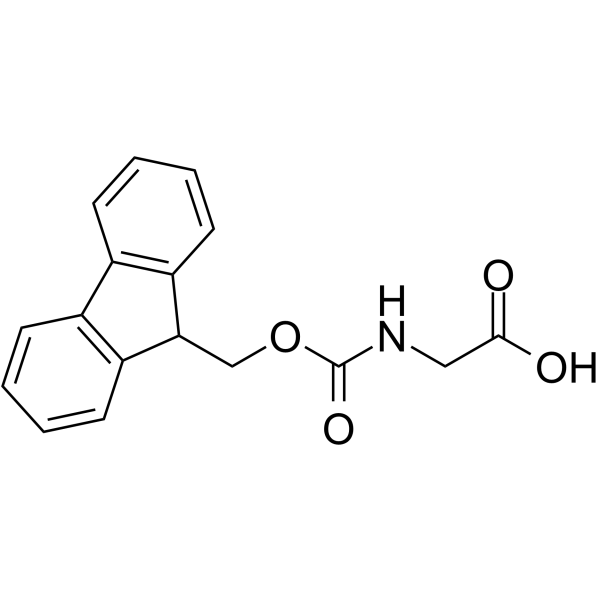

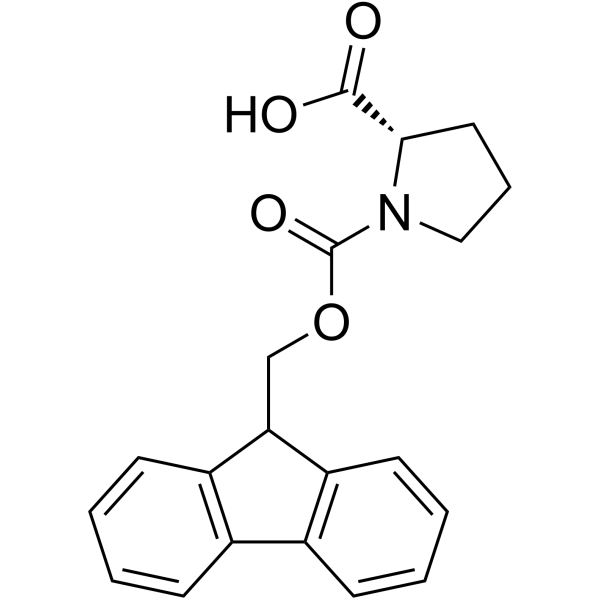
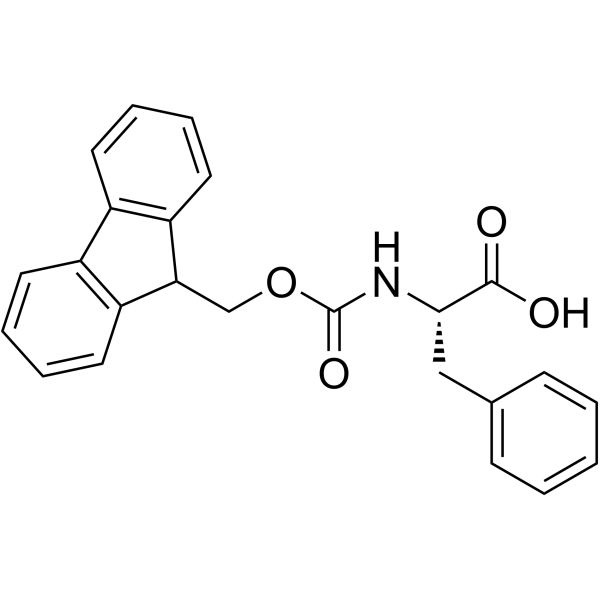

| Precursor 7 | |
|---|---|
| DownStream 0 | |

