40180-04-9

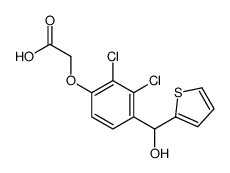
40180-04-9 structure
- Name: Tienilic acid
- Chemical Name: tienilic acid
- CAS Number: 40180-04-9
- Molecular Formula: C13H8Cl2O4S
- Molecular Weight: 331.17
- Catalog: Research Areas Metabolic Disease
- Create Date: 2018-06-11 15:19:40
- Modify Date: 2026-07-04 07:40:01
-
Tienilic acid is a uricosuric diuretic. Tienilic acid possesses certain hepatotoxicity[1][3].
| Name | tienilic acid |
|---|---|
| Synonyms |
diflurex
4-(2-thienylketo)-2,3-dichlorophenoxyaceticacid (2,3-Dichloro-4-(2-thiophenecarbonyl)phenoxy)acetic acid 2-(2,3-dichloro-4-(thiophene-2-carbonyl)phenoxy)acetic acid Selacryn ANP 3624,Tienilic Acid,Inhibitor,Uricosuric,Diuretic,inhibit,Hatotoxicity,ANP3624,Ticrynafen,ANP-3624 [2,3-dichloro-4-(2-thenoyl)phenoxy]acetic acid Tienilic Acide tienilique 4-(2-theonyl)-2,3-dichlorphenoxyessigsaeure 2,3-dichloro-4-(thien-2-ylcarbonyl)-phenoxyacetic acid [2,3-dichloro-4-(thiophene-2-carbonyl)-phenoxy]-acetic acid Tienylic acid [2,3-Dichloro-4-(2-thienylcarbonyl)phenoxy]acetic acid {[2,3-dichloro-4-(2-thienylcarbonyl)phenyl]oxy}acetic acid Ticrynafen 4-(2-Thienylcbonyl)-2,3-dichlorophenoxyacetic acid thienylicacid TICRYNAFEN //BP (2,3-dichloro-4-(2-thiophenecbonyl)phenoxy)aceticacid (2,3-Dichloro-4-(2-thienylcarbonyl)phenoxy)acetic acid (2,3-dichloro-4-(2-thenoyl)phenoxy)aceticacid 2-(2,3-Dichloro-4-(thiophene-2-carbonyl)phenoxy)acetic acid(Tienilic Acid) Difluorex Ticrex 2-[2,3-dichloro-4-(thiophene-2-carbonyl)phenoxy]acetic acid ticrex [2,3-dichloro-4-(thiophen-2-ylcarbonyl)phenoxy]acetic acid selacryn [2,3-Dichloro-4-(2-thienylcbonyl)phenoxy]aceticAcid,TienilicAcid,ThienylicAcid,ANP-3624,CE-3624,SKF-62698,Dif fr3068 2-[2,3-Dichloro-4-(2-thienylcbonyl)phenoxy]acetic Acid TIENILIC ACID(TICRYNAFEN) ienilicaci Acidum tienilicum skf62698 Diflurex Ticrynafen Tienylic acid [2,3-Dichloro-4-(2-thienylcarbonyl)phenoxy]-acetic acid Tienilic Acid, 10 mM in DMSO ce3624 Tinic acid(Axitinib Impurity 18) Acido tienilico 2-{2,3-dichloro-4-[(thiophen-2-yl)carbonyl]phenoxy}acetic acid (2,3-dichloro-4-(2-thienylcbonyl)phenoxy)-aceticaci Thienylic acid Acetic acid, 2-[2,3-dichloro-4-(2-thienylcbonyl)phenoxy] (2,3-dichloro-4-(2-thienylcbonyl)phenoxy)aceticacid Ticrynafen, Tienilic acid Tienilico acido [2,3-Dichloro-4-(2-thienylcbonyl)phenoxy]acetic Acid, Tienilic Acid, Thienylic Acid, ANP-3624, CE-3624, SKF-62698, Diflurex, Selacryn Tienilic Acid Solution, 100ppm TienilicAcid tienilicacid 2,3-dichloro-4-[(thiophen-2-yl)carbonyl]phenoxyacetic acid - [AC79977] 4-(2-Thenoyl)-2,3-dichlorophenoxyacetic Acid Tienilic Acid - Ticrynafan anp3624 TICRYNAFEN ISO 9001:2015 REACH |
| Description | Tienilic acid is a uricosuric diuretic. Tienilic acid possesses certain hepatotoxicity[1][3]. |
|---|---|
| Related Catalog | |
| In Vivo | Tienilic acid (100 mg/lg in rats and mice, 5 mg/kg in pigs and dog; PO and IV; single dosage) is only found in plasma, eliminates by the biliary and the urinary fast, and exhibits small differences in the different species[2]. Tienilic acid (0-480 mg/kg; PO; for 28 days) decreases blood pressure, serum, uric acid hemoglobin, and increased S-GPT; induces unicellular necrosis of small groups of liver cells[3]. Animal Model: Rats, mice, pigs and dogs[2] Dosage: 100 mg/lg in rats and mice, 5 mg/kg in pigs and dogs Administration: PO and IV; single dosage Result: Only found in plasma with important bindings to the plasma proteins at the blood level; pharmacological action for several hours; eliminated by the biliary and particularly the urinary fast, practically total in the first 48 hours after administration; only small differences were observed for the parameters measured in the different species. Animal Model: Female and male Sprague-Dawley rats[3] Dosage: 0, 30, 120 and 480 mg/kg Administration: PO; for 28 days Result: Decreased blood pressure and serum uric acid at 30 mg/kg; decreased slightly hemoglobin and increased S-GPT at 120 and 480 mg/kg; significantly increase the liver weight and serum magnesium concentration in male rats, while the liver weight of female rats increased only slightly; besides, induced unicellular necrosis of small groups of liver cells. |
| References |
[3]. Oker-Blom C, et al. Toxicological studies on tienilic acid in rats. Toxicol Lett. 1980;6(2):93-99. |
| Density | 1.5±0.1 g/cm3 |
|---|---|
| Boiling Point | 534.6±50.0 °C at 760 mmHg |
| Melting Point | 148-149ºC |
| Molecular Formula | C13H8Cl2O4S |
| Molecular Weight | 331.17 |
| Flash Point | 277.1±30.1 °C |
| Exact Mass | 329.952026 |
| PSA | 91.84000 |
| LogP | 3.07 |
| Vapour Pressure | 0.0±1.5 mmHg at 25°C |
| Index of Refraction | 1.632 |
| Storage condition | -20°C |
CHEMICAL IDENTIFICATION
HEALTH HAZARD DATAACUTE TOXICITY DATA
MUTATION DATA
|
| Hazard Codes | Xi |
|---|---|
| RIDADR | NONH for all modes of transport |
| RTECS | AG9300000 |
| HS Code | 2934999090 |
| Precursor 0 | |
|---|---|
| DownStream 1 | |
| HS Code | 2934999090 |
|---|---|
| Summary | 2934999090. other heterocyclic compounds. VAT:17.0%. Tax rebate rate:13.0%. . MFN tariff:6.5%. General tariff:20.0% |