- Shanghai Nianxing Industrial Co., Ltd
- China
- Product Name: Palmitic acid
- Price: Check
- Purity: 98.0%
- Stocking Period: 10 Day
- Contact: Yang
- Email: sales@echemcloud.com
- BioBioPha
- China
- Product Name: trans-Caryophyllene
- Price: ¥Inquiry/5mg
- Purity: 98.0%
- Stocking Period: 10 Day
- Contact: Xueping-Zheng
- Email: 1477035482@qq.com
- Dayang Chem (Hangzhou) Co., Ltd.
- China
- Product Name: Caryophyllene
- Price: $Inquiry/100g $Inquiry/1kg $Inquiry/100kg $Inquiry/1000kg
- Purity: 98.0%
- Stocking Period: Inquiry
- Contact: Ms Wang
- Email: enquiry@dycnchem.com
- Henan Tianfu Chemical Co., Ltd.
- China
- Product Name: TIANFU CHEM-- BETA-CARYOPHYLLENE
- Price: $Inquiry/1kg $Inquiry/25kg $Inquiry/1000kg $Inquiry/10ton
- Purity: 99.0%
- Stocking Period: Inquiry
- Contact: Anson
- Email: info@tianfuchem.com
- Zhongshan Xingrui Chemical Co. , Ltd.
- China
- Product Name: trans-Caryophyllene
- Price: ¥Inquiry/25kg
- Purity: 99.0%
- Stocking Period: Inquiry
- Contact: Wang Jie

- Email: 3096638339@qq.com
87-44-5

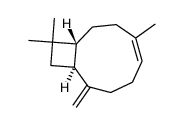
87-44-5 structure
- Name: trans-Caryophyllene
- Chemical Name: (-)-β-caryophyllene
- CAS Number: 87-44-5
- Molecular Formula: C15H24
- Molecular Weight: 204.351
- Catalog: Flavors and spices Synthetic spice Hydrocarbon spice Olefin
- Create Date: 2018-02-07 08:00:00
- Modify Date: 2026-07-01 17:11:54
-
β-Caryophyllene is a CB2 receptor agonist.
| Name | (-)-β-caryophyllene |
|---|---|
| Synonyms |
β-cyophyllene,[1R-(1R,4E,9S)]-4,11,11-trimethyl-8-methylene-bicyclo[7.2.0]undec-4-ene,(E)-cyophyllene
beta-ciofillene (1R,4E,9S)-4,11,11-trimethyl-8-methylidenebicyclo[7.2.0]undec-4-ene TRANS-CYOPHYLLENE (-)-TRANS-CYOPHYLLENE Bicyclo[7.2.0]undec-4-ene, 4,11,11-trimethyl-8-methylene-, [1R-(1R*,4E,9S*)] (1R,4E,9S)-4,11,11-Trimethyl-8-methylenebicyclo[7.2.0]undec-4-ene 4,11,11-trimethyl-8-methylene-,(1r-(1r*,4e,9s*))-bicyclo(7.2.0)undec-4-en Bicyclo(7.2.0)undec-4-ene, 8-methylene-4,11,11-trimethyl-, (E)-(1R,9S)-(-) 8-methylene-4,11,11-trimethyl-,(e)-(1r,9s)-(-)-bicyclo(7.2.0)undec-4-en BetaCryophellene 8-METHYLENE-4,11,11-TRIMETHYLBICYCLO-UNDEC-4-ENE B-CYOPHYLLENE, NATURAL L-Cyophyllene CYOPHYLLENE, (-)-TRANS 8-METHYLENE-4,11,11-TRIMETHYLBICYCLO[7.2.0]UNDEC-4-ENE (E)-Caryophyllene β-Cyophyllene, trans-(1R,9S)-8-Methylene-4,11,11-trimethylbicyclo[7.2.0]undec-4-ene β-caryophyllene Eugenol Impurity 1(Eugenol Impurity A) bicyclo[7.2.0]undec-4-ene,4,11,11-trimethyl-8-methylene-,(E)-(1R,9S)-(-) (-)-trans-Caryophyllene [1R-(1R*,4E,9S*)]-4,11,11-trimethyl-8-methylene-bicyclo[7.2.0]-4-undecene (1R,9S)-4,11,11-Trimethyl-8-methylenebicyclo[7.2.0]undec-4-ene l-Caryophyllene E-beta-cyophyllene Bicyclo[7.2.0]undec-4-ene, 4,11,11-trimethyl-8-methylene-, (E)-(1R,9S)-(-) BETA-CYOPHYLLEN HUMULENE, alpha-(SG) NATURAL β-CYOPHYLLENE (-)-Caryophyllene β-(E)-Caryophyllene TRANS-(1R,9S)-8-METHYLENE-4,11,11-TRIMETHYLBICYCLO[7.2.0]UNDEC-4-ENE Caryophyllene CYOPHYLLENE, (-)-trans-(SG) (1R,9S)-8-METHYLEN-4,11,11-TRIMETHYL-BICYCLO[7.2.0]UNDEC-4-ENE trans-beta-cyophyllene (-)-E-cyophyllene 8-METHYLENE-4,11,11-TRIMETHYLBICYCLO[7.2.0]UNDEC-4-ENE FCC (-)-trans-Cyophyllene, trans-(1R,9S)-8-Methylene-4,11,11-trimethylbicyclo[7.2.0]undec-4-ene Soluble Cyophyllene, Liposomal Cyophyllene, Cyophyllene NanoEmulsion [1R-(1R*,4E,9S*)]-4,11,11-Trimethyl-8-methylenebicyclo[7.2.0]undec-4-ene (-)-TRANS-CYOPHYLLENE WITH Bicyclo7.2.0undec-4-ene, 4,11,11-trimethyl-8-methylene-, (1R,4E,9S) CYOPHYLLENE CYOPHYLLENE NATURAL Caryophyllene (VAN) CYOPHYLLEN BETA NATUERLICH EINECS 201-746-1 4,11,11-trimethyl-8-methylene-,[1R-(1R*,4E,9S*)]-Bicyclo[7.2.0]undec-4-ene Cyophyllene (E) 1-cyophyllene COPHYLENE B-CYOPHYLLENE β-cyophyllen (E)-Cyophyllene beta-(E)-Cyophyllene MFCD00075925 BETA-CYOPHYLLENE 2-Methylene-6,10,10-trimethyl bicyclo[7.2.0]undec-5-ene [1R-(1R*,4E,9S*)]-8-methylene-4,11,11-trimethylbicyclo[7.2.0]-4-undecane (-)-beta-caryophyllene BETA-CYOPHYLLENE FCC beta-Cyophyllene solution beta-trans-cyophyllene CYOPHYLLENE ,alpha + beta MIXT (E)-beta-Cyophylene BETA-CYPOPHYLLENE Eugenol Impurity A t-.beta.-cyophyllene (-) TRANS CYOPHYLLEN |
| Description | β-Caryophyllene is a CB2 receptor agonist. |
|---|---|
| Related Catalog | |
| Target |
CB2 receptor[1] |
| In Vitro | Among the tested cancer cells, β-Caryophyllene demonstrates selective anti-proliferative effect against three cancer cell lines, namely HCT 116 (colon cancer, IC50=19 μM), PANC-1 (pancreatic cancer, IC50=27 μM), and HT29 (colon cancer, IC50=63 μM) cells, whereas β-Caryophyllene exhibits either moderate or poor cytotoxic effects against ME-180, PC3, K562 and MCF-7. Results show that β-Caryophyllene possesses higher selectivity towards the colorectal cancer cells (HCT 116), with selectivity index (SI)=27.9, followed by PANC-1 and HT 29 cells with SI=19.6 and 8, respectively. The apoptotic index estimated for β-Caryophyllene treatment on HCT 116 cells after 24 h treatment is 64±0.04. β-Caryophyllene at 10 μM concentration, causes significant nuclei condensation after 6 h of treatment. β-caryophyllene exhibits a dose and time-dependent inhibitory effect on the motility of HCT 116 cells[2]. |
| In Vivo | Treatment with β-Caryophyllene at different doses does not show any effects on swimming speed during the test. Oral treatment with β-Caryophyllene ameliorates the rise in β-amyloid deposition in the transgenic mice in a roughly dose-dependent manner, and the two higher doses exhibit almost equal effects in modifying the β-amyloid burden. The number of activated astroglial cells is higher in vehicle-treated mouse brains than in β-Caryophyllene-treated mouse brains with different doses. β-Caryophyllene is effective at reducing the enhancement of the COX-2 protein level found in vehicle-treated APP/PS1 mice[1]. Animals treated with β-Caryophyllene display higher values of object recognition index than their vehicle-treated counterparts [t(14)=4.204, P<0.05]. The total time spent in object exploration during the test trial is not significantly different between β-Caryophyllene-treated and vehicle-treated animals (t(14)=0.5874, P>0.05). Treatment with β-Caryophyllene does not significantly alter these seizure-induced neurochemical changes[3]. |
| Cell Assay | Panel of human cancer cells such as, pancreatic (PANC-1), colorectal (HCT-116 and HT-29), invasive squamous cell carcinoma (ME-180), leukemia (K562), hormone sensitive and invasive breast cancer cell line (MCF-7), and prostatic (PC3) adenocarcinoma cell lines are used. Cells are incubated in a humidified CO2 incubator at 37°C supplied with 5% CO2. Inhibitory effect of β-Caryophyllene on proliferation of the cell lines is tested using the MTT assay. The selectivity index (SI) for the cytotoxicity of β-Caryophyllene is calculated using the ratio of IC50 of β-Caryophyllene on a normal cell line (NIH-3T3) to the IC50 of β-Caryophyllene on cancer cell lines[2]. |
| Animal Admin | Male double transgenic APP/PS1 mice and wild-type littermates are used. The mice are group housed (3 to 5 animals/cage) with a 12:12-hour light/dark cycle and ad libitum access to food and water. In this experiment, animals are orally treated by gavage with 16, 48, or 144 mg/kg of β-Caryophyllene every morning for 10 weeks starting at the age of 7 months. All vehicle solutions are used for the respective control animal treatments and the Morris water maze test is performed[1]. |
| References |
| Density | 0.9±0.1 g/cm3 |
|---|---|
| Boiling Point | 268.4±10.0 °C at 760 mmHg |
| Molecular Formula | C15H24 |
| Molecular Weight | 204.351 |
| Flash Point | 104.9±13.8 °C |
| Exact Mass | 204.187805 |
| LogP | 6.78 |
| Vapour Pressure | 0.0±0.3 mmHg at 25°C |
| Index of Refraction | 1.495 |
CHEMICAL IDENTIFICATION
HEALTH HAZARD DATAACUTE TOXICITY DATA
|
| Personal Protective Equipment | Eyeshields;Gloves |
|---|---|
| Hazard Codes | Xi |
| Risk Phrases | 36/37/38 |
| Safety Phrases | S26-S36 |
| RIDADR | NONH for all modes of transport |
| WGK Germany | 1 |
| RTECS | DT8400000 |
| HS Code | 2902199090 |
|
~80%
87-44-5 |
| Literature: Larionov, Oleg V.; Corey Journal of the American Chemical Society, 2008 , vol. 130, # 10 p. 2954 - 2955 |
|
~10%
87-44-5 |
| Literature: Peppard, Terence L.; Sharpe, F. Richard; Elvidge, John A. Journal of the Chemical Society, Perkin Transactions 1: Organic and Bio-Organic Chemistry (1972-1999), 1980 , p. 311 - 313 |
|
~%
87-44-5
Detail
|
| Literature: Journal of Organic Chemistry USSR (English Translation), , vol. 25, # 1.2 p. 109 - 118 Zhurnal Organicheskoi Khimii, , vol. 25, # 1 p. 122 - 132 |
|
~%
87-44-5 |
| Literature: Journal of Organic Chemistry USSR (English Translation), , vol. 26, # 10.2 p. 1839 - 1852 Zhurnal Organicheskoi Khimii, , vol. 26, # 10 p. 2129 - 2145 |
|
~%
87-44-5
Detail
|
| Literature: Journal of Organic Chemistry USSR (English Translation), , vol. 26, # 10.2 p. 1839 - 1852 Zhurnal Organicheskoi Khimii, , vol. 26, # 10 p. 2129 - 2145 |

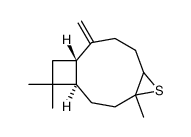
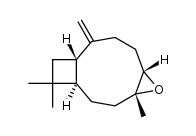

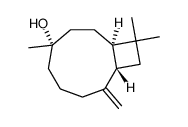


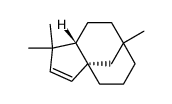
| Precursor 3 | |
|---|---|
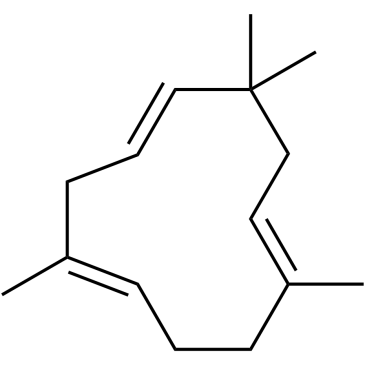
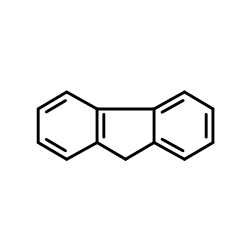
| DownStream 10 | |





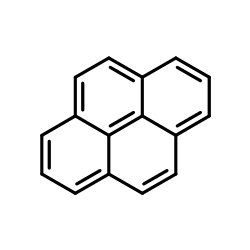
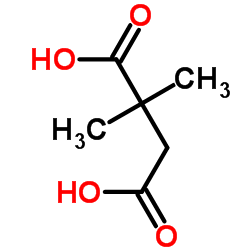
| HS Code | 2902199090 |
|---|---|
| Summary | 2902199090 other cyclanes, cyclenes and cyclotherpenes。Supervision conditions:None。VAT:17.0%。Tax rebate rate:9.0%。MFN tariff:2.0%。General tariff:30.0% |