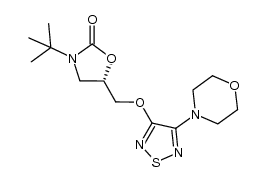
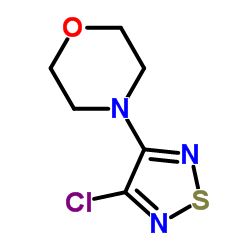
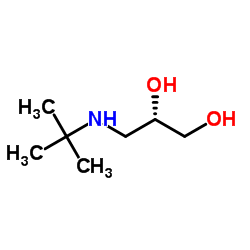
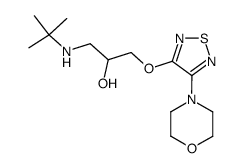
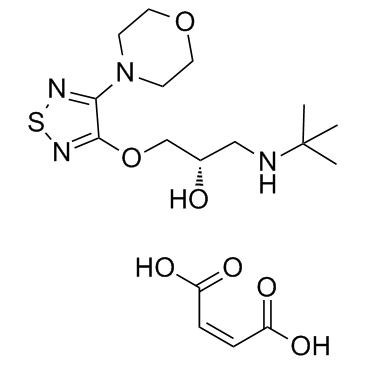
26839-75-8

26839-75-8 structure
- Name: Timolol
- Chemical Name: (S)-timolol (anhydrous)
- CAS Number: 26839-75-8
- Molecular Formula: C13H24N4O3S
- Molecular Weight: 316.42000
- Catalog: API Circulatory system medication Antiarrhythmic drug
- Create Date: 2018-06-23 13:22:38
- Modify Date: 2026-07-16 12:15:50
-
Timolol is a β-blocker available for both topical and systemic administration. Topical Timolol is primarily used to reduce intraocular pressure with open-angle glaucoma and ocular hypertension. Timolol can also be used for the research of infantile hemangiomas, hypertension, myocardial infarction, migraine prophylaxis, and atrial fibrillation.Timolol also has cardioprotective effect[1][2].
| Name | (S)-timolol (anhydrous) |
|---|---|
| Synonyms |
blocadren
(S)-Timolol (-)-S-Timolol Istalol L-714503 TIMOLOL (-)-3-MORPHOLINO-4-(3-TERT-BUTYLAMINO-2-HYDROXYPROPOXY)-1,2,5-THIADIAZOLE (S)-1-(tert-Butylamino)-3-[(4-morpholino-1,2,5-thiadiazol-3-yl)oxy]-2-propanol (S)-(-)-(1-tert-butylamino)-3-(4-morpholino-1,2,5-thiadiazol-3-yloxy)-2-propanol (s)-3-yl]oxy] S(-)-Timolol maleate (s)-1-(tert-butylamino)-3-[(4-morpholino-1,2,5-thiadiazol-3-yl)oxy]propan-2-ol 2-Propanol, 1-(tert-butylamino)-3-[(4-morpholino-1,2,5-thiadiazol-3-yl)oxy]-, (S)-(-)- (8CI) EINECS 248-032-6 MFCD00864565 1-(tert-butylamino)-3-{[4-(4-morpholinyl)-1,2,5-thiadiazol-3-yl]oxy}-2-propanol 2-Propanol, 1-[(1,1-dimethylethyl)amino]-3-[[4-(4-morpholinyl)-1,2,5-thiadiazol-3-yl]oxy]-, (2S)- (9CI) Timolol free base Timopic s-(-)-3-(3-tert-butylamino-2-hydroxypropoxy)-4-morpholino-1,2,5-thiadiazole TimololMaleate26921-/Base (S)-thymolol timolol (s)-1-[1,1-dimethylethyl)amino]-3-[[4-(4-morpholinyl)-1,2,5-thiadiazol-3-yl]oxy Timolol //BP 2-propanol,1-[(1,1-dimethylethyl)amino]-3-[[4-(4-morpholinyl)-1,2,5-thiadiazol (S)-timolol (2S)-1-(tert-butylamino)-3-[(4-morpholin-4-yl-1,2,5-thiadiazol-3-yl)oxy]propan-2-ol Timolol Intermediate Optimol (S)-(-)-3-(3-tert-butylamino-2-hydroxypropoxy)-4-(N-morpholino)-1,2,5-thiadiazole Timacar l-Timolol (2S)-1-(tert-butylamino)-3-[(4-morpholino-1,2,5-thiadiazol-3-yl)oxy]propan-2-ol Timoptic Blocadren Betimol Timoptol 2-Propanol, 1-[(1,1-dimethylethyl)amino]-3-[[4-(4-morpholinyl)-1,2,5-thiadiazol-3-yl]oxy]-, (S) 2-Propanol, 1-[(1,1-dimethylethyl)amino]-3-[[4-(4-morpholinyl)-1,2,5-thiadiazol-3-yl]oxy]-, (2S) Oftensin |
| Description | Timolol is a β-blocker available for both topical and systemic administration. Topical Timolol is primarily used to reduce intraocular pressure with open-angle glaucoma and ocular hypertension. Timolol can also be used for the research of infantile hemangiomas, hypertension, myocardial infarction, migraine prophylaxis, and atrial fibrillation.Timolol also has cardioprotective effect[1][2]. |
|---|---|
| Related Catalog | |
| In Vitro | Timolol can significantly prevent the increased lipid peroxidation level of the heart from diabetic rats. Timolol can induce a well-balanced ratio between oxidative stress and antioxidant defense system in the diabetic animals, can have an important cardioprotection against diabetes-induced ERS and associated apoptotic effects[3]. |
| In Vivo | Timolol has a cardioprotective effect via inhibition of ERS response in diabetic rats[3]. Animal Model: Experimental diabetes model: 3-month old male Wistar rats[3]. Dosage: 5 mg/kg Administration: Timolol (5 mg/kg daily for 12-week) Result: Showed cardioprotective effect. |
| References |
| Density | 1.224 g/cm3 |
|---|---|
| Boiling Point | 487.2ºC at 760 mmHg |
| Melting Point | 71.5 - 72.5ºC |
| Molecular Formula | C13H24N4O3S |
| Molecular Weight | 316.42000 |
| Flash Point | 248.5ºC |
| Exact Mass | 316.15700 |
| PSA | 107.98000 |
| LogP | 0.95840 |
| Vapour Pressure | 2.62E-10mmHg at 25°C |
| Index of Refraction | 1.548 |
| Precursor 9 | |
|---|---|
| DownStream 1 | |