2898-95-5
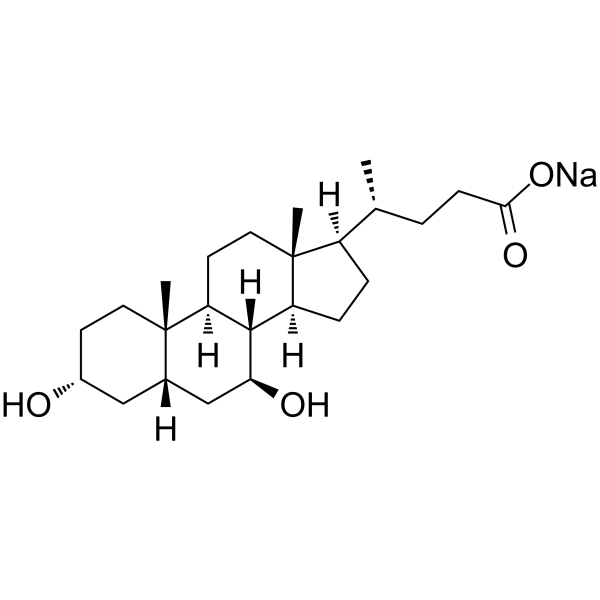
2898-95-5 structure
- Name: Ursodeoxycholic acid sodium
- Chemical Name: NaUDCh
- CAS Number: 2898-95-5
- Molecular Formula: C24H39NaO4
- Molecular Weight: 414.554
- Catalog: Signaling Pathways GPCR/G Protein GPCR19
- Create Date: 2017-12-30 12:00:17
- Modify Date: 2026-06-30 22:01:31
-
Ursodeoxycholic acid (Ursodeoxycholate) sodium is a secondary bile acid issued from the transformation of (cheno)deoxycholic acid by intestinal bacteria, acting as a key regulator of the intestinal barrier integrity and essential for lipid metabolism. Ursodeoxycholic acid sodium acts as signaling molecule, exerting its effects by interacting with bile acid activated receptors, including G-protein coupled bile acid receptor 5 (TGR5, GPCR19) and the farnesoid X receptor (FXR). Ursodeoxycholic acid sodium can be used for the research of a variety of hepatic and gastrointestinal diseases. Orally active[1][2].
| Name | NaUDCh |
|---|---|
| Synonyms |
Ursodeoxycholate sodium
URSODEOXYCHOLIC ACID SODIUM SALT //BP (3alpha,5beta,7beta)-3,7-Dihydroxycholan-24-oic acid monosodium salt Sodium ursodesoxycholate (R)-4-((3R,5S,7S,8R,9S,10S,13R,14S,17R)-3,7-dihydroxy-10,13-dimethylhexadecahydro-1H-cyclopenta[a]phenanthren-17-yl)pentanoic acid, sodium salt Sodium (3α,5β,7β)-3,7-dihydroxycholan-24-oate Ursodiol sodium Cholan-24-oic acid, 3,7-dihydroxy-, sodium salt (1:1), (3α,5β,7β) UDCA Na Cholan-24-oic acid, 3,7-dihydroxy-, MonosodiuM salt, (3a,5b,7b) SODIUM URSODEOXYCHOLATE HYDRATE Cholan-24-oic acid, 3,7-dihydroxy-, sodium salt, (3α,5β,7β)- (1:1) Ursodeoxycholic Acid (sodium salt) gastrointestinal diseases,lipid metabolism,Ursodeoxycholate,GPB1,Ursodeoxycholic acid sodium,intestinal brier inteity,NR1H4,Ursodeoxycholic acid,G-protein coupled rector 19,hatic,UCDA,inhibit,oral,GPCR19,Inhibitor,G protein-coupled Bile Acid Rector 1,Endogenous Metabolite,Ursodiol,FXR,secondy bile acid,T5 UCDA sodium |
| Description | Ursodeoxycholic acid (Ursodeoxycholate) sodium is a secondary bile acid issued from the transformation of (cheno)deoxycholic acid by intestinal bacteria, acting as a key regulator of the intestinal barrier integrity and essential for lipid metabolism. Ursodeoxycholic acid sodium acts as signaling molecule, exerting its effects by interacting with bile acid activated receptors, including G-protein coupled bile acid receptor 5 (TGR5, GPCR19) and the farnesoid X receptor (FXR). Ursodeoxycholic acid sodium can be used for the research of a variety of hepatic and gastrointestinal diseases. Orally active[1][2]. |
|---|---|
| Related Catalog | |
| Target |
Microbial Metabolite |
| In Vivo | Ursodeoxycholic acid (50, 150, and 450 mg/kg; p.o.; daily for 21 days) sodium results in weight loss in C57BL/6J wildtype mice[1]. Animal Model: 5 week old C57BL/6J WT mice (male and female)[1] Dosage: 50, 150, and 450 mg/kg dissolved in corn oil Administration: Oral gavage; daily for 21 days Result: Mice in the 50 and 450 mg/kg groups sustained significant weight loss within a week. At 50 mg/kg, this weight loss persisted over the course of the experiment. At 450 mg/kg, initially weight loss was noted during the first and third week of ursodiol administration. At 150 mg/kg, it did not have significantly different weights compared to the untreated mice. |
| References |
| Molecular Formula | C24H39NaO4 |
|---|---|
| Molecular Weight | 414.554 |
| Exact Mass | 414.274597 |
| PSA | 80.59000 |
| LogP | 3.14320 |
| Vapour Pressure | 2.98E-14mmHg at 25°C |