26787-78-0
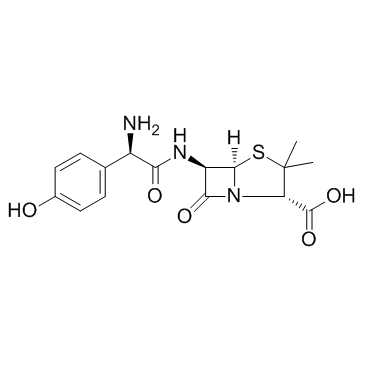
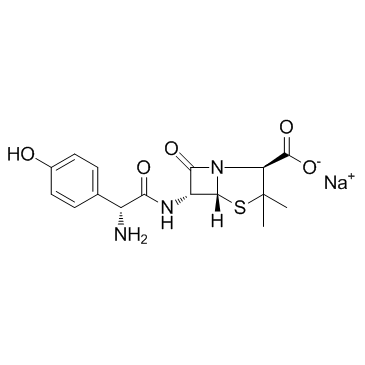
26787-78-0 structure
- Name: Amoxicillin
- Chemical Name: amoxicillin
- CAS Number: 26787-78-0
- Molecular Formula: C16H19N3O5S
- Molecular Weight: 365.404
- Catalog: API Antibiotics Penicillin
- Create Date: 2018-02-05 08:00:00
- Modify Date: 2026-07-01 10:31:24
-
Amoxicillin is a moderate- spectrum, bacteriolytic, β-lactam antibiotic.Target: AntibacterialAmoxicillin is a moderate-spectrum, bacteriolytic, β-lactam antibiotic in the aminopenicillin family used to treat bacterial infections caused by susceptible Gram-positive and Gram-negative microorganisms. It is usually the drug of choice within the class because it is better-absorbed, following oral administration, than other β-lactam antibiotics. Amoxicillin is susceptible to degradation by β-lactamase-producing bacteria, which are resistant to a narrow spectrum of β-lactam antibiotics, such as penicillin. For this reason, it is often combined with clavulanic acid, a β-lactamase inhibitor. This increases effectiveness by reducing its susceptibility to β-lactamase resistance. From Wikipedia.
| Name | amoxicillin |
|---|---|
| Synonyms |
Lamoxy
Novenzymin Amoxin Amoxtrex Amoxa Uro-clamoxyl Imox Moxylin Ampidroxyl 6-(d-(-)-p-hydroxy-alpha-aminobenzyl)penicillin Excillin 4-Thia-1-azabicyclo3.2.0htane-2-cboxylic acid, 6-(2R)-amino(4-hydroxyphenyl)acetylamino-3,3-dimethyl-7-oxo-, (2S,5R,6R) ibiamox amoxicillinstanddsolution Samosillin Amoxy d-2-amino-2-(4-hydroxyphenyl)acetamidopenicillanicacid Grunamox alpha-amino-p-hydroxybenzylpenicillin Kamoxin amoxipen Damoxicil Zamocilline Polymox Rhamoxilina Limox Pasetocin Gomcillin (2S,5R,6R)-6-{(E)-[(2R)-2-Amino-1-hydroxy-2-(4-hydroxyphenyl)ethylidene]amino}-3,3-dimethyl-7-oxo-4-thia-1-azabicyclo[3.2.0]heptane-2-carboxylic acid Sigmopen Amoxine Comoxyl Moxaline Zimox Amoxi-Diolan Eupen 6-[D(-)-a-Amino-p-hydroxyphenylacetamido]penicillanic Acid Amoxina Sawacillin Suramox PM amolin Amoxicillin-ratiopharm Simplamox Draximox Amoxihexal [2S,5R,6R]-6-[[[2R]-Amino[4-hydroxyphenyl]acetyl]amino]-3,3-dimethyl-7-oxo-4-thia-1-azabicyclo[3.2.0]heptane-2-carboxylic Acid Optium Moxlin Trimox Mopen insil Lotid Hipen AMOXICILLIN 3-HYDRATE Moxilen Rocillin Amosine Gimalxina α-Amino-p-hydroxybenzylpenicillin Bioxyllin Triafamox clamoxyl Moxarin amoxi Morgenxil Robamox Amoran Grinsul p-Hydroxyampicillin Amophar Amodex Moxypen Reloxyl Efpinex Sil-A-mox p-hydroxyampicillin Bimox Fullcilina Triamoxil Teramoxyl Matasedrin d-(-)-alpha-amino-p-hydroxybenzylpenicillin Ronemox Amoxivan Amoxillin Amoxipen Pamoxicillin D-(-)-α-amino-p-hydroxybenzyl penicillin trihydrate Novabritine Posmox Novamoxin Ranoxyl Amoxcillin clavulanate Twicyl brl2333 Izoltil Amoflux Utimox Flemoxine Imoxil o[3.2.0]htane-2-cboxylicacid 6-[[amino(4-hydroxyphenyl)acetyl]-amino]-3,3-dimethyl-7-oxo-4-thia-1-azabicycl Kentrocyllin AMOXICILLIN (CRM STANDD) amopenixin Trilaxin 6-(p-hydroxy-alpha-aminophenylacetamido)penicillanicacid Bactamox Medimox Sawamezin Cuxacillin Dura AX Hosboral 6-[d(-)-alpha-amino-p-hydroxyphenylacetamido]penicillanicacid Intermox A-Gram d-nyl)acetamido) AMOX Imaxilin Rancil MOx anemolin Tolodina [2S-[2a,5a,6b(S*)]]-6-[[Amino(4-hydroxyphenyl)acetyl]amino]-3,3-dimethyl-7-oxo-4-thia-1-azabicyclo[3.2.0]heptane-2-carboxylic Acid Protexillin Bridopen Ranmoxy Jerramcil Amoxaren Zamocillin Larocilin ampc 4-thia-1-azobicyclo[3.2.0]htane-2-cboxylicacid,6-[[amino(4-hydroxyphenyl) Cilamox Amoxy-diolan Zerrsox efpenix Agerpen Amoxal Gemox amoxil Bioxidona blp1410 cyclo-[3.2.0]htane-2-cboxylicacid Alphamox Azillin Zamox D-(-)-ALPHA-AMINO-P-HYDROXYBENZYL PENICILLIN TRIHYDRATE Amagesen Solutab 4-thia-1-azabicyclo(3.2.0)htane-2-cboxylicacid,6-(2-amino-2-(p-hydroxyphe Amoxi-basan Amoxidal histocillin Amoxillat Amoxisol 4-thia-1-azabicyclo(3.2.0)htane-2-cboxylicacid,6-((amino(4-hydroxyphenyl) Imacillin Virgoxillin EINECS 248-003-8 Clamox a-Amino-p-hydroxybenzylpenicillin hiconcil Amoxibiotic Meixil Galenamox Amoxipenil Farconcil Ciblor Zamoxil Anemol PENSYN Moxyvit D-(-)-a-amino-p-hydroxybenzylpenicillintrydrate Clamoxyl (Trihydrate) Amopen (2S,5R,6R)-6-{[(2R)-2-Amino-2-(4-hydroxyphenyl)acetyl]amino}-3,3-dimethyl-7-oxo-4-thia-1-azabicyclo[3.2.0]heptane-2-carboxylic acid amoxicillintrhydrate MFCD00072029 Apo-Amoxi Ikamoxil Amoxi-wolff delacillin Audumic Alfamox Ospamox Penbiosyn Fisamox Moxcil Winmox Amcill Amoxapen Amo-flamsian AMOXICILLIN TRIHYDRATE(FOR SENSION.) Abdimox Biomox Cemoxin Himinomax Pacetocin 6-(p-Hydroxy-α-aminophenylacetamido)penicillanic acid Yisulon Sintopen Isimoxin Acimox Samthongcillin Bintamox Velamox Gramidil abicyclo[3.2.0]htane-2-cboxylicacidtrihydrate Adbiotin 6-(p-Hydroxy-a-aminophenylacetamido)penicillanic Acid Majorpen Saltermox Sia-mox Moxacin AMOXYCILLIN COMPACTED Paradroxil Foxolin Hidramox Pamocil Specillin Senox Actimoxi Sawacillin (Trihydrate) Superpeni amoxycillin (-)-6-[2-Amino-2-(p-hydroxyphenyl)acetamido]-3,3-dimethyl-7-oxo-4-thia-1-azabicyclo[3.2.0]heptane-2-carboxylic Acid 6-(d-(-)-alpha-amino-p-hydroxyphenylacetamido)penicillanicacid Maxcil Apitart Coamoxin bristamox sumox |
| Description | Amoxicillin is a moderate- spectrum, bacteriolytic, β-lactam antibiotic.Target: AntibacterialAmoxicillin is a moderate-spectrum, bacteriolytic, β-lactam antibiotic in the aminopenicillin family used to treat bacterial infections caused by susceptible Gram-positive and Gram-negative microorganisms. It is usually the drug of choice within the class because it is better-absorbed, following oral administration, than other β-lactam antibiotics. Amoxicillin is susceptible to degradation by β-lactamase-producing bacteria, which are resistant to a narrow spectrum of β-lactam antibiotics, such as penicillin. For this reason, it is often combined with clavulanic acid, a β-lactamase inhibitor. This increases effectiveness by reducing its susceptibility to β-lactamase resistance. From Wikipedia. |
|---|---|
| Related Catalog | |
| References |
| Density | 1.6±0.1 g/cm3 |
|---|---|
| Boiling Point | 701.8±70.0 °C at 760 mmHg |
| Molecular Formula | C16H19N3O5S |
| Molecular Weight | 365.404 |
| Flash Point | 378.2±35.7 °C |
| Exact Mass | 365.104553 |
| PSA | 158.26000 |
| LogP | 0.92 |
| Vapour Pressure | 0.0±2.3 mmHg at 25°C |
| Index of Refraction | 1.745 |
| Storage condition | 2-8°C |
| Stability | Stable. Incompatible with strong oxidizing agents. |
CHEMICAL IDENTIFICATION
HEALTH HAZARD DATAACUTE TOXICITY DATA
|
| Symbol |

GHS08 |
|---|---|
| Signal Word | Danger |
| Hazard Statements | H317-H334 |
| Precautionary Statements | P261-P280-P342 + P311 |
| Personal Protective Equipment | dust mask type N95 (US);Eyeshields;Faceshields;Gloves |
| Hazard Codes | Xn:Harmful |
| Risk Phrases | R42/43 |
| Safety Phrases | S22-S36/37 |
| RIDADR | NONH for all modes of transport |
| WGK Germany | 2 |
| RTECS | XH8300000 |
| HS Code | 2941109200 |
| Precursor 10 | |
|---|---|
| DownStream 3 | |





| HS Code | 2941109200 |
|---|