diglyme

diglyme structure
|
Common Name | diglyme | ||
|---|---|---|---|---|
| CAS Number | 111-96-6 | Molecular Weight | 134.174 | |
| Density | 0.9±0.1 g/cm3 | Boiling Point | 159.8±0.0 °C at 760 mmHg | |
| Molecular Formula | C6H14O3 | Melting Point | −64 °C(lit.) | |
| MSDS | Chinese USA | Flash Point | 70.0±0.0 °C | |
| Symbol |


GHS02, GHS08 |
Signal Word | Danger | |
This table lists Chinese names, IUPAC names and various aliases of this chemical substance.
| Name | diglyme |
|---|---|
| Synonym | More Synonyms |
This table shows physicochemical parameters including melting point, boiling point, density, solubility and optical rotation. Missing data is marked as N/A.
| Density | 0.9±0.1 g/cm3 |
|---|---|
| Boiling Point | 159.8±0.0 °C at 760 mmHg |
| Melting Point | −64 °C(lit.) |
| Molecular Formula | C6H14O3 |
| Molecular Weight | 134.174 |
| Flash Point | 70.0±0.0 °C |
| Exact Mass | 134.094299 |
| PSA | 27.69000 |
| LogP | -0.80 |
| Vapour density | 4.6 (vs air) |
| Vapour Pressure | 3.2±0.2 mmHg at 25°C |
| Index of Refraction | 1.394 |
| InChIKey | SBZXBUIDTXKZTM-UHFFFAOYSA-N |
| SMILES | COCCOCCOC |
| Stability | Stable. Combustible. Incompatible with strong oxidizing agents. May be air or light sensitive. |
| Water Solubility | Miscible |
This table provides MSDS information including hazard classification, first‑aid, fire‑fighting, spill handling, operation and storage instructions.
This table summarizes toxicological test data, acute & chronic toxicity and ecological hazard parameters for this chemical.
CHEMICAL IDENTIFICATION
HEALTH HAZARD DATAACUTE TOXICITY DATA
MUTATION DATA
|
This table covers safety warnings, protective measures, incompatible substances and disposal guidelines for this compound.
| Symbol |
GHS02, GHS08 |
|---|---|
| Signal Word | Danger |
| Hazard Statements | H226-H360 |
| Supplemental HS | May form explosive peroxides. |
| Precautionary Statements | P201-P210-P280-P308 + P313-P370 + P378 |
| Personal Protective Equipment | Eyeshields;Faceshields;full-face respirator (US);Gloves;multi-purpose combination respirator cartridge (US);type ABEK (EN14387) respirator filter |
| Hazard Codes | T:Toxic; |
| Risk Phrases | R10;R19;R60;R61 |
| Safety Phrases | S53-S45 |
| RIDADR | UN 3271 3/PG 3 |
| WGK Germany | 1 |
| RTECS | KN3339000 |
| Packaging Group | III |
| Hazard Class | 3 |
| HS Code | 2909199090 |
This table presents publicly reported synthetic routes, reaction conditions, reactants and product information of the compound.
This table lists upstream starting materials and downstream derivative products related to this chemical.
| Precursor 10 | |
|---|---|
| DownStream 10 | |
 CAS#:67-56-1
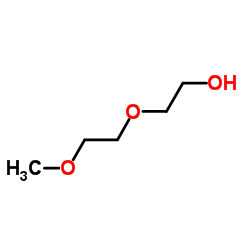 CAS#:111-77-3
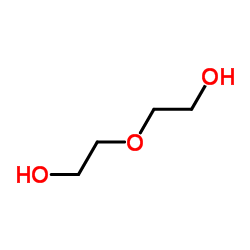 CAS#:111-46-6
 CAS#:109-86-4
 CAS#:433-06-7
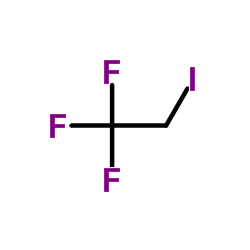 CAS#:353-83-3
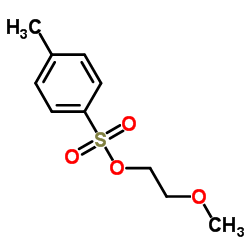 CAS#:17178-10-8
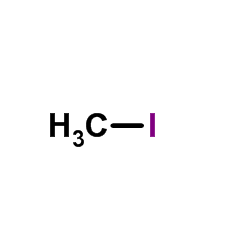 CAS#:74-88-4
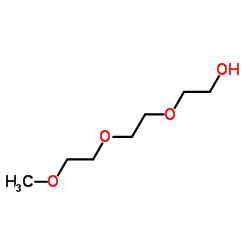 CAS#:112-35-6
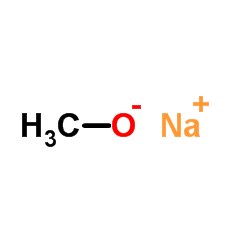 CAS#:124-41-4
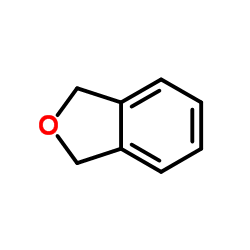 CAS#:496-14-0
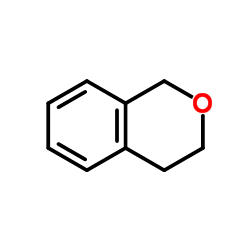 CAS#:493-05-0
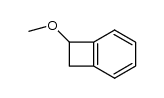 CAS#:36101-23-2
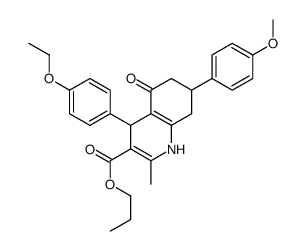 CAS#:5707-27-7
 CAS#:926-02-3
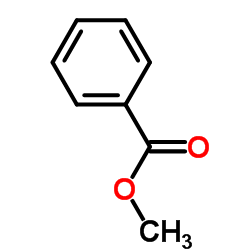 CAS#:93-58-3
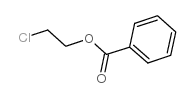 CAS#:939-55-9
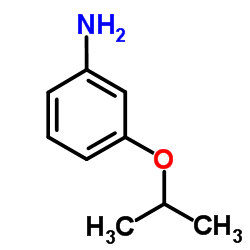 CAS#:41406-00-2
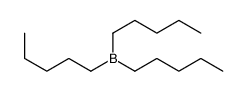 CAS#:1883-38-1
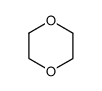 CAS#:123-91-1
This table shows customs‑related data including HS‑code, tariff and regulatory conditions for import and export.
| HS Code | 2909199090 |
|---|---|
| Summary | 2909199090. other acyclic ethers and their halogenated, sulphonated, nitrated or nitrosated derivatives. VAT:17.0%. Tax rebate rate:13.0%. . MFN tariff:5.5%. General tariff:30.0% |
This table lists relevant public references with title, journal and publication metadata for this compound.
|
Diels-Alder functionalized carbon nanotubes for bone tissue engineering: in vitro/in vivo biocompatibility and biodegradability.
Nanoscale 7 , 9238-51, (2015) The risk-benefit balance for carbon nanotubes (CNTs) dictates their clinical fate. To take a step forward at this crossroad it is compulsory to modulate the CNT in vivo biocompatibility and biodegrada... |
|
|
Radical Cationic Pathway for the Decay of Ionized Glyme Molecules in Liquid Solution.
J. Phys. Chem. B 119 , 14472-8, (2015) Chemical stability of primary radical cations (RCs) generated in irradiated matter determines substantially the radiation resistance of organic materials. Transformations of the RCs of the glyme molec... |
|
|
Salts of highly fluorinated weakly coordinating anions as versatile precursors towards hydrogen storage materials.
Dalton Trans. 44 , 19469-77, (2015) We report the most recent results related to application of a metathetic pathway towards mixed-metal borohydrides. The synthetic protocol utilizes highly-fluorinated weakly coordinating anion salts as... |
This table collects all English aliases, systematic names and CAS‑related synonyms of the compound.
| diethyleneglycol dimethylether |
| Bis(2-methoxyethyl) Ether |
| diethylene glycol dimethyl ether |
| 1-methoxyethoxy-2-methoxyethoxyethane |
| Dimethylcarbitol |
| DEG dibenzoate |
| bis-(2-methoxy ethyl)-ether |
| MFCD00008503 |
| 1-Methoxy-2-(2-methoxyethoxy)ethane |
| Benzo flex 2-45 |
| diglyme |
| Bis-(2-benzoyloxy-aethyl)-aether |
| EINECS 203-924-4 |
| diethyleneglycol dibenzoate |
| Bis(2-methoxyethyl) ether,AcroSeal,Extra Dry |
| bis-(2-benzoyloxy-ethyl)-ether |
| OXY BIS(2-ETHYL BENZOATE) |
| oxydiethylenedibenzoate |
| diethylenebenzylbenzoate |
| 2-Methoxyethyl ether |
| DIGLYCOL DIBENZOATE |
| Dimethyldiglycol |
| Diaethylenglykol-dibenzoat |
| DEGDB |
| 1O2O2O1 |
| bis(methoxyethyl) ether |
| 2,2-OXYBISETHANOLDIBENZOATE |
This section contains frequently‑asked‑questions about this compound, including basic parameters, properties, storage conditions and corresponding answers.
| Q: What is the boiling point of diglyme? |
| A: Boiling point of diglyme is 159.8±0.0 °C at 760 mmHg. |
| Q: What is the safety information for diglyme? |
| A: Safety information for diglyme: S53-S45. |
| Q: How is the water solubility of diglyme? |
| A: Water solubility of diglyme: Miscible. |
| Q: What is the melting point of diglyme? |
| A: Melting point of diglyme is −64 °C(lit.). |
| Q: What is the SMILES notation of diglyme? |
| A: SMILES notation of diglyme is COCCOCCOC. |
| Q: What is the InChIKey of diglyme? |
| A: InChIKey of diglyme is SBZXBUIDTXKZTM-UHFFFAOYSA-N. |
| Q: What is the molecular weight of diglyme? |
| A: Molecular weight of diglyme is 134.174. |
| Q: What is the LogP of diglyme? |
| A: LogP of diglyme is -0.80. |
| Q: What is the molecular formula of diglyme? |
| A: Molecular formula of diglyme is C6H14O3. |
| Q: What are the upstream materials of diglyme? |
| A: Related upstream materials(CAS) of diglyme: 67-56-1;111-77-3;111-46-6;109-86-4;433-06-7;353-83-3;17178-10-8;74-88-4;112-35-6;124-41-4. |
This table lists manufacturers and suppliers of this compound, including vendor names and product supply reference information.
| Shanghai Nianxing Industrial Co., Ltd |
| Dayang Chem (Hangzhou) Co., Ltd. |
| Henan Tianfu Chemical Co., Ltd. |