Retinyl acetate
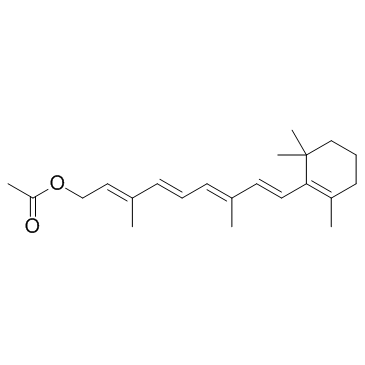
Retinyl acetate structure
|
Common Name | Retinyl acetate | ||
|---|---|---|---|---|
| CAS Number | 127-47-9 | Molecular Weight | 328.488 | |
| Density | 1.0±0.1 g/cm3 | Boiling Point | 440.5±14.0 °C at 760 mmHg | |
| Molecular Formula | C22H32O2 | Melting Point | 57-58 °C | |
| MSDS | Chinese USA | Flash Point | 124.8±18.5 °C | |
| Symbol |

GHS08 |
Signal Word | Danger | |
Use of Retinyl acetateRetinyl acetate is a natural form of vitamin A and has potential antineoplastic and chemo preventive activities. |
This table lists Chinese names, IUPAC names and various aliases of this chemical substance.
| Name | retinyl acetate |
|---|---|
| Synonym | More Synonyms |
This table contains bioactivity, target information and biological‑assay experimental data of this compound.
| Description | Retinyl acetate is a natural form of vitamin A and has potential antineoplastic and chemo preventive activities. |
|---|---|
| Related Catalog | |
| References |
This table shows physicochemical parameters including melting point, boiling point, density, solubility and optical rotation. Missing data is marked as N/A.
| Density | 1.0±0.1 g/cm3 |
|---|---|
| Boiling Point | 440.5±14.0 °C at 760 mmHg |
| Melting Point | 57-58 °C |
| Molecular Formula | C22H32O2 |
| Molecular Weight | 328.488 |
| Flash Point | 124.8±18.5 °C |
| Exact Mass | 328.240234 |
| PSA | 26.30000 |
| LogP | 7.39 |
| Vapour Pressure | 0.0±1.1 mmHg at 25°C |
| Index of Refraction | 1.532 |
| InChIKey | QGNJRVVDBSJHIZ-QHLGVNSISA-N |
| SMILES | CC(=O)OCC=C(C)C=CC=C(C)C=CC1=C(C)CCCC1(C)C |
| Storage condition | 2-8°C |
| Water Solubility | soluble |
This table provides MSDS information including hazard classification, first‑aid, fire‑fighting, spill handling, operation and storage instructions.
This table summarizes toxicological test data, acute & chronic toxicity and ecological hazard parameters for this chemical.
CHEMICAL IDENTIFICATION
HEALTH HAZARD DATAACUTE TOXICITY DATA
MUTATION DATA
|
This table covers safety warnings, protective measures, incompatible substances and disposal guidelines for this compound.
| Symbol |
GHS08 |
|---|---|
| Signal Word | Danger |
| Hazard Statements | H360-H413 |
| Precautionary Statements | P201-P308 + P313 |
| Personal Protective Equipment | Eyeshields;full-face respirator (US);Gloves;multi-purpose combination respirator cartridge (US);type ABEK (EN14387) respirator filter |
| Hazard Codes | Xn:Harmful |
| Risk Phrases | R38;R63 |
| Safety Phrases | S36/37-S45 |
| RIDADR | NONH for all modes of transport |
| WGK Germany | 2 |
| RTECS | VH6825000 |
| HS Code | 2936210000 |
This table presents publicly reported synthetic routes, reaction conditions, reactants and product information of the compound.
This table lists upstream starting materials and downstream derivative products related to this chemical.
| Precursor 7 | |
|---|---|
| DownStream 9 | |
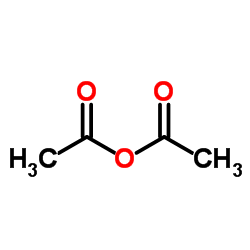 CAS#:108-24-7
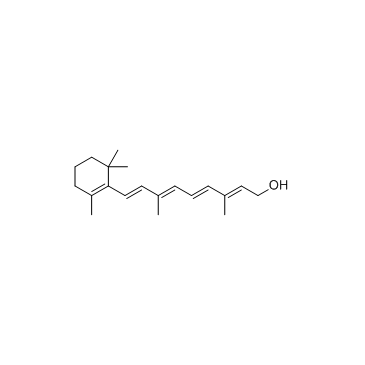 CAS#:68-26-8
![[(E)-3-methyl-4-oxobut-2-enyl] acetate Structure](https://image.chemsrc.com/caspic/338/26586-02-7.png) CAS#:26586-02-7
CAS#:26586-02-7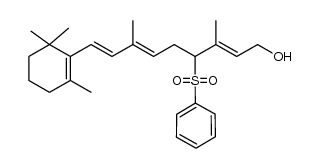 CAS#:59830-43-2
 CAS#:59830-46-5
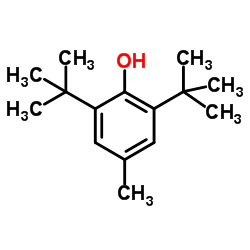 CAS#:128-37-0
 CAS#:103905-08-4
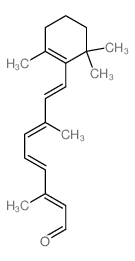 CAS#:472-86-6
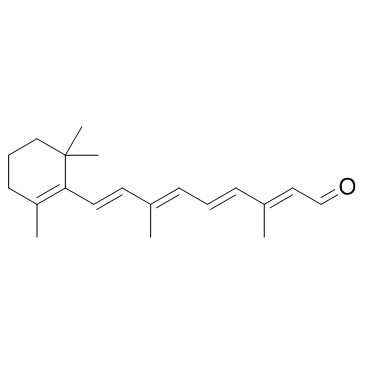 CAS#:116-31-4
 CAS#:514-85-2
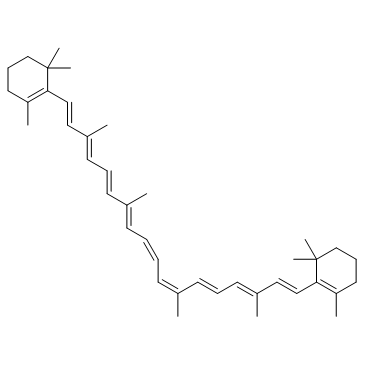 CAS#:7235-40-7
![(1E,3E)-3-methyl-1-[2,6,6-trimethylcyclohex-1-enyl]hexa-1,3,5-triene structure](https://image.chemsrc.com/caspic/027/43219-55-2.png) CAS#:43219-55-2
CAS#:43219-55-2 CAS#:70244-78-9
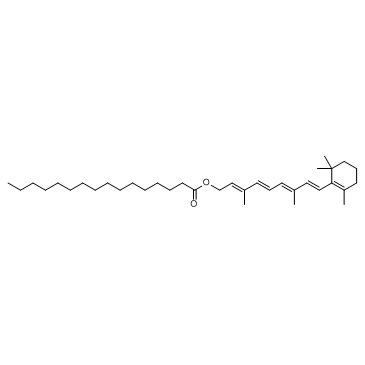 CAS#:79-81-2
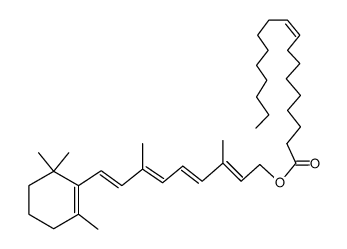 CAS#:631-88-9
This table shows customs‑related data including HS‑code, tariff and regulatory conditions for import and export.
| HS Code | 2936210000 |
|---|
This table lists relevant public references with title, journal and publication metadata for this compound.
|
Simultaneous analysis for water- and fat-soluble vitamins by a novel single chromatography technique unifying supercritical fluid chromatography and liquid chromatography.
J. Chromatogr. A. 1362 , 270-7, (2014) Chromatography techniques usually use a single state in the mobile phase, such as liquid, gas, or supercritical fluid. Chromatographers manage one of these techniques for their purpose but are sometim... |
|
|
Effects of microbial phytase on apparent and standardized total tract digestibility of calcium in calcium supplements fed to growing pigs.
J. Anim. Sci. 93 , 2255-64, (2015) An experiment was conducted to test the hypothesis that differences in the apparent total tract digestibility (ATTD) and standardized total tract digestibility (STTD) of Ca exist among Ca supplements ... |
|
|
Ultra-performance liquid chromatographic determination of tocopherols and retinol in human plasma.
J. Chromatogr. Sci. 52(9) , 1065-70, (2014) A rapid, selective and sensitive ultra-performance liquid chromatography method has been developed for the detection and quantification of tocopherols and retinol in human plasma. Alpha-tocopherol, ga... |
This table collects all English aliases, systematic names and CAS‑related synonyms of the compound.
| all-trans-Retinyl acetate |
| Vitamin A acetate (VAN) |
| all-trans-Vitamin A acetate |
| VITAMIN A1 ACETATE |
| Retinyl acetate |
| MFCD00019413 |
| trans-Vitamin A acetate |
| Retinol acetate,Retinyl acetate,Vitamin A acetate |
| Retinol, acetate |
| Retinol acetate |
| Myvax |
| O-Acetylretinol |
| Vitamin A, acetate |
| EINECS 204-844-2 |
| Myvak |
| Myvak (VAN) |
| Retinol, acetate, all-trans- (8CI) |
| Myvax (VAN) |
| Vitamin A ester |
| VITAMIN A ACETATE |
| Retinol acetate (JP15) |
| all-trans-Retinol acetate |
This section contains frequently‑asked‑questions about this compound, including basic parameters, properties, storage conditions and corresponding answers.
| Q: What is the SMILES notation of retinyl acetate? |
| A: SMILES notation of retinyl acetate is CC(=O)OCC=C(C)C=CC=C(C)C=CC1=C(C)CCCC1(C)C. |
| Q: What is the English name of retinyl acetate? |
| A: The English name of retinyl acetate is retinyl acetate. |
| Q: What is the molecular formula of retinyl acetate? |
| A: Molecular formula of retinyl acetate is C22H32O2. |
| Q: What is the polar surface area (PSA) of retinyl acetate? |
| A: Polar surface area (PSA) of retinyl acetate is 26.30000. |
| Q: What is the melting point of retinyl acetate? |
| A: Melting point of retinyl acetate is 57-58 °C. |
| Q: How is the water solubility of retinyl acetate? |
| A: Water solubility of retinyl acetate: soluble. |
| Q: What is the safety information for retinyl acetate? |
| A: Safety information for retinyl acetate: S36/37-S45. |
| Q: What is the boiling point of retinyl acetate? |
| A: Boiling point of retinyl acetate is 440.5±14.0 °C at 760 mmHg. |
| Q: What are the uses of retinyl acetate? |
| A: Main uses of retinyl acetate: Retinyl acetate is a natural form of vitamin A and has potential antineoplastic and chemo preventive activities. |
| Q: What is the LogP of retinyl acetate? |
| A: LogP of retinyl acetate is 7.39. |
This table lists manufacturers and suppliers of this compound, including vendor names and product supply reference information.
| Shanghai Nianxing Industrial Co., Ltd |
| Dayang Chem (Hangzhou) Co., Ltd. |
| Henan Tianfu Chemical Co., Ltd. |