Iprodione
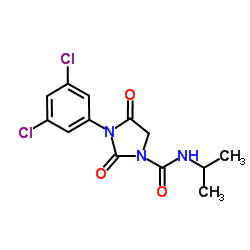
Iprodione structure
|
Common Name | Iprodione | ||
|---|---|---|---|---|
| CAS Number | 36734-19-7 | Molecular Weight | 330.167 | |
| Density | 1.5±0.1 g/cm3 | Boiling Point | 481.1±55.0 °C at 760 mmHg | |
| Molecular Formula | C13H13Cl2N3O3 | Melting Point | 130-134 °C(lit.) | |
| MSDS | Chinese USA | Flash Point | 244.7±31.5 °C | |
| Symbol |


GHS08, GHS09 |
Signal Word | Warning | |
Use of IprodioneIprodione, a dicarboximide fungicide, has a highly specific action, with a capacity to cause oxidative damage through production of free oxygen radicals (ROS). Iprodione does not appear to be species selective[1]. |
This table lists Chinese names, IUPAC names and various aliases of this chemical substance.
| Name | iprodione |
|---|---|
| Synonym | More Synonyms |
This table contains bioactivity, target information and biological‑assay experimental data of this compound.
| Description | Iprodione, a dicarboximide fungicide, has a highly specific action, with a capacity to cause oxidative damage through production of free oxygen radicals (ROS). Iprodione does not appear to be species selective[1]. |
|---|---|
| Related Catalog | |
| References |
This table shows physicochemical parameters including melting point, boiling point, density, solubility and optical rotation. Missing data is marked as N/A.
| Density | 1.5±0.1 g/cm3 |
|---|---|
| Boiling Point | 481.1±55.0 °C at 760 mmHg |
| Melting Point | 130-134 °C(lit.) |
| Molecular Formula | C13H13Cl2N3O3 |
| Molecular Weight | 330.167 |
| Flash Point | 244.7±31.5 °C |
| Exact Mass | 329.033386 |
| PSA | 69.72000 |
| LogP | 2.22 |
| Vapour Pressure | 0.0±1.3 mmHg at 25°C |
| Index of Refraction | 1.645 |
| InChIKey | ONUFESLQCSAYKA-UHFFFAOYSA-N |
| SMILES | CC(C)NC(=O)N1CC(=O)N(c2cc(Cl)cc(Cl)c2)C1=O |
| Water Solubility | 0.0013 g/100 mL |
This table provides MSDS information including hazard classification, first‑aid, fire‑fighting, spill handling, operation and storage instructions.
This table summarizes toxicological test data, acute & chronic toxicity and ecological hazard parameters for this chemical.
CHEMICAL IDENTIFICATION
HEALTH HAZARD DATAACUTE TOXICITY DATA
|
This table covers safety warnings, protective measures, incompatible substances and disposal guidelines for this compound.
| Symbol |
GHS08, GHS09 |
|---|---|
| Signal Word | Warning |
| Hazard Statements | H351-H410 |
| Precautionary Statements | P273-P281-P501 |
| Personal Protective Equipment | Eyeshields;full-face particle respirator type N100 (US);Gloves;respirator cartridge type N100 (US);type P1 (EN143) respirator filter;type P3 (EN 143) respirator cartridges |
| Hazard Codes | Xn:Harmful |
| Risk Phrases | R40;R50/53 |
| Safety Phrases | S36/37-S60-S61-S36-S26-S16 |
| RIDADR | UN 3077 9/PG 3 |
| WGK Germany | 3 |
| RTECS | NI8870000 |
| Hazard Class | 9.0 |
| HS Code | 2933290011 |
This table lists upstream starting materials and downstream derivative products related to this chemical.
| Precursor 3 | |
|---|---|
| DownStream 5 | |
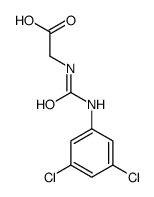 CAS#:62584-33-2
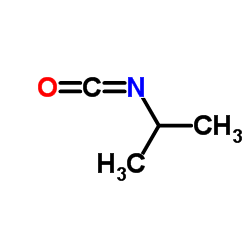 CAS#:1795-48-8
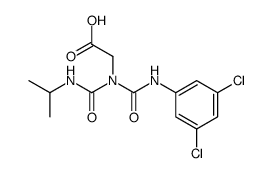 CAS#:64952-42-7
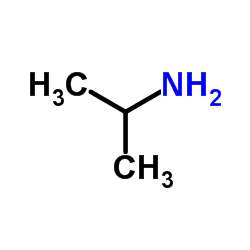 CAS#:75-31-0
 CAS#:626-43-7
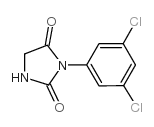 CAS#:27387-87-7
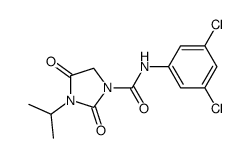 CAS#:63637-89-8
This table shows customs‑related data including HS‑code, tariff and regulatory conditions for import and export.
| HS Code | 2933290011 |
|---|---|
| Summary | 2933290011 3-(3,5-dichlorophenyl)-n-isopropyl-2,4-dioxoimidazolidine-1-carboxamide |
This table lists relevant public references with title, journal and publication metadata for this compound.
|
Multiresidue method for the determination of 13 pesticides in three environmental matrices: water, sediments and fish muscle.
Talanta 85(3) , 1500-7, (2011) Pesticides residues in aquatic ecosystems are an environmental concern which requires efficient analytical methods. In this study, we proposed a generic method for the quantification of 13 pesticides ... |
|
|
Ultraviolet-vis degradation of iprodione and estimation of the acute toxicity of its photodegradation products.
J. Chromatogr. A. 1371 , 146-53, (2014) The UV-vis photodegradation of iprodione in water was investigated with a high pressure mercury lamp photoreactor. Five photoproducts of iprodione were characterized by LC-HR-MS/MS and isotopic labeli... |
|
|
Molecular characterization, fitness and mycotoxin production of benzimidazole-resistant isolates of Penicillium expansum.
Int. J. Food Microbiol. 162(3) , 237-44, (2013) Penicillium expansum field-strains resistant to benzimidazole fungicides were isolated in high frequency from decayed apple fruit collected from packinghouses and processing industries located in the ... |
This table collects all English aliases, systematic names and CAS‑related synonyms of the compound.
| 5-24-05-00201 (Beilstein Handbook Reference) |
| 26019 rp |
| rovrol |
| ROVRAL |
| mrc910 |
| ROVER |
| 3-(3,5-Dichlorphenyl)-N-isopropyl-2,4-dioxoimidazolidin-1-carboxamid |
| KIDAN |
| Iprodione ([3-(3,5-Dichlorophenyl)-2,4-dioxoimidazolidinyl]-N-(methylethyl)carboxamide |
| 3-(3,5-Dichlorophenyl)-N-isopropyl-2,4-dioxo-1-imidazolidinecarboxamide |
| 3-(3,5-dichlorophenyl)-N-(1-methylethyl)-2,4-dioxo-1-imidazolidinecarboxamide |
| 3-(3,5-Dichlorophenyl)-N-isopropyl-2,4-dioxo-1-imidazolidinecarboximidic acid |
| MFCD00055353 |
| Iprodione |
| [3-(3,5-Dichlorophenyl)-2,4-dioxoimidazolidinyl]-N-(methylethyl)carboxamide |
| [3-(3,5-Dichlorophenyl)-2,5-dioxoimidazolidinyl]-N-(methylethyl)carboxamide |
| EINECS 253-178-9 |
| 3-(3,5-dichlorophenyl)-2,4-dioxo-N-(propan-2-yl)imidazolidine-1-carboxamide |
| 3-(3,5-DICHLOROPHENYL)-N-ISOPROPYL-2,4-DIOXOIMIDAZOLIDINE-1-CARBOXAMIDE |
| Glycophen |
| 3-(3,5-dichlorophenyl)-2,4-dioxo-N-propan-2-ylimidazolidine-1-carboxamide |
| fa2071 |
| nrc910 |
| anfor |
This section contains frequently‑asked‑questions about this compound, including basic parameters, properties, storage conditions and corresponding answers.
| Q: What is the safety information for iprodione? |
| A: Safety information for iprodione: S36/37-S60-S61-S36-S26-S16. |
| Q: What is the LogP of iprodione? |
| A: LogP of iprodione is 2.22. |
| Q: What are the upstream materials of iprodione? |
| A: Related upstream materials(CAS) of iprodione: 62584-33-2;1795-48-8;64952-42-7. |
| Q: What is the English name of iprodione? |
| A: The English name of iprodione is iprodione. |
| Q: How is the water solubility of iprodione? |
| A: Water solubility of iprodione: 0.0013 g/100 mL. |
| Q: What is the polar surface area (PSA) of iprodione? |
| A: Polar surface area (PSA) of iprodione is 69.72000. |
| Q: What are the uses of iprodione? |
| A: Main uses of iprodione: Iprodione, a dicarboximide fungicide, has a highly specific action, with a capacity to cause oxidative damage through production of free oxygen radicals (ROS). Iprodione does not appear to be species selective[1]. |
| Q: What is the molecular formula of iprodione? |
| A: Molecular formula of iprodione is C13H13Cl2N3O3. |
| Q: What is the molecular weight of iprodione? |
| A: Molecular weight of iprodione is 330.167. |
| Q: What is the SMILES notation of iprodione? |
| A: SMILES notation of iprodione is CC(C)NC(=O)N1CC(=O)N(c2cc(Cl)cc(Cl)c2)C1=O. |
This table lists manufacturers and suppliers of this compound, including vendor names and product supply reference information.
| Shanghai Nianxing Industrial Co., Ltd |
| Henan Tianfu Chemical Co., Ltd. |