N-methylcytisine
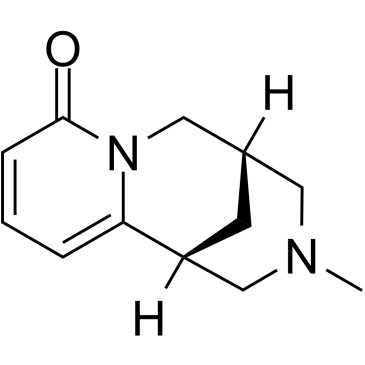
N-methylcytisine structure
|
Common Name | N-methylcytisine | ||
|---|---|---|---|---|
| CAS Number | 486-86-2 | Molecular Weight | 204.27 | |
| Density | 1.2±0.1 g/cm3 | Boiling Point | 400.8±34.0 °C at 760 mmHg | |
| Molecular Formula | C12H16N2O | Melting Point | 137-139ºC | |
| MSDS | Chinese USA | Flash Point | 191.9±18.0 °C | |
| Symbol |

GHS07 |
Signal Word | Warning | |
Use of N-methylcytisineN-Methylcytisine (Caulophylline), a tricyclic quinolizidine alkaloid, exerts hypoglycaemic, analgesic and anti-inflammatory activities. N-methylcytisine is a selective ligand of nicotinic receptors of acetylcholine in the central nervous system and has a high affinity (Kd = 50 nM) to nicotinic acetylcholine receptors (nAChR) from squid optical ganglia[1][2]. |
This table lists Chinese names, IUPAC names and various aliases of this chemical substance.
| Name | N-Methylcytisine |
|---|---|
| Synonym | More Synonyms |
This table contains bioactivity, target information and biological‑assay experimental data of this compound.
| Description | N-Methylcytisine (Caulophylline), a tricyclic quinolizidine alkaloid, exerts hypoglycaemic, analgesic and anti-inflammatory activities. N-methylcytisine is a selective ligand of nicotinic receptors of acetylcholine in the central nervous system and has a high affinity (Kd = 50 nM) to nicotinic acetylcholine receptors (nAChR) from squid optical ganglia[1][2]. |
|---|---|
| Related Catalog | |
| Target |
kd: 50 nM (nicotinic acetylcholine receptors)[2] |
| References |
This table shows physicochemical parameters including melting point, boiling point, density, solubility and optical rotation. Missing data is marked as N/A.
| Density | 1.2±0.1 g/cm3 |
|---|---|
| Boiling Point | 400.8±34.0 °C at 760 mmHg |
| Melting Point | 137-139ºC |
| Molecular Formula | C12H16N2O |
| Molecular Weight | 204.27 |
| Flash Point | 191.9±18.0 °C |
| Exact Mass | 204.126266 |
| PSA | 25.24000 |
| LogP | 0.46 |
| Vapour Pressure | 0.0±0.9 mmHg at 25°C |
| Index of Refraction | 1.616 |
| InChIKey | CULUKMPMGVXCEI-VHSXEESVSA-N |
| SMILES | CN1CC2CC(C1)c1cccc(=O)n1C2 |
This table summarizes toxicological test data, acute & chronic toxicity and ecological hazard parameters for this chemical.
CHEMICAL IDENTIFICATION
HEALTH HAZARD DATAACUTE TOXICITY DATA
|
This table covers safety warnings, protective measures, incompatible substances and disposal guidelines for this compound.
| Symbol |
GHS07 |
|---|---|
| Signal Word | Warning |
| Hazard Statements | H302 |
| Precautionary Statements | P301 + P312 + P330 |
| Hazard Codes | Xn |
| Risk Phrases | 22 |
| RIDADR | NONH for all modes of transport |
| RTECS | HA4400000 |
This table presents publicly reported synthetic routes, reaction conditions, reactants and product information of the compound.
|
~99%
N-methylcytisine CAS#:486-86-2 |
| Literature: Frigerio, Fabio; Haseler, Claire A.; Gallagher, Timothy Synlett, 2010 , # 5 p. 729 - 730 |
|
~%
N-methylcytisine CAS#:486-86-2 |
| Literature: Tsypysheva; Koval'skaya; Makara; Lobov; Petrenko; Galkin; Sapozhnikova; Zarudii; Yunusov Chemistry of Natural Compounds, 2012 , vol. 48, # 4 p. 629 - 634 Khim. Prir. Soedin., 2012 , p. 565 - 570 |
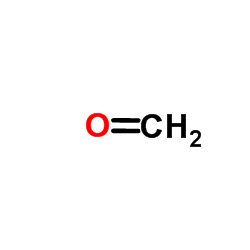
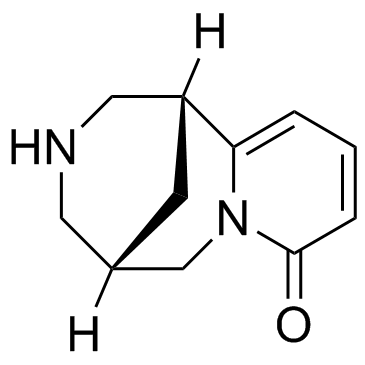
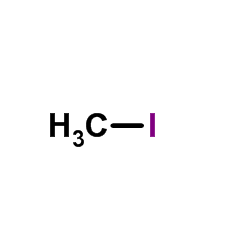
This table lists upstream starting materials and downstream derivative products related to this chemical.
| Precursor 3 | |
|---|---|
| DownStream 0 | |
This table contains target information, in‑vitro & in‑vivo assay data for this compound.
This table collects all English aliases, systematic names and CAS‑related synonyms of the compound.
| N-methylcytisine |
| N-Methylcytisine |
| (1R)-11-Methyl-7,11-diazatricyclo[7.3.1.0]trideca-2,4-dien-6-one |
| 11-Methyl-7,11-diazatricyclo[7.3.1.0]trideca-2,4-dien-6-one |
| 1,2,3,4,5,6-Hexahydro-3-methyl-1,5-methano-8H-pyrido[1,2-a][1,5]diazocin-8-one |
| Caulophylline |
| 3-methyl-1,2,3,4,5,6-hexahydro-8H-1,5-methanopyrido[1,2-a][1,5]diazocin-8-one |
| (1R)-3-methyl-1,2,3,4,5,6-hexahydro-8H-1,5-methanopyrido[1,2-a][1,5]diazocin-8-one |
This section contains frequently‑asked‑questions about this compound, including basic parameters, properties, storage conditions and corresponding answers.
| Q: What is the SMILES notation of N-Methylcytisine? |
| A: SMILES notation of N-Methylcytisine is CN1CC2CC(C1)c1cccc(=O)n1C2. |
| Q: What is the molecular weight of N-Methylcytisine? |
| A: Molecular weight of N-Methylcytisine is 204.27. |
| Q: What are the uses of N-Methylcytisine? |
| A: Main uses of N-Methylcytisine: N-Methylcytisine (Caulophylline), a tricyclic quinolizidine alkaloid, exerts hypoglycaemic, analgesic and anti-inflammatory activities. N-methylcytisine is a selective ligand of nicotinic receptors of acetylcholine in the central nervous system and has a high affinity (Kd = 50 nM) to nicotinic acetylcholine receptors (nAChR) from squid optical ganglia[1][2]. |
| Q: What is the English name of N-Methylcytisine? |
| A: The English name of N-Methylcytisine is N-Methylcytisine. |
| Q: What is the InChIKey of N-Methylcytisine? |
| A: InChIKey of N-Methylcytisine is CULUKMPMGVXCEI-VHSXEESVSA-N. |
| Q: What is the polar surface area (PSA) of N-Methylcytisine? |
| A: Polar surface area (PSA) of N-Methylcytisine is 25.24000. |
| Q: What is the melting point of N-Methylcytisine? |
| A: Melting point of N-Methylcytisine is 137-139ºC. |
| Q: What is the boiling point of N-Methylcytisine? |
| A: Boiling point of N-Methylcytisine is 400.8±34.0 °C at 760 mmHg. |
| Q: What is the CAS number of N-Methylcytisine? |
| A: CAS number of N-Methylcytisine is 486-86-2. |
| Q: What is the LogP of N-Methylcytisine? |
| A: LogP of N-Methylcytisine is 0.46. |
This table lists manufacturers and suppliers of this compound, including vendor names and product supply reference information.
| Shanghai Nianxing Industrial Co., Ltd |
| BioBioPha |
| Dayang Chem (Hangzhou) Co., Ltd. |
| naturewill |