Adenosine triphosphate

Adenosine triphosphate structure
|
Common Name | Adenosine triphosphate | ||
|---|---|---|---|---|
| CAS Number | 56-65-5 | Molecular Weight | 507.181 | |
| Density | 2.6±0.1 g/cm3 | Boiling Point | 951.4±75.0 °C at 760 mmHg | |
| Molecular Formula | C10H16N5O13P3 | Melting Point | 187 - 190ºC (Decomposes) | |
| MSDS | N/A | Flash Point | 529.2±37.1 °C | |
Use of Adenosine triphosphateATP is a central component of energy storage and metabolism in vivo, provides the metabolic energy to drive metabolic pumps and serves as a coenzyme in cells. |
Summary: Adenosine triphosphate (ATP), Chinese name: 5’-三磷酸腺苷, CAS number: 56-65-5, molecular formula: C10H16N5O13P3, molecular weight: 507.181. It is a white crystalline powder and an important substance for energy storage and metabolism in the body. For research-use only, not for medical or clinical usage.
This table lists Chinese names, IUPAC names and various aliases of this chemical substance.
| Name | atp |
|---|---|
| Synonym | More Synonyms |
This table contains bioactivity, target information and biological‑assay experimental data of this compound.
| Description | ATP is a central component of energy storage and metabolism in vivo, provides the metabolic energy to drive metabolic pumps and serves as a coenzyme in cells. |
|---|---|
| Related Catalog | |
| Target |
Human Endogenous Metabolite |
| In Vitro | ATP (100-300 µM) inhibits the production of TNF-α by 32±8%, and at 300 µM, the attenuation of TNF-α production is 65±4% in LPS + PHA-stimulated whole blood. ATP (100, 300 µM) increases IL-10 levels by 48±5% (p=0.01) and 62±7%, respectively, in LPS + PHA-stimulated whole blood. ATP does not significantly alter the production of IL-6. |
| References |
This table shows physicochemical parameters including melting point, boiling point, density, solubility and optical rotation. Missing data is marked as N/A.
| Density | 2.6±0.1 g/cm3 |
|---|---|
| Boiling Point | 951.4±75.0 °C at 760 mmHg |
| Melting Point | 187 - 190ºC (Decomposes) |
| Molecular Formula | C10H16N5O13P3 |
| Molecular Weight | 507.181 |
| Flash Point | 529.2±37.1 °C |
| Exact Mass | 506.995758 |
| PSA | 308.56000 |
| LogP | -4.18 |
| Vapour Pressure | 0.0±0.3 mmHg at 25°C |
| Index of Refraction | 1.904 |
| InChIKey | ZKHQWZAMYRWXGA-KQYNXXCUSA-N |
| SMILES | Nc1ncnc2c1ncn2C1OC(COP(=O)(O)OP(=O)(O)OP(=O)(O)O)C(O)C1O |
This table summarizes toxicological test data, acute & chronic toxicity and ecological hazard parameters for this chemical.
CHEMICAL IDENTIFICATION
HEALTH HAZARD DATAACUTE TOXICITY DATA
MUTATION DATA
|
This table covers safety warnings, protective measures, incompatible substances and disposal guidelines for this compound.
| Hazard Codes | Xi |
|---|---|
| Safety Phrases | S22-S24/25 |
| WGK Germany | 3 |
This table presents publicly reported synthetic routes, reaction conditions, reactants and product information of the compound.
This table lists upstream starting materials and downstream derivative products related to this chemical.
| Precursor 9 | |
|---|---|
| DownStream 9 | |
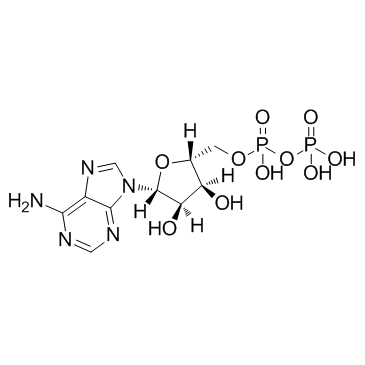 CAS#:58-64-0
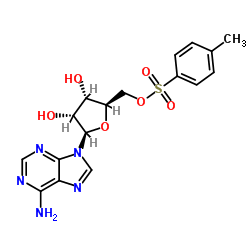 CAS#:5135-30-8
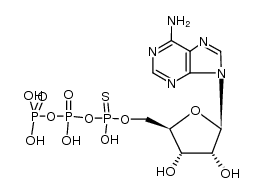 CAS#:29220-54-0
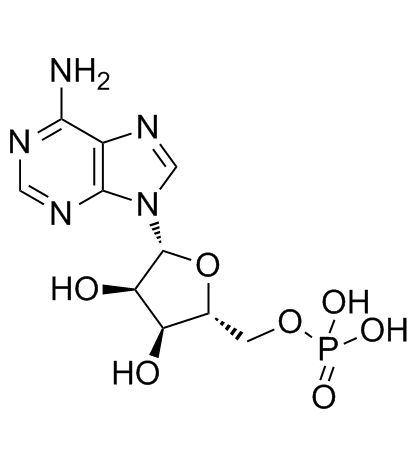 CAS#:61-19-8
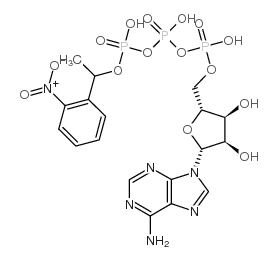 CAS#:67030-27-7
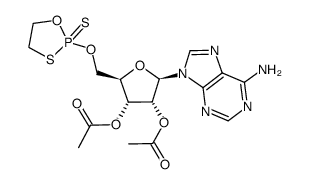 CAS#:857447-44-0
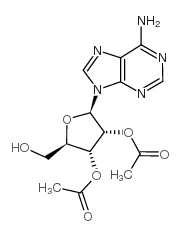 CAS#:29886-19-9
 CAS#:34051-17-7
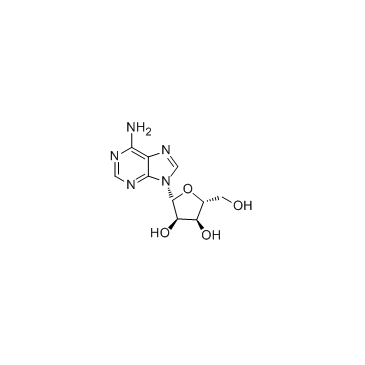 CAS#:58-61-7
![[(2R,3R,4S,5S,6R)-3,4,5-trihydroxy-6-(hydroxymethyl)oxan-2-yl] dihydrogen phosphate structure](https://image.chemsrc.com/caspic/152/59-56-3.png) CAS#:59-56-3
CAS#:59-56-3 CAS#:53-84-9
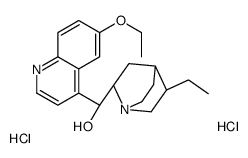 CAS#:19375-33-8
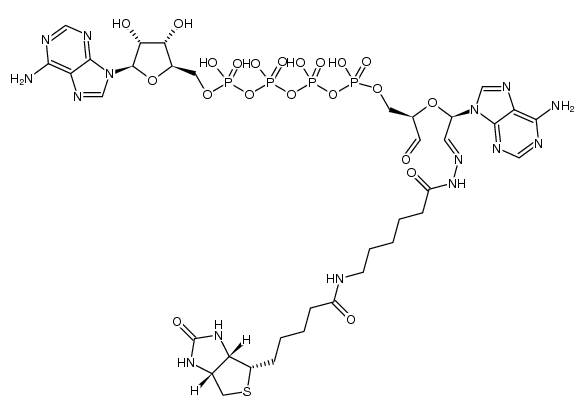 CAS#:1350980-54-9
 CAS#:5959-90-0
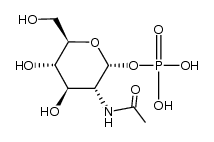 CAS#:28446-21-1
![6-amino-9-[3-hydroxy-5-[(hydroxy-sulfooxy-phosphoryl)oxymethyl]-4-phosphonooxy-oxolan-2-yl]-purine structure](https://image.chemsrc.com/caspic/302/482-67-7.png) CAS#:482-67-7
CAS#:482-67-7This table collects all English aliases, systematic names and CAS‑related synonyms of the compound.
| atipi |
| Fosfobion |
| Adenosine tetrahydrogen triphosphate |
| Adenosine, 5'-(tetrahydrogen triphosphate) |
| adenosine-triphosphate |
| Striphos |
| Adenosine 5'-triphosphorate |
| Triadesin A |
| adetol |
| Adenosine 5'-(tetrahydrogen triphosphate) |
| Triphosadenine |
| adephos |
| MFCD00065467 |
| EINECS 200-283-2 |
| Adenosine triphosphate |
| Adenosine-5'-triphosphate |
| Adetide |
| 5'-Atp |
| adynol |
| striadyne |
| Adenosinetriphosphate |
| atriphos |
| adenosine-5′-triphosphate |
| adenosine 5'-triphosphoric acid |
| Adenosine 5'-triphosphate |
| Cardenosine |
| adenosine 5′-triphosphate |
| Phosphobion |
| ATP |
| Adenphos |
This section contains frequently‑asked‑questions about this compound, including basic parameters, properties, storage conditions and corresponding answers.
| Q: What are the uses of atp? |
| A: Main uses of atp: ATP is a central component of energy storage and metabolism in vivo, provides the metabolic energy to drive metabolic pumps and serves as a coenzyme in cells. |
| Q: What is the boiling point of atp? |
| A: Boiling point of atp is 951.4±75.0 °C at 760 mmHg. |
| Q: What is the molecular formula of atp? |
| A: Molecular formula of atp is C10H16N5O13P3. |
| Q: What is the LogP of atp? |
| A: LogP of atp is -4.18. |
| Q: What is the melting point of atp? |
| A: Melting point of atp is 187 - 190ºC (Decomposes). |
| Q: What is the polar surface area (PSA) of atp? |
| A: Polar surface area (PSA) of atp is 308.56000. |
| Q: What is the molecular weight of atp? |
| A: Molecular weight of atp is 507.181. |
| Q: What is the English name of atp? |
| A: The English name of atp is atp. |
| Q: What are the downstream products of atp? |
| A: Related downstream products(CAS) of atp: 58-64-0;59-56-3;53-84-9;61-19-8;19375-33-8;1350980-54-9;5959-90-0;28446-21-1;482-67-7. |
| Q: What is the safety information for atp? |
| A: Safety information for atp: S22-S24/25. |
This table lists manufacturers and suppliers of this compound, including vendor names and product supply reference information.
| Shanghai Nianxing Industrial Co., Ltd |
| Dayang Chem (Hangzhou) Co., Ltd. |
| Henan Tianfu Chemical Co., Ltd. |