Phenylephrine hydrochloride

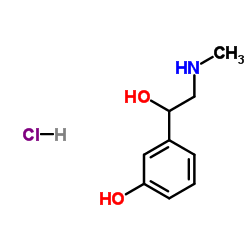
Phenylephrine hydrochloride structure
|
Common Name | Phenylephrine hydrochloride | ||
|---|---|---|---|---|
| CAS Number | 61-76-7 | Molecular Weight | 203.666 | |
| Density | N/A | Boiling Point | 341.1ºC at 760 mmHg | |
| Molecular Formula | C9H14ClNO2 | Melting Point | 143-145 °C(lit.) | |
| MSDS | Chinese USA | Flash Point | 163.4ºC | |
| Symbol |

GHS07 |
Signal Word | Warning | |
Use of Phenylephrine hydrochloride(R)-(-)-Phenylephrine hydrochloride is a selective α1-adrenoceptor agonist with pKis of 5.86, 4.87 and 4.70 for α1D, α1B and α1A receptors respectively. |
This table lists Chinese names, IUPAC names and various aliases of this chemical substance.
| Name | phenylephrine hydrochloride |
|---|---|
| Synonym | More Synonyms |
This table contains bioactivity, target information and biological‑assay experimental data of this compound.
| Description | (R)-(-)-Phenylephrine hydrochloride is a selective α1-adrenoceptor agonist with pKis of 5.86, 4.87 and 4.70 for α1D, α1B and α1A receptors respectively. |
|---|---|
| Related Catalog | |
| Target |
pKi: 5.86 (α1D), 5.86 (α1B), 5.86 (α1A)[1] |
| In Vitro | (R)-(-)-Phenylephrine is a selective α1-adrenoceptor agonist with pKi values of 5.86, 4.87 and 4.70 for α1D, α1B and α1A receptors respectively[1][2]. Phenylephrine promotes cardiac fibroblast proliferation. Phenylephrine activates CaN and evokes NFAT3 nuclear translocation. It suggests that the Ca(2+)/CaN/NFAT pathway mediates phenylephrine -induced cardiac fibroblast proliferation, and this pathway might be a possible therapeutic target in cardiac fibrosis[3]. |
| In Vivo | Perfusion of hearts with 100 μM phenylephrine causes a rapid (maximal at 10 min) 12-fold activation of two p38-MAPK isoforms. α1-adrenoceptor agonists such as phenylephrine increase the contractility of the heart. Phenylephrine also activates SAPKs/JNKs in neonatal ventricular myocytes[4]. Phenylephrine could increase the alveolar fluid clearance in high tidal volume-ventilated rats and accelerate the absorption of pulmonary edema[5]. |
| Animal Admin | Rat: A total of 170 male Wistar rats are randomLy allocated into 17 groups (n=10) using random number tables. Short-term (40 minutes) mechanical ventilation with high tidal volume is performed to induce lung injury, impair active Na+ transport and lung liquid clearance in the rats. Unventilated rats serves as controls. To demonstrate the effect of phenylephrine on alveolar fluid clearance, phenylephrine at different concentrations (10, 1, 0.1, 0.01, and 0.001 μM) is injected into the alveolar space of the HVT ventilated rats[5]. |
| References |
This table shows physicochemical parameters including melting point, boiling point, density, solubility and optical rotation. Missing data is marked as N/A.
| Boiling Point | 341.1ºC at 760 mmHg |
|---|---|
| Melting Point | 143-145 °C(lit.) |
| Molecular Formula | C9H14ClNO2 |
| Molecular Weight | 203.666 |
| Flash Point | 163.4ºC |
| Exact Mass | 203.071304 |
| PSA | 52.49000 |
| LogP | 1.83790 |
| Index of Refraction | -45.5 ° (C=1, H2O) |
| Water Solubility | >=10 g/100 mL at 21 ºC |
This table provides MSDS information including hazard classification, first‑aid, fire‑fighting, spill handling, operation and storage instructions.
This table summarizes toxicological test data, acute & chronic toxicity and ecological hazard parameters for this chemical.
CHEMICAL IDENTIFICATION
HEALTH HAZARD DATAACUTE TOXICITY DATA
MUTATION DATA
|
This table covers safety warnings, protective measures, incompatible substances and disposal guidelines for this compound.
| Symbol |
GHS07 |
|---|---|
| Signal Word | Warning |
| Hazard Statements | H302-H315-H319-H335 |
| Precautionary Statements | P261-P305 + P351 + P338 |
| Personal Protective Equipment | dust mask type N95 (US);Eyeshields;Faceshields;Gloves |
| Hazard Codes | Xn:Harmful |
| Risk Phrases | R22;R36/37/38 |
| Safety Phrases | S26-S36-S37/39 |
| RIDADR | 3249 |
| WGK Germany | 3 |
| RTECS | DO7525000 |
| Packaging Group | III |
| Hazard Class | 6.1(b) |
| HS Code | 2937229000 |
This table presents publicly reported synthetic routes, reaction conditions, reactants and product information of the compound.
This table lists upstream starting materials and downstream derivative products related to this chemical.
| Precursor 10 | |
|---|---|
| DownStream 2 | |
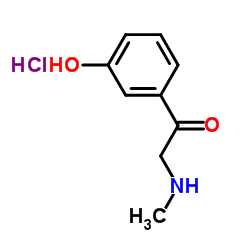 CAS#:94240-17-2
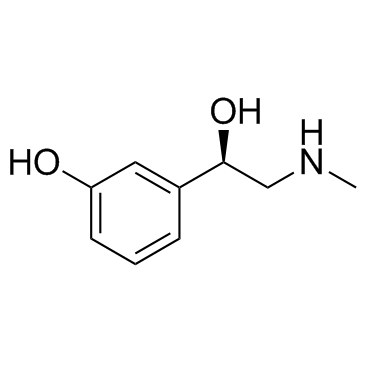 CAS#:59-42-7
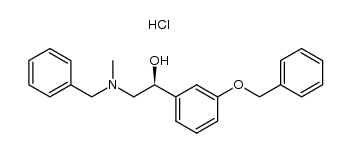 CAS#:122709-71-1
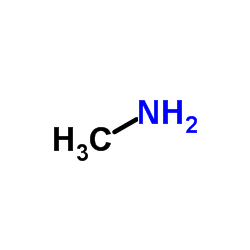 CAS#:74-89-5
 CAS#:603983-68-2
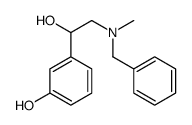 CAS#:1159977-09-9
![1-(3-Hydroxyphenyl)-2-[methyl(phenylmethyl)amino]-ethanone hydrochloride Structure](https://image.chemsrc.com/caspic/463/71786-67-9.png) CAS#:71786-67-9
CAS#:71786-67-9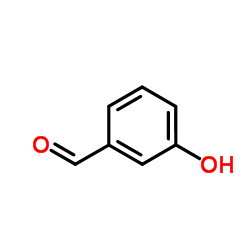 CAS#:100-83-4
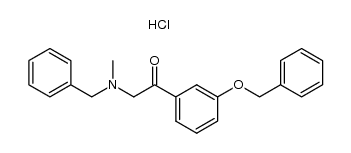 CAS#:122709-70-0
![3-[tert-butyl(dimethyl)silyl]oxybenzaldehyde Structure](https://image.chemsrc.com/caspic/296/96013-95-5.png) CAS#:96013-95-5
CAS#:96013-95-5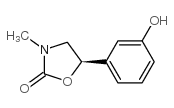 CAS#:110193-49-2
 CAS#:154-86-9
This table shows customs‑related data including HS‑code, tariff and regulatory conditions for import and export.
| HS Code | 2922509090 |
|---|---|
| Summary | 2922509090. other amino-alcohol-phenols, amino-acid-phenols and other amino-compounds with oxygen function. VAT:17.0%. Tax rebate rate:13.0%. . MFN tariff:6.5%. General tariff:30.0% |
This table lists relevant public references with title, journal and publication metadata for this compound.
|
Receptor mediated disruption of retinal pigment epithelium function in acute glycated-albumin exposure.
Exp. Eye Res. 137 , 50-6, (2015) Diabetic macular edema (DME) is a major cause of visual impairment. Although DME is generally believed to be a microvascular disease, dysfunction of the retinal pigment epithelium (RPE) can also contr... |
|
|
Chemical genetics reveals a complex functional ground state of neural stem cells.
Nat. Chem. Biol. 3(5) , 268-273, (2007) The identification of self-renewing and multipotent neural stem cells (NSCs) in the mammalian brain holds promise for the treatment of neurological diseases and has yielded new insight into brain canc... |
|
|
Formulation and stability study of a pediatric 2% phenylephrine hydrochloride eye drop solution.
Ann. Pharm. Fr. 73(1) , 31-6, (2015) We present formulation and stability evaluation of a 2% (w/v) phenylephrine hydrochloride biocompatible eye drop solution, routinely prepared in hospital pharmacy under aseptic conditions, for retinal... |
This table contains target information, in‑vitro & in‑vivo assay data for this compound.
|
Name: Inhibition of neurosphere proliferation of mouse neural precursor cells by MTT assay
Source: ChEMBL
Target: N/A
External Id: CHEMBL1266185
|
|
Name: Primary qHTS assay for inhibitors of alpha-synuclein gene (SNCA) expression
Source: NCGC
External Id: SNCA-p-activity-luciferase
|
|
Name: Fluorescence-based cell-based primary high throughput screening assay to identify ago...
Source: The Scripps Research Institute Molecular Screening Center
Target: muscarinic acetylcholine receptor M1 [Homo sapiens]
External Id: CHRM1_AG_FLUO8_1536_1X%ACT PRUN
|
|
Name: Cytochrome P450 Family 1 Subfamily A Member 2 (CYP1A2) small molecule antagonists: lu...
Source: 824
External Id: CYP273
|
|
Name: Fluorescence-based cell-based primary high throughput screening assay to identify pos...
Source: The Scripps Research Institute Molecular Screening Center
Target: muscarinic acetylcholine receptor M1 [Homo sapiens]
External Id: CHRM1_PAM_FLUO8_1536_1X%ACT PRUN
|
|
Name: qHTS Assay for Small Molecule Inhibitors of the Human hERG Channel Activity
Source: NCGC
External Id: HERG01
|
|
Name: qHTS for Inhibitors of TGF-b: Cytotox Counterscreen
Source: NCGC
Target: N/A
External Id: SMAD3201
|
|
Name: uHTS identification of cystic fibrosis induced NFkb Inhibitors in a fluoresence assay
Source: Burnham Center for Chemical Genomics
Target: cystic fibrosis transmembrane conductance regulator [Homo sapiens]
External Id: SBCCG-A764-CF-PAF-Primary-Assay
|
|
Name: Fluorescence-based cell-based primary high throughput screening assay to identify ant...
Source: The Scripps Research Institute Molecular Screening Center
Target: muscarinic acetylcholine receptor M1 [Homo sapiens]
External Id: CHRM1_ANT_FLUO8_1536_1X%INH PRUN
|
This table collects all English aliases, systematic names and CAS‑related synonyms of the compound.
| consdrin |
| (R)-3-Hydroxy-a-[(methylamino)methyl]benzenemethanol Hydrochloride |
| (R)-(-)-Phenylephrine (hydrochloride) |
| almefrin |
| synasal |
| phenylephrine HCl |
| 3-[(1R)-1-Hydroxy-2-(methylamino)ethyl]phenol hydrochloride (1:1) |
| 3-[(1R)-1-hydroxy-2-(méthylamino)éthyl]phénol chlorhydrate |
| l-1-(m-Hydroxyphenyl)-2-methylaminoethanol Hydrochloride |
| emagrin |
| fenilfar |
| AK-Dilate |
| Benzenemethanol, 3-hydroxy-α-[(methylamino)methyl]-, (αR)-, hydrochloride (1:1) |
| benzenemethanol, 3-hydroxy-α-[(methylamino)methyl]-, (αR)-, hydrochloride |
| rhinall |
| l-a-Hydroxy-b-methylamino-3-hydroxy-1-ethylbenzene Hydrochloride |
| AK-Nefrin |
| m-Sympatol |
| Metaoxedrin |
| Pyracort D |
| Phenylephrine hydrochloride |
| efricel |
| Mezaton |
| lexatol |
| uri |
| fenox |
| EINECS 200-517-3 |
| MFCD00012605 |
| 1-m-Hydroxy-a-[(methylamino)methyl]benzyl Alcohol Hydrochloride |
| Isophrin |
| 3-[(1R)-1-Hydroxy-2-(methylamino)ethyl]benzololhydrochlorid |
This section contains frequently‑asked‑questions about this compound, including basic parameters, properties, storage conditions and corresponding answers.
| Q: What is the molecular weight of phenylephrine hydrochloride? |
| A: Molecular weight of phenylephrine hydrochloride is 203.666. |
| Q: What is the boiling point of phenylephrine hydrochloride? |
| A: Boiling point of phenylephrine hydrochloride is 341.1ºC at 760 mmHg. |
| Q: What is the safety information for phenylephrine hydrochloride? |
| A: Safety information for phenylephrine hydrochloride: S26-S36-S37/39. |
| Q: What are the uses of phenylephrine hydrochloride? |
| A: Main uses of phenylephrine hydrochloride: (R)-(-)-Phenylephrine hydrochloride is a selective α1-adrenoceptor agonist with pKis of 5.86, 4.87 and 4.70 for α1D, α1B and α1A receptors respectively. |
| Q: What are the upstream materials of phenylephrine hydrochloride? |
| A: Related upstream materials(CAS) of phenylephrine hydrochloride: 94240-17-2;59-42-7;122709-71-1;74-89-5;603983-68-2;1159977-09-9;71786-67-9;100-83-4;122709-70-0;96013-95-5. |
| Q: What is the LogP of phenylephrine hydrochloride? |
| A: LogP of phenylephrine hydrochloride is 1.83790. |
| Q: What is the melting point of phenylephrine hydrochloride? |
| A: Melting point of phenylephrine hydrochloride is 143-145 °C(lit.). |
| Q: How is the water solubility of phenylephrine hydrochloride? |
| A: Water solubility of phenylephrine hydrochloride: >=10 g/100 mL at 21 ºC. |
| Q: What is the CAS number of phenylephrine hydrochloride? |
| A: CAS number of phenylephrine hydrochloride is 61-76-7. |
| Q: What are the downstream products of phenylephrine hydrochloride? |
| A: Related downstream products(CAS) of phenylephrine hydrochloride: 110193-49-2;154-86-9. |
This table lists manufacturers and suppliers of this compound, including vendor names and product supply reference information.
| Shanghai Nianxing Industrial Co., Ltd |
| Henan Tianfu Chemical Co., Ltd. |