N-(3-Chlorophenyl)-2-(4-(4-chlorophenyl)-1-oxophthalazin-2(1H)-yl)acetamide
Modify Date: 2025-08-26 13:59:07
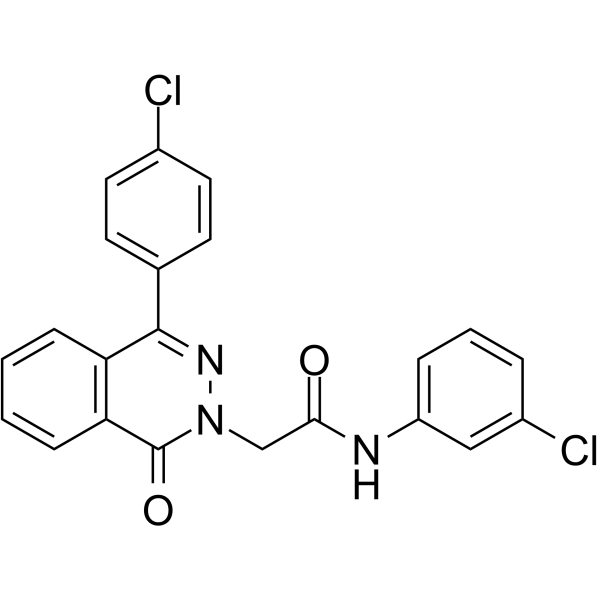
N-(3-Chlorophenyl)-2-(4-(4-chlorophenyl)-1-oxophthalazin-2(1H)-yl)acetamide structure
|
Common Name | N-(3-Chlorophenyl)-2-(4-(4-chlorophenyl)-1-oxophthalazin-2(1H)-yl)acetamide | ||
|---|---|---|---|---|
| CAS Number | 684234-55-7 | Molecular Weight | 424.28 | |
| Density | N/A | Boiling Point | N/A | |
| Molecular Formula | C22H15Cl2N3O2 | Melting Point | N/A | |
| MSDS | N/A | Flash Point | N/A | |
Use of N-(3-Chlorophenyl)-2-(4-(4-chlorophenyl)-1-oxophthalazin-2(1H)-yl)acetamidePARP-1-IN-2 (compound 11g) is a potent and BBB-penetrated PARP1 inhibitor, with an IC50 of 149 nM. PARP1-IN-2 shows significantly potent anti-proliferative activity against Human lung adenocarcinoma epithelial cell line A549. PARP1-IN-2 can induce A549 cells apoptosis[1]. |
| Name | PARP-1-IN-2 |
|---|
| Description | PARP-1-IN-2 (compound 11g) is a potent and BBB-penetrated PARP1 inhibitor, with an IC50 of 149 nM. PARP1-IN-2 shows significantly potent anti-proliferative activity against Human lung adenocarcinoma epithelial cell line A549. PARP1-IN-2 can induce A549 cells apoptosis[1]. |
|---|---|
| Related Catalog | |
| Target |
PARP-1:149 ± 11.0 nM (IC50) Caspase-3 Caspase-9 |
| In Vitro | PARP-1-IN-2 (compound 11g) (0-10 μM, 24-48 h) shows significantly potent anti-proliferative activity against A549 cells[1]. PARP-1-IN-2 (0-10 μM, 24 h) decreases the expression of pro-caspase-3 and phosphorylated AKT, increases the expression of caspase-3, caspase-9 protein and the cleaved PARP-1[1]. Cell Proliferation Assay Cell Line: A549, HFF cells[1] Concentration: 0, 0.1, 1, 10 μM Incubation Time: 24, 48 h Result: Showed significantly potent anti-proliferative activity against A549 cells, and didn’t display any significant cytotoxicity on HFF cells. Western Blot Analysis Cell Line: A549 cells[1] Concentration: 0, 0.1, 1, 10 μM Incubation Time: 24 h Result: Reduced expression of pro-caspase-3 and phosphorylated AKT, significantly increased the expression of caspase-3 and caspase-9 protein, and enhanced expression of the cleaved PARP-1. |
| References |
| Molecular Formula | C22H15Cl2N3O2 |
|---|---|
| Molecular Weight | 424.28 |
| InChIKey | ASIIOGZHCMSESG-UHFFFAOYSA-N |
| SMILES | O=C(Cn1nc(-c2ccc(Cl)cc2)c2ccccc2c1=O)Nc1cccc(Cl)c1 |