Phenanthrene
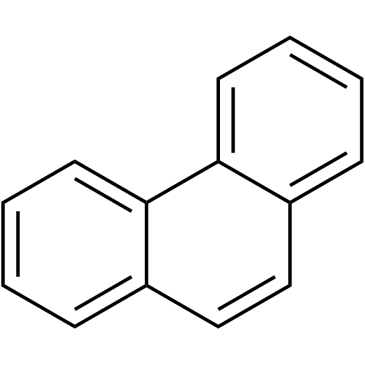
Phenanthrene structure
|
Common Name | Phenanthrene | ||
|---|---|---|---|---|
| CAS Number | 85-01-8 | Molecular Weight | 178.229 | |
| Density | 1.1±0.1 g/cm3 | Boiling Point | 337.4±9.0 °C at 760 mmHg | |
| Molecular Formula | C14H10 | Melting Point | 98-100 °C(lit.) | |
| MSDS | Chinese USA | Flash Point | 146.6±12.8 °C | |
| Symbol |


GHS07, GHS09 |
Signal Word | Warning | |
Use of PhenanthrenePhenanthrene is a polycyclic aromatic hydrocarbon (PAH) and has been frequently used as an indicator for monitoring PAH contaminated matrices[1]. Phenanthrene induces oxidative stress and inflammation[2]. |
This table lists Chinese names, IUPAC names and various aliases of this chemical substance.
| Name | phenanthrene |
|---|---|
| Synonym | More Synonyms |
This table contains bioactivity, target information and biological‑assay experimental data of this compound.
| Description | Phenanthrene is a polycyclic aromatic hydrocarbon (PAH) and has been frequently used as an indicator for monitoring PAH contaminated matrices[1]. Phenanthrene induces oxidative stress and inflammation[2]. |
|---|---|
| Related Catalog | |
| References |
This table shows physicochemical parameters including melting point, boiling point, density, solubility and optical rotation. Missing data is marked as N/A.
| Density | 1.1±0.1 g/cm3 |
|---|---|
| Boiling Point | 337.4±9.0 °C at 760 mmHg |
| Melting Point | 98-100 °C(lit.) |
| Molecular Formula | C14H10 |
| Molecular Weight | 178.229 |
| Flash Point | 146.6±12.8 °C |
| Exact Mass | 178.078247 |
| LogP | 4.68 |
| Vapour Pressure | 0.0±0.3 mmHg at 25°C |
| Index of Refraction | 1.715 |
| InChIKey | YNPNZTXNASCQKK-UHFFFAOYSA-N |
| SMILES | c1ccc2c(c1)ccc1ccccc12 |
| Storage condition | APPROX 4°C |
| Stability | Stable. Combustible. Incompatible with strong oxidizing agents. |
| Water Solubility | insoluble |
This table provides MSDS information including hazard classification, first‑aid, fire‑fighting, spill handling, operation and storage instructions.
This table summarizes toxicological test data, acute & chronic toxicity and ecological hazard parameters for this chemical.
CHEMICAL IDENTIFICATION
HEALTH HAZARD DATAACUTE TOXICITY DATA
MUTATION DATA
|
This table covers safety warnings, protective measures, incompatible substances and disposal guidelines for this compound.
| Symbol |
GHS07, GHS09 |
|---|---|
| Signal Word | Warning |
| Hazard Statements | H302-H315-H319-H335-H410 |
| Precautionary Statements | P261-P273-P305 + P351 + P338-P501 |
| Target Organs | Blood, Central nervous system, Liver |
| Personal Protective Equipment | dust mask type N95 (US);Eyeshields;Gloves |
| Hazard Codes | Xn:Harmful;N:Dangerousfortheenvironment; |
| Risk Phrases | R22;R40;R50/53 |
| Safety Phrases | S26-S60-S61-S36/37-S29-S62-S45-S16-S7-S24/25-S23-S53 |
| RIDADR | UN 3077 9/PG 3 |
| WGK Germany | 2 |
| RTECS | SF7175000 |
| Packaging Group | III |
| Hazard Class | 9 |
| HS Code | 2902909090 |
This table lists upstream starting materials and downstream derivative products related to this chemical.
| Precursor 0 | |
|---|---|
| DownStream 9 | |
 CAS#:776-35-2
 CAS#:104614-58-6
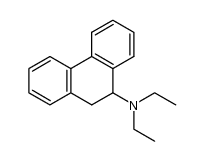 CAS#:106469-28-7
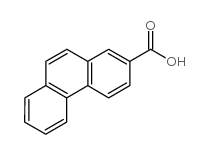 CAS#:40452-20-8
 CAS#:837-45-6
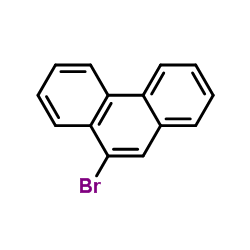 CAS#:573-17-1
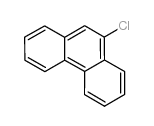 CAS#:947-72-8
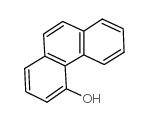 CAS#:7651-86-7
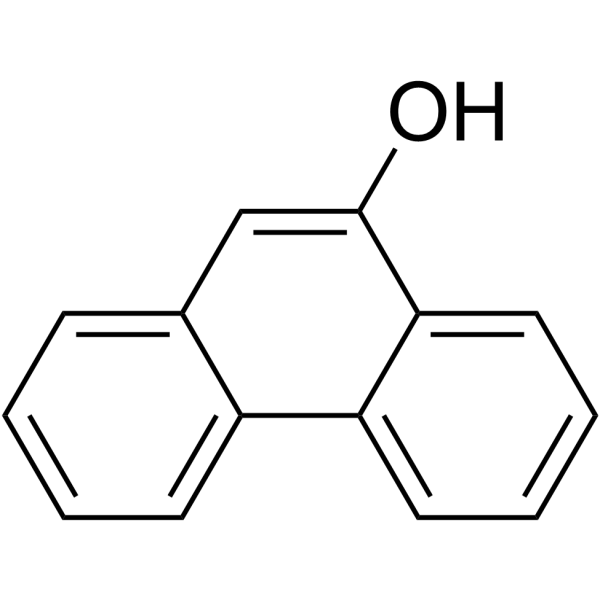 CAS#:484-17-3
This table shows customs‑related data including HS‑code, tariff and regulatory conditions for import and export.
| HS Code | 2902909090 |
|---|---|
| Summary | 2902909090 other aromatic hydrocarbons。Supervision conditions:None。VAT:17.0%。Tax rebate rate:9.0%。MFN tariff:2.0%。General tariff:30.0% |
This table lists relevant public references with title, journal and publication metadata for this compound.
|
Electrochemical polymerization of pyrene derivatives on functionalized carbon nanotubes for pseudocapacitive electrodes.
Nat. Commun. 6 , 7040, (2015) Electrochemical energy-storage devices have the potential to be clean and efficient, but their current cost and performance limit their use in numerous transportation and stationary applications. Many... |
|
|
High-Sensitivity Surface-Enhanced Raman Scattering (SERS) Substrate Based on a Gold Colloid Solution with a pH Change for Detection of Trace-Level Polycyclic Aromatic Hydrocarbons in Aqueous Solution.
Appl. Spectrosc. 69 , 574-9, (2015) In this study, a gold colloid solution whose parameters were optimized, and without any surfactants, was developed as a surface-enhanced Raman scattering (SERS) substrate for the detection of trace-le... |
|
|
L-cysteine-capped core/shell/shell quantum dot-graphene oxide nanocomposite fluorescence probe for polycyclic aromatic hydrocarbon detection.
Talanta 146 , 780-8, (2015) Environmental pollutants, such as the polycyclic aromatic hydrocarbons (PAHs), become widely distributed in the environment after emission from a range of sources, and they have potential biological e... |
This table contains target information, in‑vitro & in‑vivo assay data for this compound.
|
Name: Luminescence-based cell-based primary high throughput screening assay to identify ago...
Source: The Scripps Research Institute Molecular Screening Center
Target: mu-type opioid receptor isoform MOR-1 [Homo sapiens]
External Id: OPRM1-OPRD1_AG_LUMI_1536_1X%ACT PRUN
|
|
Name: Fluorescence-based cell-based primary high throughput screening assay to identify ago...
Source: The Scripps Research Institute Molecular Screening Center
Target: muscarinic acetylcholine receptor M1 [Homo sapiens]
External Id: CHRM1_AG_FLUO8_1536_1X%ACT PRUN
|
|
Name: Cytochrome P450 Family 1 Subfamily A Member 2 (CYP1A2) small molecule antagonists: lu...
Source: 824
External Id: CYP273
|
|
Name: Inhibitory concentration against mouse cytochrome P450 2A5
Source: ChEMBL
Target: Cytochrome P450 2A5
External Id: CHEMBL832818
|
|
Name: Inhibitory concentration against human cytochrome P450 2A6
Source: ChEMBL
Target: Cytochrome P450 2A6
External Id: CHEMBL832816
|
|
Name: Fluorescence-based cell-based primary high throughput screening assay to identify pos...
Source: The Scripps Research Institute Molecular Screening Center
Target: muscarinic acetylcholine receptor M1 [Homo sapiens]
External Id: CHRM1_PAM_FLUO8_1536_1X%ACT PRUN
|
|
Name: Fluorescence polarization-based biochemical high throughput primary assay to identify...
Source: The Scripps Research Institute Molecular Screening Center
Target: RecName: Full=Sialate O-acetylesterase; AltName: Full=H-Lse; AltName: Full=Sialic acid-specific 9-O-acetylesterase; Flags: Precursor [Homo sapiens]
External Id: SIAE_INH_FP_1536_1X%INH PRUN
|
|
Name: p53 small molecule agonists, cell-based qHTS assay: qHTS cell viability counter scree...
Source: 824
Target: N/A
External Id: P53600
|
|
Name: p53 small molecule agonists, cell-based qHTS assay with rat liver microsomes: qHTS ce...
Source: 824
Target: N/A
External Id: P53MS958
|
|
Name: p53 small molecule agonists, cell-based qHTS assay with rat liver microsomes: Summary
Source: 824
External Id: P53MS482
|
This table collects all English aliases, systematic names and CAS‑related synonyms of the compound.
| Phenanthrin |
| Phenanthrene |
| PHENANTHRENE, REAGENT |
| Ravatite |
| EINECS 201-581-5 |
| O-DIPHENYLENEETHYLENE |
| Phenanthren |
| METHYLENE CHLORIDE IN THE STANDARD MATERIAL OF THE PHILIPPINE ORGANIC POLLUTANTS, CERTIFIED REFERENCE MATERIAL |
| PHENANTHRINE |
| Phenanthracene |
| PHENANTHRENE FOR SYNTHESIS |
| MFCD00001168 |
| Phenantrin |
This section contains frequently‑asked‑questions about this compound, including basic parameters, properties, storage conditions and corresponding answers.
| Q: What is the LogP of phenanthrene? |
| A: LogP of phenanthrene is 4.68. |
| Q: What is the safety information for phenanthrene? |
| A: Safety information for phenanthrene: S26-S60-S61-S36/37-S29-S62-S45-S16-S7-S24/25-S23-S53. |
| Q: What is the molecular formula of phenanthrene? |
| A: Molecular formula of phenanthrene is C14H10. |
| Q: What is the molecular weight of phenanthrene? |
| A: Molecular weight of phenanthrene is 178.229. |
| Q: What is the English name of phenanthrene? |
| A: The English name of phenanthrene is phenanthrene. |
| Q: How is the water solubility of phenanthrene? |
| A: Water solubility of phenanthrene: insoluble. |
| Q: What are the storage conditions for phenanthrene? |
| A: Storage conditions for phenanthrene: APPROX 4°C. |
| Q: What is the SMILES notation of phenanthrene? |
| A: SMILES notation of phenanthrene is c1ccc2c(c1)ccc1ccccc12. |
| Q: What is the melting point of phenanthrene? |
| A: Melting point of phenanthrene is 98-100 °C(lit.). |
| Q: What are the uses of phenanthrene? |
| A: Main uses of phenanthrene: Phenanthrene is a polycyclic aromatic hydrocarbon (PAH) and has been frequently used as an indicator for monitoring PAH contaminated matrices[1]. Phenanthrene induces oxidative stress and inflammation[2]. |
This table lists manufacturers and suppliers of this compound, including vendor names and product supply reference information.
| Henan Tianfu Chemical Co., Ltd. |