Benzo[d]thiazole
![Benzo[d]thiazole Structure](https://image.chemsrc.com/caspic/318/95-16-9.png)
Benzo[d]thiazole structure
|
Common Name | Benzo[d]thiazole | ||
|---|---|---|---|---|
| CAS Number | 95-16-9 | Molecular Weight | 135.186 | |
| Density | 1.3±0.1 g/cm3 | Boiling Point | 227.0±9.0 °C at 760 mmHg | |
| Molecular Formula | C7H5NS | Melting Point | 2 °C(lit.) | |
| MSDS | Chinese USA | Flash Point | 96.6±7.6 °C | |
| Symbol |

GHS06 |
Signal Word | Danger | |
Use of Benzo[d]thiazoleBenzothiazole is a natural occurring heterocyclic nuclei. Benzothiazole nucleus possesses a number of biological activities such as anticancer, antimicrobial, antidiabetic, anti-inflammatory, antiviral, antileishmanial, and antiviral[1]. |
Summary: Benzothiazole (C7H5NS, MW 135.186), also known as Benzo[d]thiazole, is a yellow liquid with an unpleasant odor. Melting point: 2°C, Boiling point: 227.0±9.0°C, Density: 1.3±0.1 g/cm3. CAS number: 95-16-9. Used in photographic materials, organic synthesis, and agricultural plant resource research, and specified in GB 2760—1996 as an allowable food flavoring. For research-use only, not for medical or clinical usage.
This table lists Chinese names, IUPAC names and various aliases of this chemical substance.
| Name | benzothiazole |
|---|---|
| Synonym | More Synonyms |
This table contains bioactivity, target information and biological‑assay experimental data of this compound.
| Description | Benzothiazole is a natural occurring heterocyclic nuclei. Benzothiazole nucleus possesses a number of biological activities such as anticancer, antimicrobial, antidiabetic, anti-inflammatory, antiviral, antileishmanial, and antiviral[1]. |
|---|---|
| Related Catalog | |
| References |
This table shows physicochemical parameters including melting point, boiling point, density, solubility and optical rotation. Missing data is marked as N/A.
| Density | 1.3±0.1 g/cm3 |
|---|---|
| Boiling Point | 227.0±9.0 °C at 760 mmHg |
| Melting Point | 2 °C(lit.) |
| Molecular Formula | C7H5NS |
| Molecular Weight | 135.186 |
| Flash Point | 96.6±7.6 °C |
| Exact Mass | 135.014267 |
| PSA | 41.13000 |
| LogP | 2.01 |
| Vapour density | 4.66 (vs air) |
| Vapour Pressure | 0.1±0.4 mmHg at 25°C |
| Index of Refraction | 1.689 |
| InChIKey | IOJUPLGTWVMSFF-UHFFFAOYSA-N |
| SMILES | c1ccc2scnc2c1 |
| Stability | Stable - regarded as highly persistent in the environment. Incompatible with strong oxidizing agents. Combustion products: nitrogen oxides, carbon monoxide, carbon dioxide, sulphur oxides. |
| Water Solubility | slightly soluble |
This table provides MSDS information including hazard classification, first‑aid, fire‑fighting, spill handling, operation and storage instructions.
This table summarizes toxicological test data, acute & chronic toxicity and ecological hazard parameters for this chemical.
CHEMICAL IDENTIFICATION
HEALTH HAZARD DATAACUTE TOXICITY DATA
|
This table covers safety warnings, protective measures, incompatible substances and disposal guidelines for this compound.
| Symbol |
GHS06 |
|---|---|
| Signal Word | Danger |
| Hazard Statements | H301 + H311-H319-H332 |
| Precautionary Statements | P280-P301 + P310-P305 + P351 + P338-P312 |
| Personal Protective Equipment | Eyeshields;Faceshields;full-face respirator (US);Gloves;multi-purpose combination respirator cartridge (US);type ABEK (EN14387) respirator filter |
| Hazard Codes | Xn:Harmful; |
| Risk Phrases | R20/21/22 |
| Safety Phrases | S23-S26-S36-S36/37 |
| RIDADR | 2810 |
| WGK Germany | 2 |
| RTECS | DL0875000 |
| Packaging Group | III |
| Hazard Class | 6.1 |
| HS Code | 2934200090 |
This table lists upstream starting materials and downstream derivative products related to this chemical.
| Precursor 7 | |
|---|---|
| DownStream 10 | |
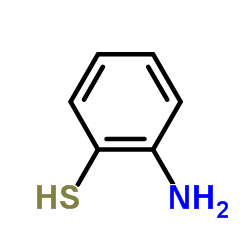 CAS#:137-07-5
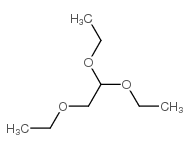 CAS#:4819-77-6
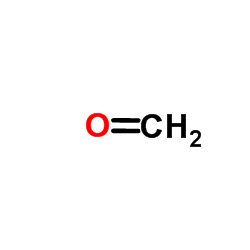 CAS#:50-00-0
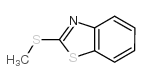 CAS#:615-22-5
![Benzo[d]thiazol-2-amine Structure](https://image.chemsrc.com/caspic/040/136-95-8.png) CAS#:136-95-8
CAS#:136-95-8 CAS#:122-51-0
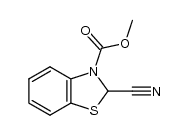 CAS#:113372-40-0
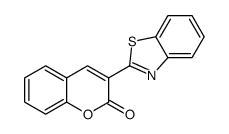 CAS#:1032-98-0
![Benzenecarbothioicacid, S-[2-(benzoylamino)phenyl] ester structure](https://image.chemsrc.com/caspic/347/1047-61-6.png) CAS#:1047-61-6
CAS#:1047-61-6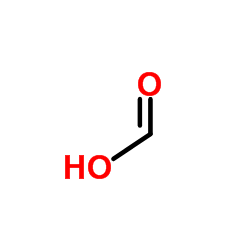 CAS#:64-18-6
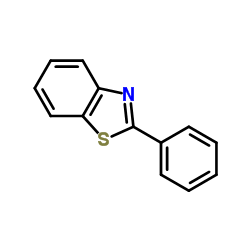 CAS#:883-93-2
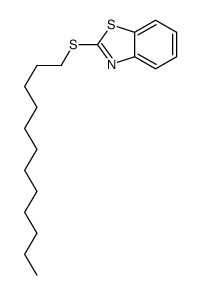 CAS#:106184-47-8
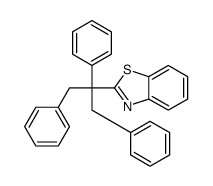 CAS#:111324-05-1
 CAS#:22201-26-9
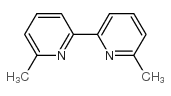 CAS#:4411-80-7
 CAS#:54223-20-0
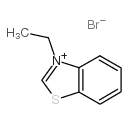 CAS#:32446-47-2
This table shows customs‑related data including HS‑code, tariff and regulatory conditions for import and export.
| HS Code | 2934999090 |
|---|---|
| Summary | 2934999090. other heterocyclic compounds. VAT:17.0%. Tax rebate rate:13.0%. . MFN tariff:6.5%. General tariff:20.0% |
This table lists relevant public references with title, journal and publication metadata for this compound.
|
Convenient QSAR model for predicting the complexation of structurally diverse compounds with β-cyclodextrins
Bioorg. Med. Chem. 17 , 896-904, (2009) This paper reports a QSAR study for predicting the complexation of a large and heterogeneous variety of substances (233 organic compounds) with beta-cyclodextrins (beta-CDs). Several different theoret... |
|
|
Benzothiazole, benzotriazole, and their derivates in clothing textiles--a potential source of environmental pollutants and human exposure.
Environ. Sci. Pollut. Res. Int. 22(8) , 5842-9, (2015) Textiles play an important role in our daily life, and textile production is one of the oldest industries. In the manufacturing chain from natural and/or synthetic fibers to the final clothing product... |
|
|
Synthesis and anti-angiogenic activity of benzothiazole, benzimidazole containing phthalimide derivatives.
Bioorg. Med. Chem. Lett. 23(1) , 287-90, (2013) Benzothiazole and benzimidazole containing phthalimide derivatives (NK037, NK041, NK042, NK0139A and NK0148) have been synthesized and their anti-angiogenic activity was evaluated using ex vivo egg yo... |
This table collects all English aliases, systematic names and CAS‑related synonyms of the compound.
| 1,3-Benzothiazole |
| benzothiazol |
| Benzothiazole |
| (methylthio)benzothiazole |
| USAF EK-4812 |
| Vangard BT |
| Benzosulfonazole |
| benzo[d][1,3]thiazole |
| 1-Thia-3-azaindene |
| benzthiazole |
| MFCD00005775 |
| EINECS 202-396-2 |
| BENZO[D]THIAZOLE |
This section contains frequently‑asked‑questions about this compound, including basic parameters, properties, storage conditions and corresponding answers.
| Q: What is the melting point of benzothiazole? |
| A: Melting point of benzothiazole is 2 °C(lit.). |
| Q: What is the CAS number of benzothiazole? |
| A: CAS number of benzothiazole is 95-16-9. |
| Q: What is the LogP of benzothiazole? |
| A: LogP of benzothiazole is 2.01. |
| Q: What is the safety information for benzothiazole? |
| A: Safety information for benzothiazole: S23-S26-S36-S36/37. |
| Q: What are the uses of benzothiazole? |
| A: Main uses of benzothiazole: Benzothiazole is a natural occurring heterocyclic nuclei. Benzothiazole nucleus possesses a number of biological activities such as anticancer, antimicrobial, antidiabetic, anti-inflammatory, antiviral, antileishmanial, and antiviral[1]. |
| Q: What is the polar surface area (PSA) of benzothiazole? |
| A: Polar surface area (PSA) of benzothiazole is 41.13000. |
| Q: What is the SMILES notation of benzothiazole? |
| A: SMILES notation of benzothiazole is c1ccc2scnc2c1. |
| Q: What is the InChIKey of benzothiazole? |
| A: InChIKey of benzothiazole is IOJUPLGTWVMSFF-UHFFFAOYSA-N. |
| Q: What is the boiling point of benzothiazole? |
| A: Boiling point of benzothiazole is 227.0±9.0 °C at 760 mmHg. |
| Q: What are the upstream materials of benzothiazole? |
| A: Related upstream materials(CAS) of benzothiazole: 137-07-5;4819-77-6;50-00-0;615-22-5;136-95-8;122-51-0;113372-40-0. |
This table lists manufacturers and suppliers of this compound, including vendor names and product supply reference information.
| Shanghai Nianxing Industrial Co., Ltd |
| Henan Tianfu Chemical Co., Ltd. |