去甲斑蝥素
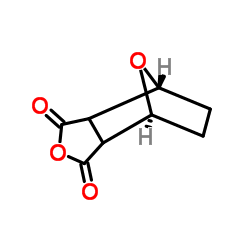
去甲斑蝥素结构式

|
常用名 | 去甲斑蝥素 | 英文名 | (±)-Norcantharidin |
|---|---|---|---|---|
| CAS号 | 29745-04-8 | 分子量 | 168.147 | |
| 密度 | 1.5±0.1 g/cm3 | 沸点 | 362.5±35.0 °C at 760 mmHg | |
| 分子式 | C8H8O4 | 熔点 | 114-116ºC | |
| MSDS | 中文版 美版 | 闪点 | 167.0±26.0 °C |
|
Two triterpenoid glycosides from the roots of Camellia oleifera and their cytotoxic activity.
J. Asian Nat. Prod. Res. 17 , 800-7, (2015) Two new triterpenoid saponins, oleiferoside N and oleiferoside O, were isolated from the EtOH extract from the roots of Camellia oleifera C. Abel. Their structures were elucidated as 16α-acetoxy-21β,22α-O-diangeloyloxy-23,28-dihydroxyolean-12-ene 3β-O-β-D-xyl... |
|
|
Cantharidin represses invasion of pancreatic cancer cells through accelerated degradation of MMP2 mRNA.
Sci. Rep. 5 , 11836, (2015) Cantharidin is an active constituent of mylabris, a traditional Chinese medicine, and is a potent and selective inhibitor of protein phosphatase 2A (PP2A) that plays an important role in cell cycle control, apoptosis, and cell-fate determination. In the prese... |
|
|
A novel cantharidin analogN-Benzylcantharidinamide reduces the expression of MMP-9 and invasive potentials of Hep3B via inhibiting cytosolic translocation of HuR
Biochem. Biophys. Res. Commun. 447(2) , 371-7, (2014) Graphical abstract |
|
|
Norcantharidin combined with EGFR-TKIs overcomes HGF-induced resistance to EGFR-TKIs in EGFR mutant lung cancer cells via inhibition of Met/PI3k/Akt pathway.
Cancer Chemother. Pharmacol. 76 , 307-15, (2015) Hepatocyte growth factor (HGF) induces resistance to reversible and irreversible epidermal growth factor receptor-tyrosine kinase inhibitors (EGFR-TKI) in EGFR mutant lung cancer cells by activating Met and the downstream phosphoinositide 3-kinase (PI3K)/Akt ... |
|
|
Norcantharidin enhances TIMP‑2 anti‑vasculogenic mimicry activity for human gallbladder cancers through downregulating MMP‑2 and MT1‑MMP.
Int. J. Oncol. 46(2) , 627-40, (2014) Vasculogenic mimicry (VM) is a tumor microcirculation pattern in highly aggressive gallbladder cancers (GBCs). We recently reported the anti‑VM activity of norcantharidin (NCTD) in highly aggressive GBC‑SD cells and xenografts. In this study, we further inves... |
|
|
CDC6 controls dynamics of the first embryonic M-phase entry and progression via CDK1 inhibition.
Dev. Biol. 396(1) , 67-80, (2014) CDC6 is essential for S-phase to initiate DNA replication. It also regulates M-phase exit by inhibiting the activity of the major M-phase protein kinase CDK1. Here we show that addition of recombinant CDC6 to Xenopus embryo cycling extract delays the M-phase ... |
|
|
p38-NF-κB-promoted mitochondria-associated apoptosis and G2/M cell cycle arrest in norcantharidin-treated HeLa cells.
J. Asian Nat. Prod. Res. 14(11) , 1008-19, (2012) Previous study proved that norcantharidin (NCTD) could exert its anticancer activity in a variety of malignant cell lines, including human cervical carcinoma HeLa cells. In this study, we found that NCTD-activated p38 mitogen-activated protein kinase (p38 MAP... |
|
|
A systems biology approach reveals the role of a novel methyltransferase in response to chemical stress and lipid homeostasis.
PLoS Genet. 7(10) , e1002332, (2011) Using small molecule probes to understand gene function is an attractive approach that allows functional characterization of genes that are dispensable in standard laboratory conditions and provides insight into the mode of action of these compounds. Using ch... |
|
|
Hepatocyte-targeted delivery using ph-sensitive liposomes loaded with lactosylnorcantharidin phospholipid complex: preparation, characterization, and therapeutic evaluation in vivo and in vitro.
Curr. Med. Chem. 19(33) , 5754-63, (2012) Liposomes loaded with lactosyl-norcantharidin phospholipid complex (LPC) were prepared, in which soybean phosphatidylcholine was used to improve the liposolubility of lactosyl-norcantharidin (Lac-NCTD). The pH-sensitive LPC liposomes (pH-LPC-lips) were obtain... |
|
|
Norcantharidin induces melanoma cell apoptosis through activation of TR3 dependent pathway.
Cancer Biol. Ther. 12(11) , 1005-14, (2011) Norcantharidin (NCTD) has been reported to induce tumor cell apoptosis. However, the underlying mechanism behinds its antitumor effect remains elusive. We have previously shown that TR3 expression is significantly decreased in metastatic melanomas and involve... |