IP3K抑制剂
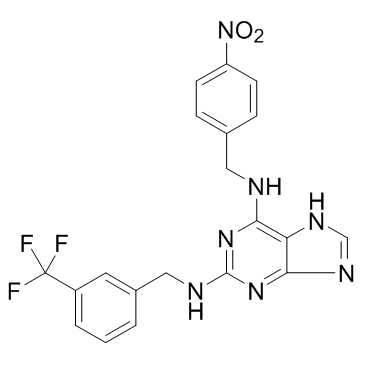
IP3K抑制剂结构式

|
常用名 | IP3K抑制剂 | 英文名 | TNP |
|---|---|---|---|---|
| CAS号 | 519178-28-0 | 分子量 | 443.38200 | |
| 密度 | N/A | 沸点 | N/A | |
| 分子式 | C20H16F3N7O2 | 熔点 | N/A | |
| MSDS | 中文版 美版 | 闪点 | N/A | |
| 符号 |

GHS06 |
信号词 | Danger |
|
Development of anti-HER2 fragment antibody conjugated to iron oxide nanoparticles for in vivo HER2-targeted photoacoustic tumor imaging.
Nanomedicine: Nanotechnology, Biology, and Medicine 11 , 2051-60, (2015) Photoacoustic (PA) imaging is a promising imaging modality that provides biomedical information with high sensitivity and resolution. Iron oxide nanoparticles (IONPs) have been regarded as remarkable PA contrast agents because of their low toxicity and biodeg... |
|
|
Regulation of the Min Cell Division Inhibition Complex by the Rcs Phosphorelay in Proteus mirabilis.
J. Bacteriol. 197 , 2499-507, (2015) A key regulator of swarming in Proteus mirabilis is the Rcs phosphorelay, which represses flhDC, encoding the master flagellar regulator FlhD4C2. Mutants in rcsB, the response regulator in the Rcs phosphorelay, hyperswarm on solid agar and differentiate into ... |
|
|
Facilitated monocyte-macrophage uptake and tissue distribution of superparmagnetic iron-oxide nanoparticles.
PLoS ONE 4 , e4343, (2009) We posit that the same mononuclear phagocytes (MP) that serve as target cells and vehicles for a host of microbial infections can be used to improve diagnostics and drug delivery. We also theorize that physical and biological processes such as particle shape,... |
|
|
Genetic Interaction between Lyn, Ets1, and Btk in the Control of Antibody Levels.
J. Immunol. 195 , 1955-63, (2015) Tight control of B cell differentiation into plasma cells (PCs) is critical for proper immune responses and the prevention of autoimmunity. The Ets1 transcription factor acts in B cells to prevent PC differentiation. Ets1(-/-) mice accumulate PCs and produce ... |
|
|
rPbPga1 from Paracoccidioides brasiliensis Activates Mast Cells and Macrophages via NFkB.
PLoS Negl. Trop. Dis. 9 , e0004032, (2015) The fungus Paracoccidioides brasiliensis is the leading etiological agent of paracoccidioidomycosis (PCM), a systemic granulomatous disease that typically affects the lungs. Cell wall components of P. brasiliensis interact with host cells and influence the pa... |
|
|
Protective Role of STAT6 in Basophil-Dependent Prurigo-like Allergic Skin Inflammation.
J. Immunol. 194 , 4631-40, (2015) Prurigo is a common, but treatment-resistant, skin disease characterized by persistent papules/nodules and severe itching. Prurigo occurs in association with various underlying diseases, such as diabetes, chronic renal failure, and internal malignancies. Atop... |
|
|
Syk tyrosine kinase is critical for B cell antibody responses and memory B cell survival.
J. Immunol. 194 , 4650-6, (2015) Signals from the BCR are required for Ag-specific B cell recruitment into the immune response. Binding of Ag to the BCR induces phosphorylation of immune receptor tyrosine-based activation motifs in the cytoplasmic domains of the CD79a and CD79b signaling sub... |
|
|
Kidins220/ARMS binds to the B cell antigen receptor and regulates B cell development and activation.
J. Exp. Med. 212 , 1693-708, (2015) B cell antigen receptor (BCR) signaling is critical for B cell development and activation. Using mass spectrometry, we identified a protein kinase D-interacting substrate of 220 kD (Kidins220)/ankyrin repeat-rich membrane-spanning protein (ARMS) as a novel in... |
|
|
Endogenous VSIG4 negatively regulates the helper T cell-mediated antibody response.
Immunol. Lett. 165 , 78-83, (2015) VSIG4 acts as a co-inhibitory ligand to negatively regulate T cell proliferation and cytokine production, and its expression is restricted to macrophages. We hypothesized that endogenous VSIG4 impairs helper T cell functions and then inhibits the subsequent a... |
|
|
Butyrate suppresses murine mast cell proliferation and cytokine production through inhibiting histone deacetylase.
J. Nutr. Biochem. 27 , 299-306, (2015) Beyond their nutritional impact to colonic epithelial cells, the intestinal microbiota metabolite butyrate has pleotropic effects to host cells and is known for its beneficial effects on intestinal homeostasis and metabolism. However, it remains unclear how i... |