2-Propanone,1,1-dichloro
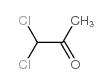
2-Propanone,1,1-dichloro structure
|
Common Name | 2-Propanone,1,1-dichloro | ||
|---|---|---|---|---|
| CAS Number | 513-88-2 | Molecular Weight | 126.96900 | |
| Density | 1.327 g/mL at 25 °C(lit.) | Boiling Point | 117-118 °C(lit.) | |
| Molecular Formula | C3H4Cl2O | Melting Point | N/A | |
| MSDS | Chinese USA | Flash Point | 99-100 °F | |
| Symbol |


GHS02, GHS06 |
Signal Word | Danger | |
|
Implication of novel thiazolo-thiophene derivative (MCD-KV-10) for management of asthma.
J. Enzyme Inhib. Med. Chem. 30(2) , 229-39, (2015) Asthma is multifaceted disease where many targets contribute towards its development and progression. Among these, adenosine receptor subtypes play a major role.MCD-KV-10, a novel thiazolo-thiophene was designed and evaluated pre-clinically for its implicatio... |
|
|
Dermal uptake of chloroform and haloketones during bathing.
J. Expo. Anal. Environ. Epidemiol. 15(4) , 289-96, (2005) Dermal contact with some organic disinfection by-products (DBPs) such as trihalomethanes in chlorinated drinking water has been established to be an important exposure route. We evaluated dermal absorption of two haloketones (1,1-dichloropropanone and 1,1,1-t... |
|
|
Studies of the toxic interactions of disinfection by-products.
Environ. Health Perspect. 69 , 203-7, (1986) A large number and variety of compounds are formed in the process of chlorinating drinking water. The classes of compounds formed include trihalomethanes, haloacetic acids, haloacetonitriles, halophenols, and halopropanones. Many of the compounds have been sh... |
|
|
Chemical reactivity, cytotoxicity, and mutagenicity of chloropropanones.
Toxicol. Appl. Pharmacol. 91(1) , 46-54, (1987) Studies were conducted to assess the in vitro toxicity of three chloropropanones: monochloropropanone (MCP), 1,1-dichloropropanone (1,1-DCP), and 1,3-dichloropropanone (1,3-DCP). Chloropropanones reacted directly with reduced glutathione (GSH) in sodium phosp... |
|
|
Carcinogenic activity associated with halogenated acetones and acroleins in the mouse skin assay.
Cancer Lett. 48(3) , 197-203, (1989) Several chlorinated acetones have been identified in drinking water and these, as well as a number of chlorinated acroleins, are produced by chlorination of humic acid solutions. Many of these chlorinated compounds and the brominated acrolein analog were posi... |
|
|
Subchronic toxicity study of 1,1-dichloro-2-propanone in Sprague-Dawley rats.
Drug Chem. Toxicol. 16(3) , 293-305, (1993) Groups of 10 male and 10 female Sprague-Dawley rats were administered 1,1-dichloro-2-propanone in corn oil by gavage at 0, 10, 20, 40, or 80 mg/kg/day for 90 consecutive days. Food and water consumption, body and organ weights, organ-to-body weight ratios, he... |