1-Phenoxy-2-propanol
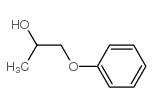
1-Phenoxy-2-propanol structure
|
Common Name | 1-Phenoxy-2-propanol | ||
|---|---|---|---|---|
| CAS Number | 770-35-4 | Molecular Weight | 152.19000 | |
| Density | 1.064 g/mL at 20 °C(lit.) | Boiling Point | 243 °C(lit.) | |
| Molecular Formula | C9H12O2 | Melting Point | 11 °C | |
| MSDS | Chinese USA | Flash Point | >230 °F | |
| Symbol |

GHS07 |
Signal Word | Warning | |
|
One rhinophore probably provides sufficient sensory input for odour-based navigation by the nudibranch mollusc Tritonia diomedea.
J. Exp. Biol. 217(Pt 23) , 4149-58, (2014) Tritonia diomedea (synonymous with Tritonia tetraquetra) navigates in turbulent odour plumes, crawling upstream towards prey and downstream to avoid predators. This is probably accomplished by odour-gated rheotaxis, but other possibilities have not been exclu... |
|
|
1-Phenoxy-2-propanol is a useful anaesthetic for gastropods used in neurophysiology.
J. Neurosci. Methods 176(2) , 121-8, (2009) Anaesthesia is often used in neurophysiological, surgical, and neuroanatomical protocols. Several anaesthetics, including magnesium chloride, volatiles (halothane, etc.), and barbiturates, have been used in gastropod neurobiology. 1-Phenoxy-2-propanol (PP) is... |
|
|
Synthesis and identification of propylene glycol phenyl ethers.
J. Am. Chem. Soc. 70(11) , 3606, (1948)
|
|
|
An investigation of the bactericidal and fungicidal effects of certain disinfectants by use of a capacity test.
Ann. Inst. Pasteur. Microbiol. 139(4) , 473-83, (1988) The bactericidal and fungicidal effects of five disinfectants and one combination of two disinfectants were tested using a modified Kelsey-Sykes method in which living microorganisms suspended in a sterilized yeast suspension ("dirty" conditions) and in steri... |
|
|
Effects of sub-lethal concentrations of the antimicrobial agent propylene phenoxetol on the growth and extracellular enzymes of Propionibacterium acnes.
Microbios 39(156) , 101-8, (1984) Propionibacterium acnes was grown in continuous culture in the presence of propylene phenoxetol. At sub-lethal concentrations of this antimicrobial agent (0.025-0.1% w/v) steady-state growth conditions were achieved. In comparison with the control, cell bioma... |
|
|
Polymerization of 1, 2-epoxypropane and 1, 2-epoxycyclohexane by diethylzinc-polyhydric phenol and/or phenol or 1-phenoxy-2-propanol as catalysts. Kuran W and Listos T.
Macromol. Chem. Phys. 195(2) , 401-411, (1994)
|