2-Chloroadenosine
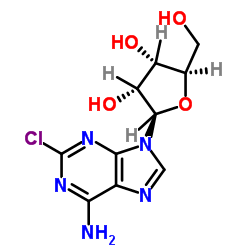
2-Chloroadenosine structure
|
Common Name | 2-Chloroadenosine | ||
|---|---|---|---|---|
| CAS Number | 146-77-0 | Molecular Weight | 301.686 | |
| Density | 2.2±0.1 g/cm3 | Boiling Point | 643.3±65.0 °C at 760 mmHg | |
| Molecular Formula | C10H12ClN5O4 | Melting Point | 162 °C | |
| MSDS | Chinese USA | Flash Point | 342.8±34.3 °C | |
Use of 2-Chloroadenosine2-Chloroadenosine, a stable adenosine analogue, protects against long term development of ischaemic cell loss in the rat hippocampus. 2-Chloroadenosine is an apparent competitive inhibitor of uridine influx (apparent Ki=33 μM) and high-affinity nitrobenzylthioinosine binding (apparent Ki=0.18 mM). 2-Chloroadenosine is a transported permeant for the nucleoside transporter in human erythrocytes[1][2]. |
This table lists Chinese names, IUPAC names and various aliases of this chemical substance.
| Name | 2-Chloroadenosine |
|---|---|
| Synonym | More Synonyms |
This table contains bioactivity, target information and biological‑assay experimental data of this compound.
| Description | 2-Chloroadenosine, a stable adenosine analogue, protects against long term development of ischaemic cell loss in the rat hippocampus. 2-Chloroadenosine is an apparent competitive inhibitor of uridine influx (apparent Ki=33 μM) and high-affinity nitrobenzylthioinosine binding (apparent Ki=0.18 mM). 2-Chloroadenosine is a transported permeant for the nucleoside transporter in human erythrocytes[1][2]. |
|---|---|
| Related Catalog | |
| References |
This table shows physicochemical parameters including melting point, boiling point, density, solubility and optical rotation. Missing data is marked as N/A.
| Density | 2.2±0.1 g/cm3 |
|---|---|
| Boiling Point | 643.3±65.0 °C at 760 mmHg |
| Melting Point | 162 °C |
| Molecular Formula | C10H12ClN5O4 |
| Molecular Weight | 301.686 |
| Flash Point | 342.8±34.3 °C |
| Exact Mass | 301.057770 |
| PSA | 139.54000 |
| LogP | -0.46 |
| Vapour Pressure | 0.0±2.0 mmHg at 25°C |
| Index of Refraction | 1.912 |
| InChIKey | BIXYYZIIJIXVFW-UUOKFMHZSA-N |
| SMILES | Nc1nc(Cl)nc2c1ncn2C1OC(CO)C(O)C1O |
| Water Solubility | H2O: 10 mg/mL, clear, colorless |
This table provides MSDS information including hazard classification, first‑aid, fire‑fighting, spill handling, operation and storage instructions.
This table summarizes toxicological test data, acute & chronic toxicity and ecological hazard parameters for this chemical.
CHEMICAL IDENTIFICATION
HEALTH HAZARD DATAACUTE TOXICITY DATA
|
This table covers safety warnings, protective measures, incompatible substances and disposal guidelines for this compound.
| Personal Protective Equipment | Eyeshields;Gloves;type N95 (US);type P1 (EN143) respirator filter |
|---|---|
| Hazard Codes | Xi |
| RIDADR | NONH for all modes of transport |
| WGK Germany | 3 |
| RTECS | AU7357550 |
This table presents publicly reported synthetic routes, reaction conditions, reactants and product information of the compound.
This table lists upstream starting materials and downstream derivative products related to this chemical.
| Precursor 7 | |
|---|---|
| DownStream 10 | |
![9-[2,3,5-TRI-O-ACETYL-BETA-D-RIBOFURANOSYL]-2,6-DICHLOROPURINE Structure](https://image.chemsrc.com/caspic/019/3056-18-6.png) CAS#:3056-18-6
CAS#:3056-18-6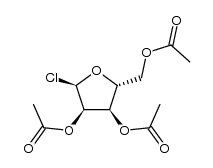 CAS#:105499-44-3
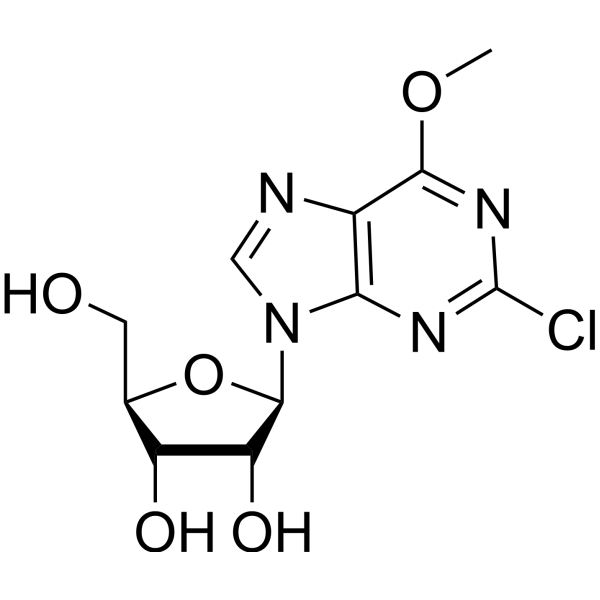 CAS#:15465-92-6
 CAS#:16321-99-6
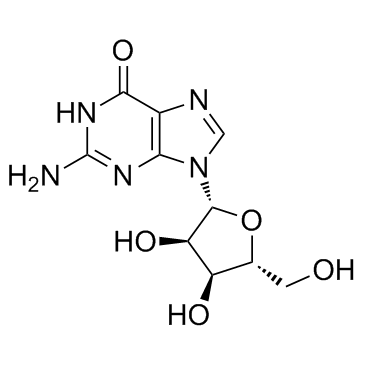 CAS#:118-00-3
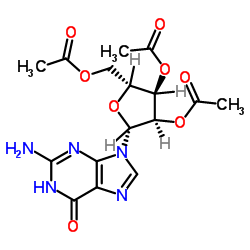 CAS#:6979-94-8
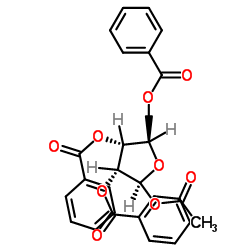 CAS#:6974-32-9
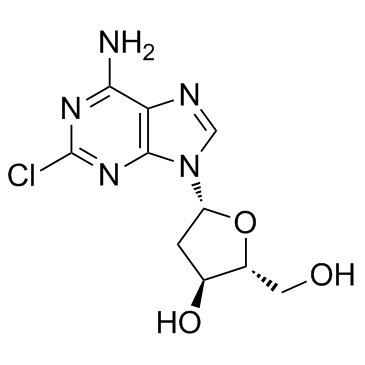 CAS#:4291-63-8
 CAS#:43157-50-2
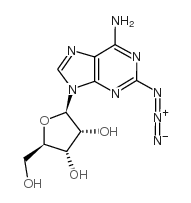 CAS#:59587-07-4
![2-Chloro-2',3',5'-tris-O-[(1,1-dimethylethyl)dimethylsilyl]-adenosine structure](https://image.chemsrc.com/caspic/254/195727-26-5.png) CAS#:195727-26-5
CAS#:195727-26-5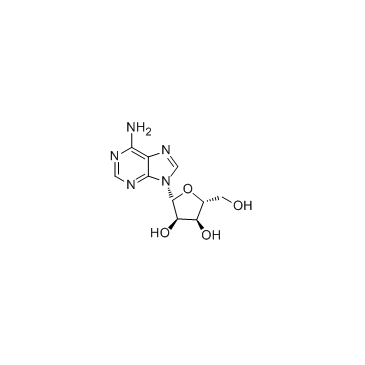 CAS#:58-61-7
 CAS#:28783-37-1
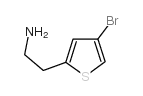
![2-[2-(4-bromo-2-thienyl)-ethylamino]-adenosine structure](https://image.chemsrc.com/caspic/211/124498-79-9.png) CAS#:124498-79-9
CAS#:124498-79-9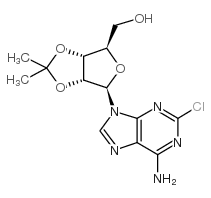 CAS#:24639-06-3
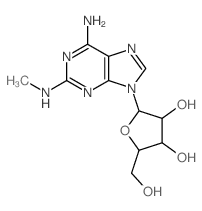 CAS#:13364-95-9
This table lists relevant public references with title, journal and publication metadata for this compound.
|
Hypoxanthine uptake by skeletal muscle microvascular endothelial cells from equilibrative nucleoside transporter 1 (ENT1)-null mice: effect of oxidative stress.
Microvasc. Res. 98 , 16-22, (2015) Adenosine is an endogenous regulator of vascular tone. This activity of adenosine is terminated by its uptake and metabolism by microvascular endothelial cells (MVEC). The predominant transporter invo... |
|
|
Oxidative stress modulates nucleobase transport in microvascular endothelial cells
Microvasc. Res. 95 , 68-75, (2014) Purine nucleosides and nucleobases play key roles in the physiological response to vascular ischemia/reperfusion events. The intra- and extracellular concentrations of these compounds are controlled, ... |
|
|
Chemical genetics reveals a complex functional ground state of neural stem cells.
Nat. Chem. Biol. 3(5) , 268-273, (2007) The identification of self-renewing and multipotent neural stem cells (NSCs) in the mammalian brain holds promise for the treatment of neurological diseases and has yielded new insight into brain canc... |
This table collects all English aliases, systematic names and CAS‑related synonyms of the compound.
| 6-Amino-2-chloro-9-(β-D-ribofuranosyl)purine Hydrate |
| 2-CADO,6-Amino-2-chloropurine riboside |
| 2-Chloroadenosine |
| 6-Amino-2-chloropurine Riboside Hydrate |
| 2-CADO Hydrate |
| EINECS 205-678-3 |
| (2R,3R,4S,5R)-2-(6-Amino-2-chloro-9H-purin-9-yl)-5-(hydroxymethyl)tetrahydro-3,4-furandiol |
| MFCD00005734 |
| 2-Chlor-9-(β-D-ribofuranosyl)-9H-purin-6-amin |
| 6-Amino-2-Chloropurine Riboside |
| 2-chloro adenosine |
This section contains frequently‑asked‑questions about this compound, including basic parameters, properties, storage conditions and corresponding answers.
| Q: What is the boiling point of 2-Chloroadenosine? |
| A: Boiling point of 2-Chloroadenosine is 643.3±65.0 °C at 760 mmHg. |
| Q: How is the water solubility of 2-Chloroadenosine? |
| A: Water solubility of 2-Chloroadenosine: H2O: 10 mg/mL, clear, colorless. |
| Q: What are the downstream products of 2-Chloroadenosine? |
| A: Related downstream products(CAS) of 2-Chloroadenosine: 4291-63-8;43157-50-2;59587-07-4;195727-26-5;58-61-7;28783-37-1;124498-79-9;24639-06-3;118-00-3;13364-95-9. |
| Q: What is the molecular weight of 2-Chloroadenosine? |
| A: Molecular weight of 2-Chloroadenosine is 301.686. |
| Q: What English synonyms does 2-Chloroadenosine have? |
| A: English synonyms of 2-Chloroadenosine: 6-Amino-2-chloro-9-(β-D-ribofuranosyl)purine Hydrate, 2-CADO,6-Amino-2-chloropurine riboside, 2-Chloroadenosine, 6-Amino-2-chloropurine Riboside Hydrate, 2-CADO Hydrate, EINECS 205-678-3, (2R,3R,4S,5R)-2-(6-Amino-2-chloro-9H-purin-9-yl)-5-(hydroxymethyl)tetrahydro-3,4-furandiol, MFCD00005734, 2-Chlor-9-(β-D-ribofuranosyl)-9H-purin-6-amin, 6-Amino-2-Chloropurine Riboside, 2-chloro adenosine. |
| Q: What are the uses of 2-Chloroadenosine? |
| A: Main uses of 2-Chloroadenosine: 2-Chloroadenosine, a stable adenosine analogue, protects against long term development of ischaemic cell loss in the rat hippocampus. 2-Chloroadenosine is an apparent competitive inhibitor of uridine influx (apparent Ki=33 μM) and high-affinity nitrobenzylthioinosine binding (apparent Ki=0.18 mM). 2-Chloroadenosine is a transported permeant for the nucleoside transporter in human erythrocytes[1][2]. |
| Q: What are the upstream materials of 2-Chloroadenosine? |
| A: Related upstream materials(CAS) of 2-Chloroadenosine: 3056-18-6;105499-44-3;15465-92-6;16321-99-6;118-00-3;6979-94-8;6974-32-9. |
| Q: What is the melting point of 2-Chloroadenosine? |
| A: Melting point of 2-Chloroadenosine is 162 °C. |
| Q: What is the polar surface area (PSA) of 2-Chloroadenosine? |
| A: Polar surface area (PSA) of 2-Chloroadenosine is 139.54000. |
| Q: What is the InChIKey of 2-Chloroadenosine? |
| A: InChIKey of 2-Chloroadenosine is BIXYYZIIJIXVFW-UUOKFMHZSA-N. |
This table lists manufacturers and suppliers of this compound, including vendor names and product supply reference information.
| Shanghai Nianxing Industrial Co., Ltd |
| Dayang Chem (Hangzhou) Co., Ltd. |
| Henan Tianfu Chemical Co., Ltd. |