23095-44-5
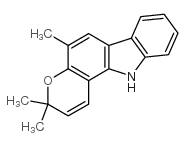
23095-44-5 structure
- Name: Girinimbine
- Chemical Name: girinimbine
- CAS Number: 23095-44-5
- Molecular Formula: C18H17NO
- Molecular Weight: 263.33400
- Catalog: Signaling Pathways Anti-infection Bacterial
- Create Date: 2018-04-11 08:00:00
- Modify Date: 2026-06-30 13:53:48
-
Girinimbine (Girinimbin) is a carbazole alkaloid with a variety of biological effects. Girinimbine can induce apoptosis, and has antitrypanosomal, antiplatelet activity, antibacterial activity, anti-inflammatory, antioxidant and antitumor activities[1][2][3].
| Name | girinimbine |
|---|---|
| Synonyms |
Girinimbine, 10 mM in DMSO
girinbimbine 3,3,5-Trimethyl-3,11-dihydropyrano[3,2-a]cbazole 3,11-Dihydro-3,3,5-trimethylpyrano[3,2-a]cbazole Cririnimhin grinimibine Pyrano[3,2-a]cbazole, 3,11-dihydro-3,3,5-trimethyl Girinimbin |
| Description | Girinimbine (Girinimbin) is a carbazole alkaloid with a variety of biological effects. Girinimbine can induce apoptosis, and has antitrypanosomal, antiplatelet activity, antibacterial activity, anti-inflammatory, antioxidant and antitumor activities[1][2][3]. |
|---|---|
| Related Catalog | |
| In Vitro | Girinimbine (1-400 µM; 24-72 h) decreases the viability of HepG2 cells in 24, 48 and 72 h with IC50 values of 61 µM, 56 µM, and 40 µM respectively. Girinimbine (10-100 µM; 24-48 h) increase of LDH leakage in both concentration- and time-dependent manner in HepG2 cells[1]. Girinimbine (56 µM; 24-48 h) treatment results in DNA fragmentation and elevates levels of caspase-3 in HepG2 cells[1].HepG2 cells[1]. Girinimbine (56 µM; 12-48 h) treatment also displays a time-dependent accumulation of the Sub-G0/G1 peak (hypodiploid) and caused G0/G1-phase arrest[1]. Girinimbine shows a potent antitrypanosomal activitywith an IC50 value of 10.16 µg/mL[3]. Cell Viability Assay[1] Cell Line: HepG2 cells Concentration: 1 µM, 10 µM, 50 µM, 100 µM, 200 µM Incubation Time: 24 h, 48 h and 72 h Result: Inhibited the proliferation of HepG2 cells in vitro in a dose- and time-dependent manner. Apoptosis Analysis[1] Cell Line: HepG2 cells Concentration: 56 µM Incubation Time: 24 h, 48 h Result: Showed typical morphological features of apoptosis. Cell Cycle Analysis[1] Cell Line: HepG2 cells Concentration: 56 µM Incubation Time: 12 h, 24 h, 48 h Result: Induced G0/G1-phase arrest in HepG2 cells. |
| In Vivo | Girinimbine (10-100 mg/kg; orally gavage; once) pretreatment helps limit total leukocyte migration, and reduced pro-inflammatory cytokine (IL-1β, TNF-α) levels in the peritoneal fluid[2]. In vivo in zebrafish embryos, Girinimbine (20 μg/mL; 24 hours) shows significant distribution of apoptotic cells in embryos[2]. Animal Model: Male ICR mice (25-35 g) treated with carrageenan[2] Dosage: 10 mg/kg, 30 mg/kg, and 100 mg/kg Administration: Orally gavage; once Result: Helped limit total leukocyte migration, and reduced pro-inflammatory cytokine levels in the peritoneal fluid. |
| References |
| Density | 1.187g/cm3 |
|---|---|
| Boiling Point | 450ºC at 760mmHg |
| Molecular Formula | C18H17NO |
| Molecular Weight | 263.33400 |
| Flash Point | 161.5ºC |
| Exact Mass | 263.13100 |
| PSA | 25.02000 |
| LogP | 4.81370 |
| Vapour Pressure | 7.27E-08mmHg at 25°C |
| Index of Refraction | 1.68 |
| HS Code | 2934999090 |
|---|
| Precursor 7 | |
|---|---|
| DownStream 0 | |

| HS Code | 2934999090 |
|---|---|
| Summary | 2934999090. other heterocyclic compounds. VAT:17.0%. Tax rebate rate:13.0%. . MFN tariff:6.5%. General tariff:20.0% |