- Shanghai Nianxing Industrial Co., Ltd
- China
- Product Name: Palmitic acid
- Price: Check
- Purity: 98.0%
- Stocking Period: 10 Day
- Contact: Yang
- Email: sales@echemcloud.com
- Dayang Chem (Hangzhou) Co., Ltd.
- China
- Product Name: Dimethyl succinate suppliers in China
- Price: $Inquiry/100g $Inquiry/1kg $Inquiry/100kg $Inquiry/1000kg
- Purity: 98.0%
- Stocking Period: Inquiry
- Contact: Ms Wang
- Email: enquiry@dycnchem.com
- Henan Tianfu Chemical Co., Ltd.
- China
- Product Name: Dimethyl succinate
- Price: $Inquiry/1kg $Inquiry/25kg $Inquiry/1000kg $Inquiry/10ton
- Purity: 99.0%
- Stocking Period: Inquiry
- Contact: Anson
- Email: info@tianfuchem.com
- Zhongshan Xingrui Chemical Co. , Ltd.
- China
- Product Name: Dimethyl succinate
- Price: ¥Inquiry/25kg
- Purity: 99.0%
- Stocking Period: Inquiry
- Contact: Wang Jie

- Email: 3096638339@qq.com
106-65-0
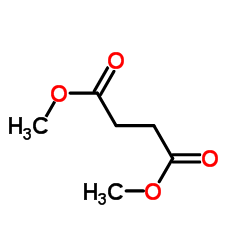
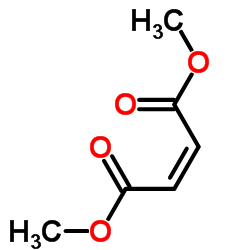
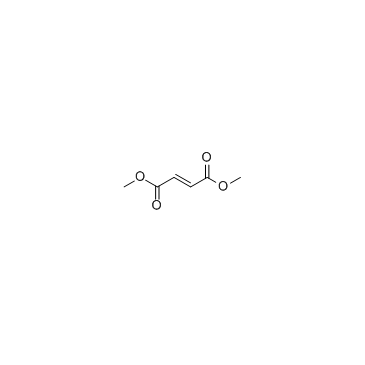
106-65-0 structure
- Name: Dimethyl succinate
- Chemical Name: Dimethyl succinate
- CAS Number: 106-65-0
- Molecular Formula: C6H10O4
- Molecular Weight: 146.141
- Catalog: Flavors and spices Synthetic spice Carboxylic acid and ester perfume Aliphatic carboxylate
- Create Date: 2018-02-05 08:00:00
- Modify Date: 2026-06-30 19:25:32
| Name | Dimethyl succinate |
|---|---|
| Synonyms |
Butanedioic acid, 1,4-dimethyl ester
Dimethyl succinate //BP Dimethyl succinate, Succinic acid dimethyl ester METHYL SUCCINATE SUCCINIC ACID BIS-METHYL ESTER Dimethy succinate Dimethyl succite Succinic Acid Dimethyl Ester Methyl Succinate TwoMethylsuccinic acid Dimethyl succinate Vetec(TM) ade Methyl succinate methyl butanedioate EINECS 203-419-9 BUTANEDIOICACID,DIMETHYLEST Dimethyl Succinate > DIMETHYL BUTANEDIOATE Succinic Acid Dimethyl Ester ESTASOL(R) MFCD00008466 DIMETHYLE SUCCINATE Dimethyl ester of succinic acid SUCCINIC ACID DIMETHYL ESTER DBE-4 DIBASIC ESTER, (DIMETHYL SUCCI NATE) 1,4-butanedioicacid,dimethylester dimethyl1,4-butanedioate DIBASIC ESTER (ESTASOL(R)) The Factory Supplies Dimethyl Succinate CAS No. -0 Ethyl Acetate Impurity 74 Succinic acid dimethyl DiMethyl succinate, R DBE-4 dibasic ester Dimetyl succinate Dimethyl succinate(DMSu) Dimethy succinate(kosher) Butanedioic acid dimethyl ester CH3OC(O)CH2CH2C(O)OCH3 DIMETHYL SUCCINATE DBE-4 dimethyl butanedioate BUTANEDIOIC ACID DIMETHYL ESTER Dimethyl Succinate(DMS) Dimethyl 2,3-butanedioate |
| Density | 1.1±0.1 g/cm3 |
|---|---|
| Boiling Point | 195.3±0.0 °C at 760 mmHg |
| Melting Point | 16-19 °C(lit.) |
| Molecular Formula | C6H10O4 |
| Molecular Weight | 146.141 |
| Flash Point | 85.0±0.0 °C |
| Exact Mass | 146.057907 |
| PSA | 52.60000 |
| LogP | 0.20 |
| Vapour Pressure | 0.4±0.3 mmHg at 25°C |
| Index of Refraction | 1.411 |
| Stability | Stable. Combustible. Incompatible with oxidizing agents, acids, bases, reducing agents. |
| Water Solubility | 8.5 g/L (20 ºC) |
CHEMICAL IDENTIFICATION
HEALTH HAZARD DATAACUTE TOXICITY DATA
|
| Personal Protective Equipment | Eyeshields;full-face respirator (US);Gloves;multi-purpose combination respirator cartridge (US);type ABEK (EN14387) respirator filter |
|---|---|
| Hazard Codes | Xi |
| Risk Phrases | R36 |
| Safety Phrases | S26-S24/25 |
| RIDADR | UN 1993 |
| WGK Germany | 1 |
| RTECS | WM7675000 |
| HS Code | 29171990 |
| Precursor 10 | |
|---|---|
| DownStream 10 | |


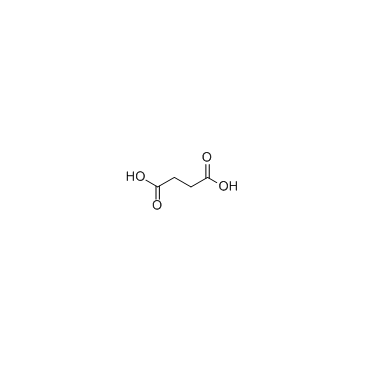
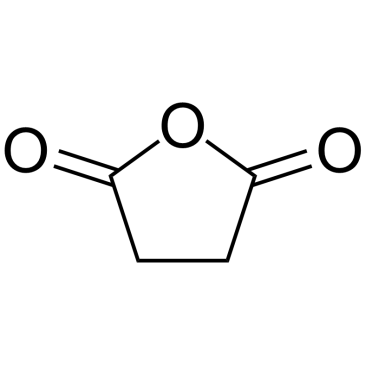
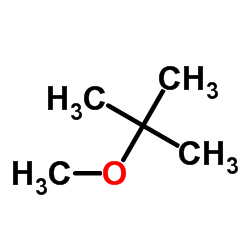




| HS Code | 2917190090 |
|---|---|
| Summary | 2917190090 acyclic polycarboxylic acids, their anhydrides, halides, peroxides, peroxyacids and their derivatives VAT:17.0% Tax rebate rate:9.0% Supervision conditions:none MFN tariff:6.5% General tariff:30.0% |