Iodoacetamide
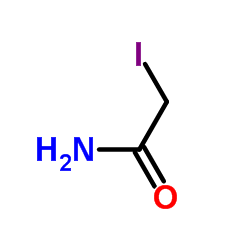
Iodoacetamide structure
|
Common Name | Iodoacetamide | ||
|---|---|---|---|---|
| CAS Number | 144-48-9 | Molecular Weight | 184.964 | |
| Density | 2.3±0.1 g/cm3 | Boiling Point | 297.1±23.0 °C at 760 mmHg | |
| Molecular Formula | C2H4INO | Melting Point | 92-95 °C(lit.) | |
| MSDS | Chinese USA | Flash Point | 133.5±22.6 °C | |
| Symbol |


GHS06, GHS08 |
Signal Word | Danger | |
Use of Iodoacetamide2-Iodoacetamide (Iodoacetamide), an alkylating agent, is a commonly used agent for alkylation of cysteine during sample preparation for proteomics[1][2]. |
Summary: 2-Iodoacetamide (Chinese name: 2-碘乙酰胺), CAS: 144-48-9, molecular formula: C2H4INO, molecular weight: 184.964. Appearance: crystalline, melting point: 92-95°C, boiling point: 297.1±23.0°C, density: 2.3±0.1g/cm3. For research-use only, not for medical or clinical usage.
This table lists Chinese names, IUPAC names and various aliases of this chemical substance.
| Name | 2-Iodoacetamide |
|---|---|
| Synonym | More Synonyms |
This table contains bioactivity, target information and biological‑assay experimental data of this compound.
| Description | 2-Iodoacetamide (Iodoacetamide), an alkylating agent, is a commonly used agent for alkylation of cysteine during sample preparation for proteomics[1][2]. |
|---|---|
| Related Catalog | |
| In Vivo | 2-Iodoacetamide (2.0-10 mg; drinking; daily; 20-93 days) feeding always produces chronic deep ulcers in the secretory part of the rat stomach[2]. Animal Model: Sprague-Dawley rats[2] Dosage: 2.0-10 mg Administration: Drinking water, daily, for periods of 20 to 93 days Result: Produced gastritis which was further complicated by chronic ulceration in many of the test rats. |
| References |
[2]. J J LALICH. Iodoacetamide induced gastric ulcers in rats. Proc Soc Exp Biol Med. 1962 Apr;109:905-8. |
This table shows physicochemical parameters including melting point, boiling point, density, solubility and optical rotation. Missing data is marked as N/A.
| Density | 2.3±0.1 g/cm3 |
|---|---|
| Boiling Point | 297.1±23.0 °C at 760 mmHg |
| Melting Point | 92-95 °C(lit.) |
| Molecular Formula | C2H4INO |
| Molecular Weight | 184.964 |
| Flash Point | 133.5±22.6 °C |
| Exact Mass | 184.933746 |
| PSA | 43.09000 |
| LogP | -0.19 |
| Vapour Pressure | 0.0±0.6 mmHg at 25°C |
| Index of Refraction | 1.602 |
| InChIKey | PGLTVOMIXTUURA-UHFFFAOYSA-N |
| SMILES | NC(=O)CI |
| Storage condition | 2-8°C |
| Stability | Stable, but light sensitive. Incompatible with strong oxidizing agents, strong bases, reducing agents, acids. |
| Water Solubility | slightly soluble |
This table provides MSDS information including hazard classification, first‑aid, fire‑fighting, spill handling, operation and storage instructions.
This table summarizes toxicological test data, acute & chronic toxicity and ecological hazard parameters for this chemical.
CHEMICAL IDENTIFICATION
HEALTH HAZARD DATAACUTE TOXICITY DATA
MUTATION DATA
|
This table covers safety warnings, protective measures, incompatible substances and disposal guidelines for this compound.
| Symbol |
GHS06, GHS08 |
|---|---|
| Signal Word | Danger |
| Hazard Statements | H301-H317-H334-H413 |
| Precautionary Statements | P261-P280-P301 + P310-P342 + P311 |
| Personal Protective Equipment | Eyeshields;Faceshields;Gloves;type P2 (EN 143) respirator cartridges |
| Hazard Codes | T:Toxic; |
| Risk Phrases | R25;R36/37/38;R43 |
| Safety Phrases | S22-S36/37-S45-S37/39-S26-S24 |
| RIDADR | UN 2811 6.1/PG 3 |
| WGK Germany | 3 |
| RTECS | AC4200000 |
| Packaging Group | III |
| Hazard Class | 6.1 |
| HS Code | 2924199090 |
This table presents publicly reported synthetic routes, reaction conditions, reactants and product information of the compound.
|
~66%
Iodoacetamide CAS#:144-48-9 |
| Literature: Molecular Probes, Inc. Patent: US5274113 A1, 1993 ; |
|
~%
Iodoacetamide CAS#:144-48-9 |
| Literature: Zeitschrift fuer Physikalische Chemie, Abteilung A: Chemische Thermodynamik, Kinetik, Elektrochemie, Eigenschaftslehre, , vol. 157, p. 249,254 Zeitschrift fuer Physikalische Chemie, Abteilung A: Chemische Thermodynamik, Kinetik, Elektrochemie, Eigenschaftslehre, , vol. 163, p. 38 |
|
~%
Iodoacetamide CAS#:144-48-9 |
| Literature: Synthesis, , p. 574 - 575 |
|
~%
Iodoacetamide CAS#:144-48-9 |
| Literature: Chemische Berichte, , vol. 41, p. 2117 Chemische Berichte, , vol. 42, p. 2056 |
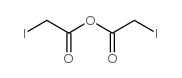

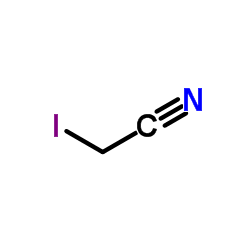

This table lists upstream starting materials and downstream derivative products related to this chemical.
| Precursor 4 | |
|---|---|
| DownStream 10 | |
![3,3-dimethyl-5'-oxo-1-ethyl-1,3-dihydrospiro[2H-indole-2,2'-pyrrolidine] structure](https://image.chemsrc.com/caspic/487/122275-78-9.png) CAS#:122275-78-9
CAS#:122275-78-9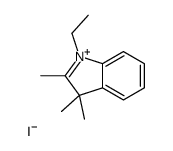 CAS#:14134-81-7
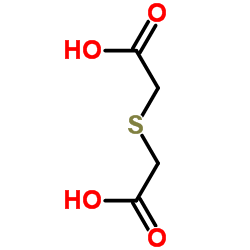 CAS#:123-93-3
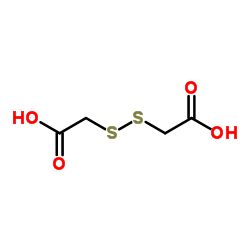 CAS#:505-73-7
 CAS#:10034-85-2
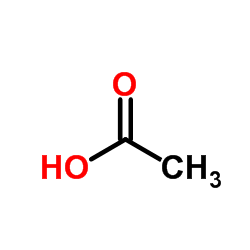 CAS#:64-19-7
 CAS#:7553-56-2
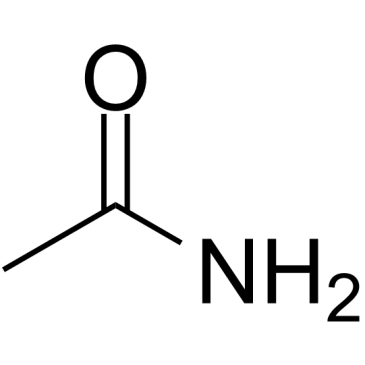 CAS#:60-35-5
 CAS#:24466-68-0
 CAS#:25077-26-3
This table shows customs‑related data including HS‑code, tariff and regulatory conditions for import and export.
| HS Code | 2924199090 |
|---|---|
| Summary | 2924199090. other acyclic amides (including acyclic carbamates) and their derivatives; salts thereof. VAT:17.0%. Tax rebate rate:13.0%. . MFN tariff:6.5%. General tariff:30.0% |
This table lists relevant public references with title, journal and publication metadata for this compound.
|
A new enabling proteomics methodology to investigate membrane associated proteins from parasitic nematodes: case study using ivermectin resistant and ivermectin susceptible isolates of Caenorhabditis elegans and Haemonchus contortus.
Vet. Parasitol. 207(3-4) , 266-75, (2015) The mechanisms involved in anthelmintic resistance (AR) are complex but a greater understanding of AR management is essential for effective and sustainable control of parasitic helminth worms in lives... |
|
|
Rad23 interaction with the proteasome is regulated by phosphorylation of its ubiquitin-like (UbL) domain.
J. Mol. Biol. 426(24) , 4049-60, (2014) Rad23 was identified as a DNA repair protein, although a role in protein degradation has been described. The protein degradation function of Rad23 contributes to cell cycle progression, stress respons... |
|
|
Proteomic analysis of nasal epithelial cells from cystic fibrosis patients.
PLoS ONE 9(9) , e108671, (2014) The pathophysiology of cystic fibrosis (CF) lung disease remains incompletely understood. New explanations for the pathogenesis of CF lung disease may be discovered by studying the patterns of protein... |
This table contains target information, in‑vitro & in‑vivo assay data for this compound.
This table collects all English aliases, systematic names and CAS‑related synonyms of the compound.
| MFCD00008028 |
| carbamoylmethyl iodide |
| 2-Iodo-acetamide |
| USAF D-1 |
| Monoiodoacetamide |
| 2-iodoacetamido |
| Iodoacetamide |
| ACETAMIDE,2-IODO |
| 2-Iodoacetamide |
| Surauto |
| EINECS 205-630-1 |
This section contains frequently‑asked‑questions about this compound, including basic parameters, properties, storage conditions and corresponding answers.
| Q: What is the molecular weight of 2-Iodoacetamide? |
| A: Molecular weight of 2-Iodoacetamide is 184.964. |
| Q: What is the molecular formula of 2-Iodoacetamide? |
| A: Molecular formula of 2-Iodoacetamide is C2H4INO. |
| Q: What is the boiling point of 2-Iodoacetamide? |
| A: Boiling point of 2-Iodoacetamide is 297.1±23.0 °C at 760 mmHg. |
| Q: What are the uses of 2-Iodoacetamide? |
| A: Main uses of 2-Iodoacetamide: 2-Iodoacetamide (Iodoacetamide), an alkylating agent, is a commonly used agent for alkylation of cysteine during sample preparation for proteomics[1][2]. |
| Q: What is the LogP of 2-Iodoacetamide? |
| A: LogP of 2-Iodoacetamide is -0.19. |
| Q: What is the polar surface area (PSA) of 2-Iodoacetamide? |
| A: Polar surface area (PSA) of 2-Iodoacetamide is 43.09000. |
| Q: What are the downstream products of 2-Iodoacetamide? |
| A: Related downstream products(CAS) of 2-Iodoacetamide: 122275-78-9;14134-81-7;123-93-3;505-73-7;10034-85-2;64-19-7;7553-56-2;60-35-5;24466-68-0;25077-26-3. |
| Q: What is the InChIKey of 2-Iodoacetamide? |
| A: InChIKey of 2-Iodoacetamide is PGLTVOMIXTUURA-UHFFFAOYSA-N. |
| Q: What is the SMILES notation of 2-Iodoacetamide? |
| A: SMILES notation of 2-Iodoacetamide is NC(=O)CI. |
| Q: What is the melting point of 2-Iodoacetamide? |
| A: Melting point of 2-Iodoacetamide is 92-95 °C(lit.). |
This table lists manufacturers and suppliers of this compound, including vendor names and product supply reference information.
| Shanghai Nianxing Industrial Co., Ltd |
| Dayang Chem (Hangzhou) Co., Ltd. |
| Henan Tianfu Chemical Co., Ltd. |
| Zhongshan Xingrui Chemical Co. , Ltd. |
The content on this webpage is sourced from various professional data sources. If you have any questions or concerns regarding the content, please feel free to contact service1@chemsrc.com.
- Shanghai Nianxing Industrial Co., Ltd
- China
- Product Name: Iodoacetamide
- Price: Check
- Purity: 99.0%
- Delivery: 10 Day
- Contact: Yang
- Email: sales@echemcloud.com
- Dayang Chem (Hangzhou) Co., Ltd.
- China
- Product Name: Iodoacetamide
- Price: $Inquiry/100g $Inquiry/1kg $Inquiry/100kg $Inquiry/1000kg
- Purity: 98.0%
- Delivery: Inquiry
- Contact: Ms Wang
- Email: enquiry@dycnchem.com
- Henan Tianfu Chemical Co., Ltd.
- China
- Product Name: 2-Iodoacetamide
- Price: $Inquiry/1kg $Inquiry/25kg $Inquiry/1000kg $Inquiry/10ton
- Purity: 99.0%
- Delivery: Inquiry
- Contact: Anson
- Email: info@tianfuchem.com
- Zhongshan Xingrui Chemical Co. , Ltd.
- China
- Product Name: Iodoacetamide
- Price: ¥Inquiry/25kg
- Purity: 99.0%
- Delivery: Inquiry
- Contact: Wang Jie

- Email: 3096638339@qq.com
Get all suppliers and price by the below link:
Reference only. check more Iodoacetamide price