2-Aminopurine
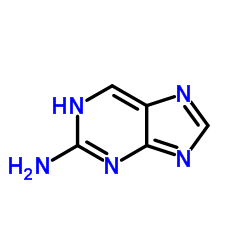
2-Aminopurine structure
|
Common Name | 2-Aminopurine | ||
|---|---|---|---|---|
| CAS Number | 452-06-2 | Molecular Weight | 135.127 | |
| Density | 1.9±0.1 g/cm3 | Boiling Point | 328.2±25.0 °C at 760 mmHg | |
| Molecular Formula | C5H5N5 | Melting Point | 280-282 °C(lit.) | |
| MSDS | Chinese USA | Flash Point | 152.3±23.2 °C | |
| Symbol |

GHS07 |
Signal Word | Warning | |
Use of 2-Aminopurine2-Aminopurine, a fluorescent analog of guanosine and adenosine, is a widely used fluorescence-decay-based probe of DNA structure. When 2-Aminopurine is inserted in anoligonucleotide, its fluorescence is highly quenched by stacking with the natural bases. 2-Aminopurine has been used to probe nucleic acid structure and dynamics[1][2]. |
This table lists Chinese names, IUPAC names and various aliases of this chemical substance.
| Name | 2-aminopurine |
|---|---|
| Synonym | More Synonyms |
This table contains bioactivity, target information and biological‑assay experimental data of this compound.
| Description | 2-Aminopurine, a fluorescent analog of guanosine and adenosine, is a widely used fluorescence-decay-based probe of DNA structure. When 2-Aminopurine is inserted in anoligonucleotide, its fluorescence is highly quenched by stacking with the natural bases. 2-Aminopurine has been used to probe nucleic acid structure and dynamics[1][2]. |
|---|---|
| Related Catalog | |
| In Vitro | 2-Aminopurine (2AP) is not valuable as afluorescent label because its fluorescence is highly quenched by stacking with the natural bases, when it is inserted in anoligonucleotide. However, it is this very susceptibility to interbase quenching that makes 2AP an exquisitely sensitivefluorescent probe of nucleic acid structure[1]. 2-Aminopurine differs from adenine (6-aminopurine) only in the position of the exocyclic amine group, and yet its fluorescence intensity is one thousand times that of adenine[1]. |
| References |
This table shows physicochemical parameters including melting point, boiling point, density, solubility and optical rotation. Missing data is marked as N/A.
| Density | 1.9±0.1 g/cm3 |
|---|---|
| Boiling Point | 328.2±25.0 °C at 760 mmHg |
| Melting Point | 280-282 °C(lit.) |
| Molecular Formula | C5H5N5 |
| Molecular Weight | 135.127 |
| Flash Point | 152.3±23.2 °C |
| Exact Mass | 135.054489 |
| PSA | 80.48000 |
| LogP | -1.33 |
| Vapour Pressure | 0.0±0.7 mmHg at 25°C |
| Index of Refraction | 1.954 |
| InChIKey | MWBWWFOAEOYUST-UHFFFAOYSA-N |
| SMILES | Nc1ncc2[nH]cnc2n1 |
This table provides MSDS information including hazard classification, first‑aid, fire‑fighting, spill handling, operation and storage instructions.
This table summarizes toxicological test data, acute & chronic toxicity and ecological hazard parameters for this chemical.
CHEMICAL IDENTIFICATION
HEALTH HAZARD DATAACUTE TOXICITY DATA
MUTATION DATA
|
This table covers safety warnings, protective measures, incompatible substances and disposal guidelines for this compound.
| Symbol |
GHS07 |
|---|---|
| Signal Word | Warning |
| Hazard Statements | H302 |
| Precautionary Statements | P301 + P312 + P330 |
| Personal Protective Equipment | dust mask type N95 (US);Eyeshields;Gloves |
| Hazard Codes | Xn:Harmful; |
| Risk Phrases | R22 |
| Safety Phrases | S22-S36 |
| RIDADR | NONH for all modes of transport |
| WGK Germany | 3 |
| RTECS | UO7475000 |
| HS Code | 2933990090 |
This table presents publicly reported synthetic routes, reaction conditions, reactants and product information of the compound.
|
~85%
2-Aminopurine CAS#:452-06-2 |
| Literature: Kusmierek, Jaroslaw; Czochralska, Barbara; Johansson, Nils Gunnar; Shugar, David Acta Chemica Scandinavica, Series B: Organic Chemistry and Biochemistry, 1987 , vol. 41, # 10 p. 701 - 707 |
|
~48%
2-Aminopurine CAS#:452-06-2 |
| Literature: Goto; Toya; Ohgi; Kondo Tetrahedron Letters, 1982 , vol. 23, # 12 p. 1271 - 1274 |
|
~90%
2-Aminopurine CAS#:452-06-2 |
| Literature: Kos, Nico J.; Plas, Henk C. van der Journal of Organic Chemistry, 1980 , vol. 45, # 15 p. 2942 - 2945 |
|
~%
2-Aminopurine CAS#:452-06-2 |
| Literature: Anufriev, M. A.; Ratsino, E. V.; Elagin, L. M.; Sokolov, L. B.; Komarov, E. V. J. Gen. Chem. USSR (Engl. Transl.), 1982 , vol. 52, # 5 p. 1015 - 1019,884 - 887 |
|
~%
2-Aminopurine CAS#:452-06-2 |
| Literature: Saladino, Raffaele; Botta, Giorgia; Delfino, Michela; Di Mauro, Ernesto Chemistry - A European Journal, 2013 , vol. 19, # 50 p. 16916 - 16922 |
|
~59%
2-Aminopurine CAS#:452-06-2 |
| Literature: Tisler, Miha; Stanovnik, Branko; Zrimsek, Zdenka Heterocycles, 1982 , vol. 17, p. 405 - 411 |
|
~%
2-Aminopurine CAS#:452-06-2 |
| Literature: Nair, Vasu; Buenger, Greg S. Journal of Organic Chemistry, 1990 , vol. 55, # 11 p. 3695 - 3697 |
|
~%
2-Aminopurine CAS#:452-06-2 |
| Literature: Ratsep, Peter C.; Pless, Reynaldo C. Journal of Organic Chemistry, 1988 , vol. 53, # 14 p. 3241 - 3246 |
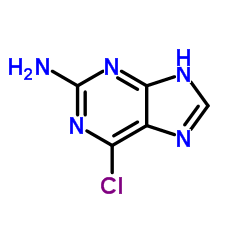
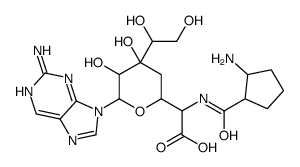
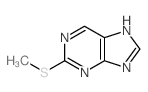
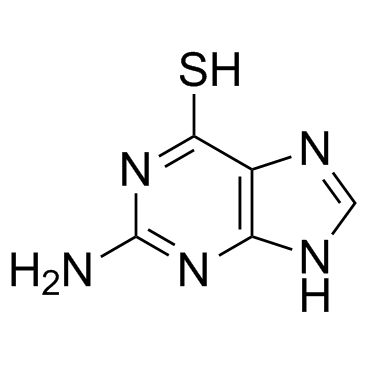

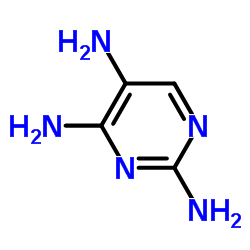
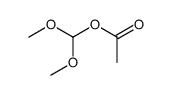
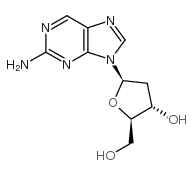
![[(2S,5R)-5-(2-aminopurin-9-yl)oxolan-2-yl]methanol structure](https://image.chemsrc.com/caspic/016/107550-74-3.png)

This table lists upstream starting materials and downstream derivative products related to this chemical.
| Precursor 8 | |
|---|---|
| DownStream 6 | |
 CAS#:4546-54-7
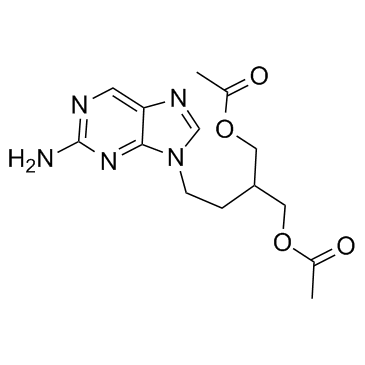 CAS#:104227-87-4
![2-[(2-aminopurin-7-yl)methoxy]ethanol structure](https://image.chemsrc.com/caspic/418/114810-83-2.png) CAS#:114810-83-2
CAS#:114810-83-2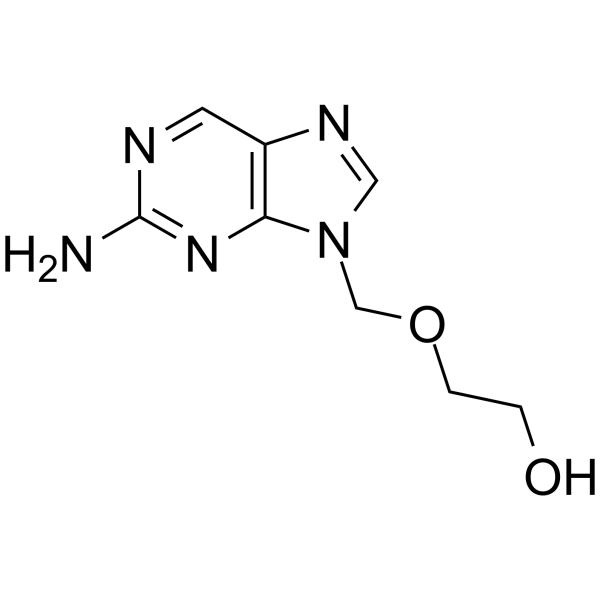 CAS#:84408-37-7
This table shows customs‑related data including HS‑code, tariff and regulatory conditions for import and export.
| HS Code | 2933990090 |
|---|---|
| Summary | 2933990090. heterocyclic compounds with nitrogen hetero-atom(s) only. VAT:17.0%. Tax rebate rate:13.0%. . MFN tariff:6.5%. General tariff:20.0% |
This table lists relevant public references with title, journal and publication metadata for this compound.
|
Site-specific fluorescence dynamics in an RNA 'thermometer' reveals the role of ribosome binding in its temperature-sensitive switch function.
Nucleic Acids Res. 43(1) , 493-503, (2015) RNA thermometers control the translation of several heat shock and virulence genes by their temperature-sensitive structural transitions. Changes in the structure and dynamics of MiniROSE RNA, which r... |
|
|
Pro-inflammatory cytokine/chemokine production by reovirus treated melanoma cells is PKR/NF-κB mediated and supports innate and adaptive anti-tumour immune priming.
Mol. Cancer 10 , 20, (2011) As well as inducing direct oncolysis, reovirus treatment of melanoma is associated with activation of innate and adaptive anti-tumour immune responses.Here we characterise the effects of conditioned m... |
|
|
Ligand-induced evolution of intrinsic fluorescence and catalytic activity from cobalt ferrite nanoparticles.
ChemPhysChem 16 , 1627-34, (2015) To develop CoFe(2)O(4) as magneto-fluorescent nanoparticles (NPs) for biomedical applications, it would be advantageous to identify any intrinsic fluorescence of this important magnetic material by si... |
This table collects all English aliases, systematic names and CAS‑related synonyms of the compound.
| 2-Aminoperin |
| iso-Adenine |
| 2-Aminopurine |
| 3H-Purin-2-amine |
| MFCD07357244 |
| 7H-Purin-2-amine |
| 9H-Purin-2-amine |
| 2-amino purine |
| EINECS 207-197-4 |
| 9H-purin-2-ylamine |
| 2-amino-6-purine |
| 1H-Purin-2-amine |
| 4-aminopurine |
| 2-amino-purin |
| SQ 22,451 |
This section contains frequently‑asked‑questions about this compound, including basic parameters, properties, storage conditions and corresponding answers.
| Q: What is the InChIKey of 2-aminopurine? |
| A: InChIKey of 2-aminopurine is MWBWWFOAEOYUST-UHFFFAOYSA-N. |
| Q: What is the polar surface area (PSA) of 2-aminopurine? |
| A: Polar surface area (PSA) of 2-aminopurine is 80.48000. |
| Q: What English synonyms does 2-aminopurine have? |
| A: English synonyms of 2-aminopurine: 2-Aminoperin, iso-Adenine, 2-Aminopurine, 3H-Purin-2-amine, MFCD07357244, 7H-Purin-2-amine, 9H-Purin-2-amine, 2-amino purine, EINECS 207-197-4, 9H-purin-2-ylamine, 2-amino-6-purine, 1H-Purin-2-amine, 4-aminopurine, 2-amino-purin, SQ 22,451. |
| Q: What is the melting point of 2-aminopurine? |
| A: Melting point of 2-aminopurine is 280-282 °C(lit.). |
| Q: What is the LogP of 2-aminopurine? |
| A: LogP of 2-aminopurine is -1.33. |
| Q: What is the safety information for 2-aminopurine? |
| A: Safety information for 2-aminopurine: S22-S36. |
| Q: What is the boiling point of 2-aminopurine? |
| A: Boiling point of 2-aminopurine is 328.2±25.0 °C at 760 mmHg. |
| Q: What is the molecular formula of 2-aminopurine? |
| A: Molecular formula of 2-aminopurine is C5H5N5. |
| Q: What are the upstream materials of 2-aminopurine? |
| A: Related upstream materials(CAS) of 2-aminopurine: 10310-21-1;61991-08-0;33512-51-5;154-42-7;77287-34-4;3546-50-7;107550-74-3;3616-24-8. |
| Q: What are the uses of 2-aminopurine? |
| A: Main uses of 2-aminopurine: 2-Aminopurine, a fluorescent analog of guanosine and adenosine, is a widely used fluorescence-decay-based probe of DNA structure. When 2-Aminopurine is inserted in anoligonucleotide, its fluorescence is highly quenched by stacking with the natural bases. 2-Aminopurine has been used to probe nucleic acid structure and dynamics[1][2]. |
This table lists manufacturers and suppliers of this compound, including vendor names and product supply reference information.
| Shanghai Nianxing Industrial Co., Ltd |
| Dayang Chem (Hangzhou) Co., Ltd. |