Manool

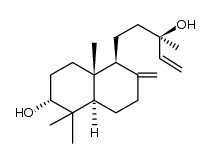
Manool structure
|
Common Name | Manool | ||
|---|---|---|---|---|
| CAS Number | 596-85-0 | Molecular Weight | 290.48300 | |
| Density | 0.93g/cm3 | Boiling Point | 368.2ºC at 760mmHg | |
| Molecular Formula | C20H34O | Melting Point | 49-52ºC(lit.) | |
| MSDS | N/A | Flash Point | 118.2ºC | |
Use of ManoolManool is a diterpene from Salvia officinalis. Manool induces selective cytotoxicity in cancer cells. Manool arrests the cancer cells at the G(2)/M phase of the cell cycle[1][2]. |
This table lists Chinese names, IUPAC names and various aliases of this chemical substance.
| Name | manool |
|---|---|
| Synonym | More Synonyms |
This table contains bioactivity, target information and biological‑assay experimental data of this compound.
| Description | Manool is a diterpene from Salvia officinalis. Manool induces selective cytotoxicity in cancer cells. Manool arrests the cancer cells at the G(2)/M phase of the cell cycle[1][2]. |
|---|---|
| Related Catalog | |
| In Vitro | Manool exhibits higher cytotoxic activity against HeLa (IC50=6.7 µg/mL) and U343 (IC50=6.7 µg/mL) cells[1]. Manool exhibits a protective effect against chromosome damage induced by MMS in HepG2 cells[3]. |
| References |
[2]. Pratsinis H, et al. Antiproliferative activity of Greek propolis. J Med Food. 2010;13(2):286-290. |
This table shows physicochemical parameters including melting point, boiling point, density, solubility and optical rotation. Missing data is marked as N/A.
| Density | 0.93g/cm3 |
|---|---|
| Boiling Point | 368.2ºC at 760mmHg |
| Melting Point | 49-52ºC(lit.) |
| Molecular Formula | C20H34O |
| Molecular Weight | 290.48300 |
| Flash Point | 118.2ºC |
| Exact Mass | 290.26100 |
| PSA | 20.23000 |
| LogP | 5.50240 |
| Index of Refraction | 1.5 |
| InChIKey | CECREIRZLPLYDM-ZYKFHVCXSA-N |
| SMILES | C=CC(C)(O)CCC1C(=C)CCC2C(C)(C)CCCC12C |
This table provides MSDS information including hazard classification, first‑aid, fire‑fighting, spill handling, operation and storage instructions.
This table covers safety warnings, protective measures, incompatible substances and disposal guidelines for this compound.
| Hazard Codes | Xi: Irritant; |
|---|---|
| Risk Phrases | R36/37/38 |
| Safety Phrases | S26-S36 |
| WGK Germany | 3 |
This table presents publicly reported synthetic routes, reaction conditions, reactants and product information of the compound.
|
~91%
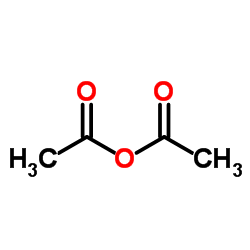
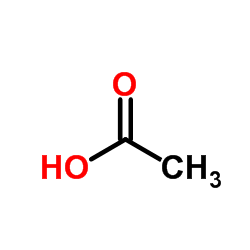
Manool CAS#:596-85-0 |
| Literature: Rogachev, Victor; Loehl, Thorsten; Markert, Thomas; Metz, Peter Arkivoc, 2012 , vol. 2012, # 3 p. 172 - 180 |
|
~15%
Manool CAS#:596-85-0
Manool CAS#:596-85-0
Learn More
|
| Literature: Organic and Biomolecular Chemistry, , vol. 9, # 7 p. 2156 - 2165 |
|
~%
Manool CAS#:596-85-0 |
| Literature: Arkivoc, , vol. 2012, # 3 p. 172 - 180 |
|
~%
Manool CAS#:596-85-0 |
| Literature: Arkivoc, , vol. 2012, # 3 p. 172 - 180 |
|
~%
Manool CAS#:596-85-0 |
| Literature: Indian Journal of Chemistry, Section B: Organic Chemistry Including Medicinal Chemistry, , vol. 26, # 1-12 p. 453 - 458 |
|
~%
Manool CAS#:596-85-0 |
| Literature: Agricultural and Biological Chemistry, , vol. 46, # 10 p. 2477 - 2484 |
|
~%
Detail
Learn More
|
| Literature: Justus Liebigs Annalen der Chemie, , vol. 617, p. 134 Journal of the Chemical Society, , p. 2187,2189 |
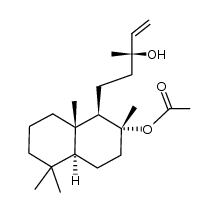

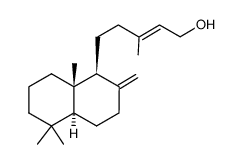
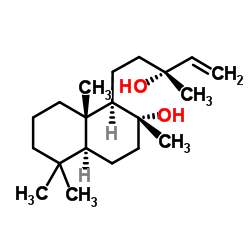
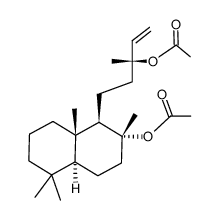
![(3R,4aS,6aR,10aR,10bS)-3-ethenyl-3,4a,7,7,10a-pentamethyl-2,5,6,6a,8,9,10,10b-octahydro-1H-benzo[f]chromene structure](https://image.chemsrc.com/caspic/327/596-84-9.png)


This table lists upstream starting materials and downstream derivative products related to this chemical.
| Precursor 7 | |
|---|---|
| DownStream 6 | |
 CAS#:3243-36-5
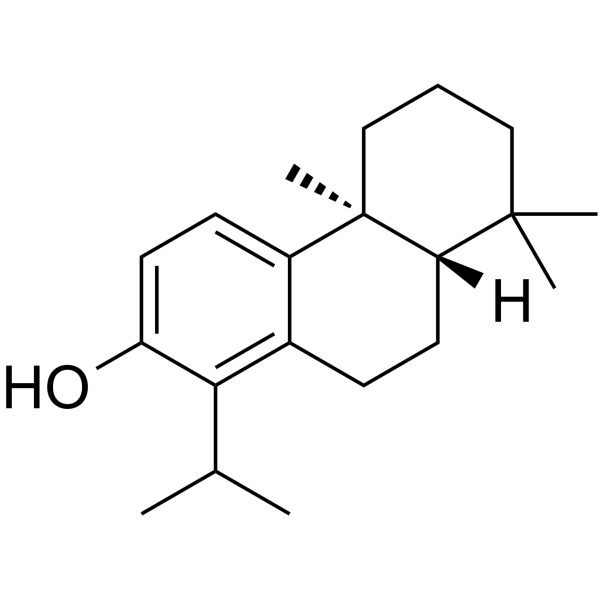 CAS#:511-15-9
 CAS#:1232-00-4
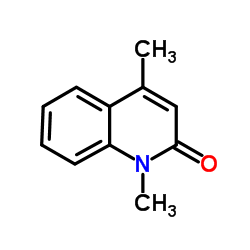 CAS#:2584-47-6
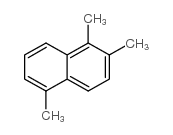 CAS#:641-91-8
This table contains target information, in‑vitro & in‑vivo assay data for this compound.
This table collects all English aliases, systematic names and CAS‑related synonyms of the compound.
| 8,14-labdadien-13-ol |
| MFCD01310996 |
| MANOOL |
This section contains frequently‑asked‑questions about this compound, including basic parameters, properties, storage conditions and corresponding answers.
| Q: What is the boiling point of manool? |
| A: Boiling point of manool is 368.2ºC at 760mmHg. |
| Q: What English synonyms does manool have? |
| A: English synonyms of manool: 8,14-labdadien-13-ol, MFCD01310996, MANOOL. |
| Q: What is the CAS number of manool? |
| A: CAS number of manool is 596-85-0. |
| Q: What is the polar surface area (PSA) of manool? |
| A: Polar surface area (PSA) of manool is 20.23000. |
| Q: What is the melting point of manool? |
| A: Melting point of manool is 49-52ºC(lit.). |
| Q: What are the uses of manool? |
| A: Main uses of manool: Manool is a diterpene from Salvia officinalis. Manool induces selective cytotoxicity in cancer cells. Manool arrests the cancer cells at the G(2)/M phase of the cell cycle[1][2]. |
| Q: What is the SMILES notation of manool? |
| A: SMILES notation of manool is C=CC(C)(O)CCC1C(=C)CCC2C(C)(C)CCCC12C. |
| Q: What are the downstream products of manool? |
| A: Related downstream products(CAS) of manool: 3243-36-5;511-15-9;515-03-7;1232-00-4;2584-47-6;641-91-8. |
| Q: What is the LogP of manool? |
| A: LogP of manool is 5.50240. |
| Q: What is the molecular formula of manool? |
| A: Molecular formula of manool is C20H34O. |
This table lists manufacturers and suppliers of this compound, including vendor names and product supply reference information.
| Shanghai Nianxing Industrial Co., Ltd |