Neratinib (HKI-272)
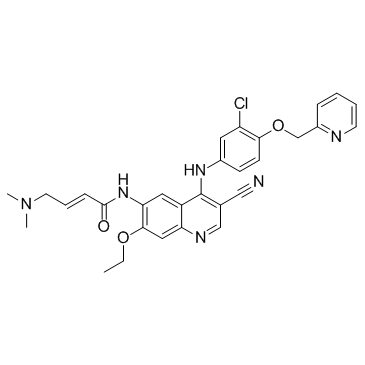
Neratinib (HKI-272) structure
|
Common Name | Neratinib (HKI-272) | ||
|---|---|---|---|---|
| CAS Number | 698387-09-6 | Molecular Weight | 557.043 | |
| Density | 1.3±0.1 g/cm3 | Boiling Point | 757.0±60.0 °C at 760 mmHg | |
| Molecular Formula | C30H29ClN6O3 | Melting Point | 184 °C | |
| MSDS | N/A | Flash Point | 411.6±32.9 °C | |
Use of Neratinib (HKI-272)Neratinib is an orally available, irreversible tyrosine kinase inhibitor with IC50s of 59 nM and 92 nM for HER2 and EGFR, respectively. |
This table lists Chinese names, IUPAC names and various aliases of this chemical substance.
| Name | neratinib |
|---|---|
| Synonym | More Synonyms |
This table contains bioactivity, target information and biological‑assay experimental data of this compound.
| Description | Neratinib is an orally available, irreversible tyrosine kinase inhibitor with IC50s of 59 nM and 92 nM for HER2 and EGFR, respectively. |
|---|---|
| Related Catalog | |
| Target |
EGFR:92 nM (IC50) HER2:59 nM (IC50) |
| In Vitro | Neratinib has inhibition of tyrosine kinases KDR and Src with IC50 of 0.8 μM and 1.4 μM, respectively, being 14- and 24-fold less active compared with HER2. Neratinib displays no activity against other serine-threonine kinases such as Akt, cyclin D1/cdk4, cyclin E/cdk2, cyclin B1/cdk1, IKK-2, MK-2, PDK1, c-Raf, and Tpl-2, as well as the tyrosine kinase c-Met. Neratinib selectively inhibits the proliferation of 3T3 cells transfected with the HER2 (3T3/neu), as well as two other HER-2-overexpressing SK-Br-3 and BT474 cells with IC50 values of 2-3 nM, displaying > 230-fold potency compared with non-transfected 3T3 cells as well as MDA-MB-435 and SW620 which are EGFR- and HER2-negative. Neratinib also inhibits the proliferation of EGFR-dependent A431 cells with an IC50 of 81 nM. Neratinib reduces HER2 receptor autophosphorylation in BT474 cells with an IC50 of 5 nM, and EGF-dependent phosphorylation of EGFR in A431 cells with IC50 of 3 nM. Blocking of HER-2 by Neratinib results in inhibition of downstream MAPK and Akt pathways with IC50 of 2 nM, more potently than Trastuzumab. Neratinib inhibits the cyclin D1 expression and the phosphorylation of the Rb-susceptibility gene production in BT474 cells with IC50 of 9 nM, leading to G1-S arrest and ultimately decreased cell proliferation[1]. |
| In Vivo | Orally treated neratinib significantly inhibits the growth of 3T3/neu xenografts, with inhibition of 34%, 53%, 98%, and 98% at dose of 10, 20, 40, and 80 mg/kg/day, respectively. Consistent with the inhibition of HER-2 phosphorylation by 84% within 1 hour of administration at 40 mg/kg/day, Neratinib inhibits the growth of BT474 xenografts by 70-82%, 67%, and 93% at dose of 5, 10, and 40 mg/kg/day, respectively. Neratinib is also effective against SK-OV-3 xenografts with inhibition of 31% and 85% at 5 and 60 mg/kg/day, respectively. Neratinib is less potent against EGFR-dependent A431 xenografts than HER-2-dependent tumors, with 32% and 44% inhibition at 5 and 20 mg/kg/day, respectively. Neratinib displays little activity against MCF-7 and MX-1 xenografts expressing low levels of HER-2 and EGFR, with only 28% inhibition at 80 mg/kg/day, suggesting that Neratinib has selective activity for cells expressing HER-2 or EGFR[1]. |
| Kinase Assay | Neratinib is prepared as 10 mg/mL stocks in DMSO and diluted in 25 mM HEPES (pH 7.5; 0.002 ng/mL-20 μg/mL). Purified recombinant COOH-terminal fragments of HER2 (amino acids 676-1255) or epidermal growth factor receptor (EGFR) (amino acids 645-1186) [diluted in 100 mM HEPES (pH 7.5) and 50% glycerol] is incubated with increasing concentrations of Neratinib in 4 mM HEPES (pH 7.5), 0.4 mM MnCl2, 20 μM sodium vanadate, and 0.2 mM DTT for 15 minutes at room temperature in 96-well ELISA plates. The kinase reaction is initiated by the addition of 40 μM ATP and 20 mM MgCl2 and allowed to proceed for 1 hour at room temperature. Plates are washed, and phosphorylation is detected using Europium-labeled anti-phospho-tyrosine antibodies (15 ng/well). After washing and enhancement steps, signal is detected using a Victor2 fluorescence reader (excitation wavelength 340 nm, emission wavelength 615 nm). The concentration of Neratinib that inhibits receptor phosphorylation by 50% (IC50) is calculated from inhibition curves. |
| Cell Assay | Cells are exposed to various concentrations of Neratinib for 2, or 6 days. Cell proliferation is determined using sulforhodamine B, a protein binding dye. Briefly, cells are fixed with 10% trichloroacetic acid and washed extensively with water. Cells are then stained with 0.1% sulforhodamine B and washed in 5% acetic acid. Protein-associated dye is solubilized in 10 mM Tris, and absorbance is measured at 450 nM. The concentration of Neratinib that inhibits cell proliferation by 50% (IC50) is determined from inhibition curves. |
| Animal Admin | Tumor cells (maintained in tissue culture) or tumor fragments are implanted s.c. in the flanks of female athymic (nude) mice. For estrogen-dependent cell lines (BT474, MCF-7, and SK-OV-3), animals are implanted with hormone pellets (0.72 mg of 17-β estradiol, 60-day release) 1 week before implantation of tumors. Additionally, SK-OV-3 cells are suspended in Matrigel basement membrane matrix for implantation. Treatment is initiated after tumors hads reached a size of 90-200 mg, following random assignment of the animals to different treatment groups (staging, day 0). For 3T3/neu xenografts, treatment is initiated the day after tumor implantation (day 0). HKI-272 is formulated in 0.5% methocellulose-0.4% polysorbate-80 (Tween 80) and administered daily, p.o., by gavage. Tumor mass [(length × width2)/2] is determined every 7 days. Tumor outgrowth in all xenograft studies, except 3T3/neu, is expressed as relative tumor growth: the ratio of the mean tumor mass to the mean tumor mass on day 0. Inhibition of tumor growth is calculated relative to vehicle-treated controls. Statistical significance of inhibition is demonstrated using one-tailed Student’s t test (equal variance) after log transformation of the data. |
| References |
This table shows physicochemical parameters including melting point, boiling point, density, solubility and optical rotation. Missing data is marked as N/A.
| Density | 1.3±0.1 g/cm3 |
|---|---|
| Boiling Point | 757.0±60.0 °C at 760 mmHg |
| Melting Point | 184 °C |
| Molecular Formula | C30H29ClN6O3 |
| Molecular Weight | 557.043 |
| Flash Point | 411.6±32.9 °C |
| Exact Mass | 556.198975 |
| PSA | 112.40000 |
| LogP | 5.46 |
| Vapour Pressure | 0.0±2.5 mmHg at 25°C |
| Index of Refraction | 1.667 |
| InChIKey | JWNPDZNEKVCWMY-VQHVLOKHSA-N |
| SMILES | CCOc1cc2ncc(C#N)c(Nc3ccc(OCc4ccccn4)c(Cl)c3)c2cc1NC(=O)C=CCN(C)C |
This table covers safety warnings, protective measures, incompatible substances and disposal guidelines for this compound.
| Hazard Codes | Xn |
|---|---|
| HS Code | 29334900 |
This table presents publicly reported synthetic routes, reaction conditions, reactants and product information of the compound.
This table lists upstream starting materials and downstream derivative products related to this chemical.
| Precursor 9 | |
|---|---|
| DownStream 0 | |
![6-amino-4-[3-chloro-4-(pyridin-2-ylmethoxy)anilino]-7-ethoxyquinoline-3-carbonitrile Structure](https://image.chemsrc.com/caspic/300/848139-78-6.png) CAS#:848139-78-6
CAS#:848139-78-6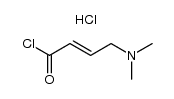 CAS#:1055943-40-2
![3-Chloro-4-[(pyridin-2-yl)methyloxy]aniline Structure](https://image.chemsrc.com/caspic/030/524955-09-7.png) CAS#:524955-09-7
CAS#:524955-09-7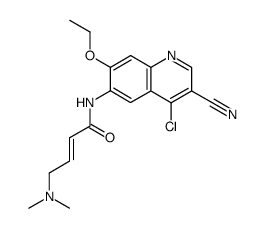 CAS#:848133-88-0
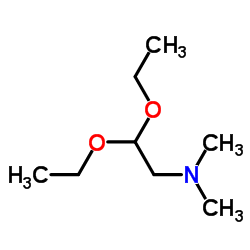 CAS#:3616-56-6
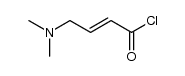 CAS#:1056149-69-9
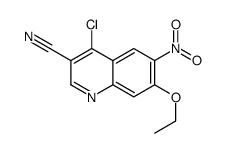 CAS#:214476-09-2
 CAS#:848133-87-9
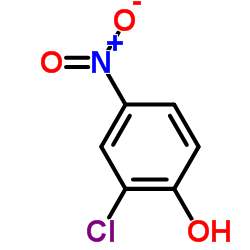 CAS#:619-08-9
This table contains target information, in‑vitro & in‑vivo assay data for this compound.
This table collects all English aliases, systematic names and CAS‑related synonyms of the compound.
| (2E)-N-[4-[[3-chloro-4-[(pyridin-2-yl)methoxy]phenyl]amino]-3-cyano-7-ethoxyquinolin-6-yl]-4-(dimethylamino)but-2-enamide |
| HKI 272 |
| (E)-N-[4-[3-chloro-4-(pyridin-2-ylmethoxy)anilino]-3-cyano-7-ethoxyquinolin-6-yl]-4-(dimethylamino)but-2-enamide |
| (E)-N-{4-[3-chloro-4-(2-pyridinylmethoxy)anilino]-3-cyano-7-ethoxy-6-quinolinyl}-4-(dimethylamino)-2-butenamide free base |
| S2150_Selleck |
| N-(4-(3-chloro-4-(2-pyridinylmethoxy)anilino)-3-cyano-7-ethoxy-6-quinolyl)-4-(dimethylamino)-2-butenamide |
| (2E)-N-(4-{[3-Chloro-4-(2-pyridinylmethoxy)phenyl]amino}-3-cyano-7-ethoxy-6-quinolinyl)-4-(dimethylamino)-2-butenamide |
| (E)-N-(4-(3-chloro-4-(pyridin-2-ylmethoxy)phenylamino)-3-cyano-7-ethoxyquinolin-6-yl)-4-(dimethylamino)but-2-enamide |
| Neratinib(HKI-272) |
| (E)-N-{4-[3-chloro-4-(2-pyridinylmethoxy)anilino]-3-cyano-7-ethoxy-6-quinolinyl}-4-(dimethylamino)-2-butenamide |
| (2E)-N-(4-{[3-chloro-4-(pyridin-2-ylmethoxy)phenyl]amino}-3-cyano-7-ethoxyquinolin-6-yl)-4-(dimethylamino)but-2-enamide |
| [2H]-Neratinib |
| Neratinib |
This section contains frequently‑asked‑questions about this compound, including basic parameters, properties, storage conditions and corresponding answers.
| Q: What is the InChIKey of neratinib? |
| A: InChIKey of neratinib is JWNPDZNEKVCWMY-VQHVLOKHSA-N. |
| Q: What is the LogP of neratinib? |
| A: LogP of neratinib is 5.46. |
| Q: What is the SMILES notation of neratinib? |
| A: SMILES notation of neratinib is CCOc1cc2ncc(C#N)c(Nc3ccc(OCc4ccccn4)c(Cl)c3)c2cc1NC(=O)C=CCN(C)C. |
| Q: What are the uses of neratinib? |
| A: Main uses of neratinib: Neratinib is an orally available, irreversible tyrosine kinase inhibitor with IC50s of 59 nM and 92 nM for HER2 and EGFR, respectively. |
| Q: What is the polar surface area (PSA) of neratinib? |
| A: Polar surface area (PSA) of neratinib is 112.40000. |
| Q: What is the CAS number of neratinib? |
| A: CAS number of neratinib is 698387-09-6. |
| Q: What is the melting point of neratinib? |
| A: Melting point of neratinib is 184 °C. |
| Q: What is the molecular formula of neratinib? |
| A: Molecular formula of neratinib is C30H29ClN6O3. |
| Q: What is the molecular weight of neratinib? |
| A: Molecular weight of neratinib is 557.043. |
| Q: What is the English name of neratinib? |
| A: The English name of neratinib is neratinib. |
This table lists manufacturers and suppliers of this compound, including vendor names and product supply reference information.
| Shanghai Nianxing Industrial Co., Ltd |
| Henan Tianfu Chemical Co., Ltd. |