DL-2-氨基-3-膦酸丙酸(AP3)
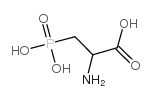
DL-2-氨基-3-膦酸丙酸(AP3)结构式

|
常用名 | DL-2-氨基-3-膦酸丙酸(AP3) | 英文名 | DL-AP3 |
|---|---|---|---|---|
| CAS号 | 20263-06-3 | 分子量 | 169.07300 | |
| 密度 | 1.763 g/cm3 | 沸点 | 481.6ºC at 760 mmHg | |
| 分子式 | C3H8NO5P | 熔点 | 227-229 °C(lit.) | |
| MSDS | 中文版 美版 | 闪点 | 245.1ºC | |
| 符号 |

GHS07 |
信号词 | Warning |
|
Chemical genetics reveals a complex functional ground state of neural stem cells.
Nat. Chem. Biol. 3(5) , 268-273, (2007) The identification of self-renewing and multipotent neural stem cells (NSCs) in the mammalian brain holds promise for the treatment of neurological diseases and has yielded new insight into brain cancer. However, the complete repertoire of signaling pathways ... |
|
|
PAR1-activated astrocytes in the nucleus of the solitary tract stimulate adjacent neurons via NMDA receptors.
J. Neurosci. 35(2) , 776-85, (2015) Severe autonomic dysfunction, including the loss of control of the cardiovascular, respiratory, and gastrointestinal systems, is a common comorbidity of stroke and other bleeding head injuries. Previous studies suggest that this collapse of autonomic control ... |
|
|
An integrative expression vector for Actinosynnema pretiosum.
BMC Biotechnol. 7 , 72, (2007) The Actinomycete Actinosynnema pretiosum ssp. auranticum has commercial importance due to its production of ansamitocin P-3 (AP-3), a potent antitumor agent. One way to increase AP-3 production would be to constitutively express selected genes so as to reliev... |
|
|
Involvement of other neurotransmitters in behaviors induced by the cannabinoid CB1 receptor antagonist SR 141716A in naive mice.
J. Neural Transm. Gen. Sect. 107(8-9) , 931-45, (2000) The receptor mechanisms by which the selective cannabinoid CB1 receptor antagonist/inverse agonist, SR 141716A [N-piperidino-5-(4-chlorophenyl)-1-(2,4-dichlorophenyl)-4-methyl-3-pyraz ole-carboxamide] produces scratching and head-twitch response (HTR) in naiv... |
|
|
Glucose-deprivation-induced [3H]D-aspartate release from isolated bovine and human retinae.
J. Ocul. Pharmacol. Ther. 19(6) , 599-609, (2003) The glucose deprivation-induced release of [3H]D-aspartate was studied in bovine and human retinas in a superfusion apparatus. [3H]D-aspartate release was significantly increased upon omitting glucose in the superfusion buffer. This effect was dependent on ex... |
|
|
The integrin antagonist cilengitide activates alphaVbeta3, disrupts VE-cadherin localization at cell junctions and enhances permeability in endothelial cells.
PLoS ONE 4 , e4449, (2009) Cilengitide is a high-affinity cyclic pentapeptdic alphaV integrin antagonist previously reported to suppress angiogenesis by inducing anoikis of endothelial cells adhering through alphaVbeta3/alphaVbeta5 integrins. Angiogenic endothelial cells express multip... |
|
|
Genetic diversity of Cercospora kikuchii isolates from soybean cultured in Argentina as revealed by molecular markers and cercosporin production.
Mycopathologia 171 , 361-71, (2011) Leaf blight and purple seed, caused by the fungal pathogen Cercospora kikuchii (Matsumoto & Tomoyasu) M. W. Gardner are very important diseases of soybean (Glycine max L. Merr.) in Argentina. The aims of this work were: (a) to confirm and to assess the geneti... |
|
|
Regulation of retromer recruitment to endosomes by sequential action of Rab5 and Rab7.
J. Cell Biol. 183 , 513-26, (2008) The retromer complex mediates retrograde transport of transmembrane cargo from endosomes to the trans-Golgi network (TGN). Mammalian retromer is composed of a sorting nexin (SNX) dimer that binds to phosphatidylinositol 3-phosphate-enriched endosomal membrane... |
|
|
Differential recognition of a dileucine-based sorting signal by AP-1 and AP-3 reveals a requirement for both BLOC-1 and AP-3 in delivery of OCA2 to melanosomes.
Mol. Biol. Cell 23(16) , 3178-92, (2012) Cell types that generate unique lysosome-related organelles (LROs), such as melanosomes in melanocytes, populate nascent LROs with cargoes that are diverted from endosomes. Cargo sorting toward melanosomes correlates with binding via cytoplasmically exposed s... |
|
|
Excitatory amino acid receptors in the vertebrate central nervous system.
Pharmacol. Rev. 40 , 143-210, (1989)
|