68-04-2
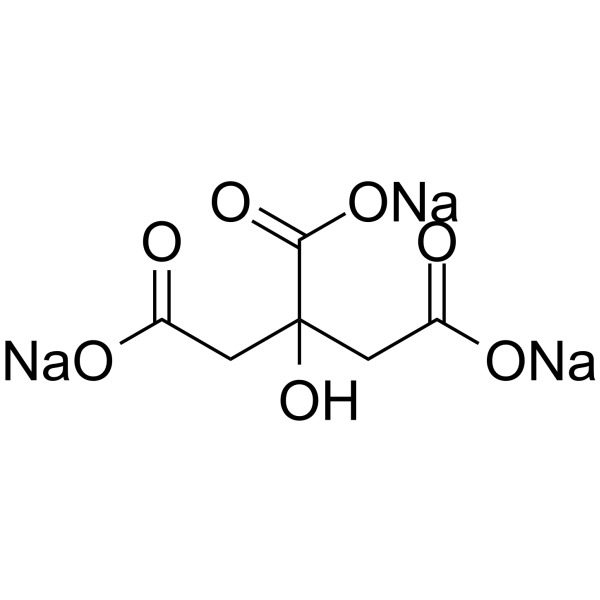
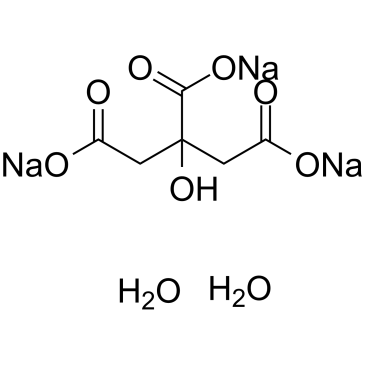
68-04-2 structure
- Name: Sodium citrate
- Chemical Name: Sodium citrate
- CAS Number: 68-04-2
- Molecular Formula: C6H5Na3O7
- Molecular Weight: 258.069
- Catalog: Organic raw materials Organometallic compound Organic sodium
- Create Date: 2018-02-04 08:00:00
- Modify Date: 2026-06-30 11:31:29
-
Citric acid trisodium is a natural preservative and food tartness enhancer. Citric acid trisodium induces apoptosis and cell cycle arrest at G2/M phase and S phase. Citric acid trisodium cause oxidative damage of the liver by means of the decrease of antioxidative enzyme activities. Citric acid trisodium causes renal toxicity in mice[1][2][3].
| Name | Sodium citrate |
|---|---|
| Synonyms |
citrate concentrated solution
SODIUM CITRATE TRIBASIC Tri-SodiumCitrate trisodium citrate 2,3-propanetricboxylicacid,2-hydroxy-trisodiumsalt Citric acid trisodium salt Vetec(TM) ade natrocitral supply high quality sodium citrate CAS: -2 citreme Sodium citrate tribasic dihydrate,Citric acid trisodium salt dihydrate, Natrii citras, Trisodium citrate dihydrate citrosodine SODIUMCITRATE,ANHYDROUS Citric acid 3Na SODIUMCITRATE,ANHYDROUS,POWDER sodiumcitrateanhydrous Citric acid sodium CITRIC ACID TRISODIUM Trisodiumcitrateanhydrous FEMA 3026 food additive sodium citrate Citric acid, trisodiuM salt, anhydrous R Na3-citrate SODIUM CITRATE ANHYDROUS POWDER CitricAcid,TrisodiumSalt,A.R Sodium Citrate Tribasic solution 1 M inwater citrosodina 1,2,3-Propanetricboxylicacid, 2-hydroxy-, sodiuM salt (1:3) SODIUMCITRATE,ANHYDROUS,POWDER,FCC Sodium citrate anhydrous Tri-SodiumCitrateExtraPure anhydrous trisodium citrate EINECS 200-675-3 SODIUMCITRATE(HYDRATE) BUFFER SOLUTION SODIUM CITRATE ANHYDROUS ANUL Sodium citrate (tribasic), anhydrous Sodium citrate tribasic dihydrate,Citric acid trisodium salt dihydrate, Trisodium citrate dihydrate SODIUMCITRATE,(BULK CITRIC ACID TRISODIUM SALT, ANHYDROU anhydrous sodium citrate SodiuM 2-hydroxypropane-1,2,3-tricboxylate citnatin SodiuM Citrate, Anhydrous CITRIC ACID TRISODIUM SALT MFCD00012462 1,2,3-Propanetricboxylicacid,2-hydroxy,trisodiumsalt 1,2,3-propanetricboxylicacid2hydroxy-trisodiumsalt TRI-SODIUM CITRATE Tri-SodiumCitrateForMoleculBiology SODIUM CITRATE SOLUTION ASTICALLY*FILL ED SODIUM CITRATE CitricAcid,SodiumSalt,Anhydrous CITRIC ACID TRISODIUM SALT, VETEC Citric acid, trisodium salt, anhydrous SodiuM Citrate-d4 Citric acidsodiuM,anhydrous Sodium Citric acid Na3 CitricAcid,TrisodiumSalt citrosodna ANHYDROUS SODIUM CITRATE citric acid trisodium salt 2-Hydroxy-1,2,3-propanetricboxylic acid trisodium 2-hydroxy-1,2,3-propanetricboxylic acid trisodium salt |
| Description | Citric acid trisodium is a natural preservative and food tartness enhancer. Citric acid trisodium induces apoptosis and cell cycle arrest at G2/M phase and S phase. Citric acid trisodium cause oxidative damage of the liver by means of the decrease of antioxidative enzyme activities. Citric acid trisodium causes renal toxicity in mice[1][2][3]. |
|---|---|
| Related Catalog | |
| In Vitro | Citric acid trisodium (0-12.5 mM; 24 h) shows antiproliferative activity in a dose dependent manner[3]. Citric acid trisodium (12.5 mM; 72 h) induces apoptosis and cell cycle arrest at G2/M phase and S phase in a dosedependent manner[3]. Citric acid trisodium (12.5 mM; 48 h) increases the expression of FAS, BAX, BID, AIF, EndoG, cytochrome c, PARP, GADD153, GRP78 and caspase-3, -8, -9, and decreases of BCL-2 and BCL-Xl[3]. Cell Viability Assay[3] Cell Line: HaCaT cells Concentration: 0, 2.5, 5, 7.5, 10, 12.5 mM Incubation Time: 24 h Result: Inhibited the cell viability in a dose dependent manner. Cell Cycle Analysis[3] Cell Line: HaCaT cells Concentration: 12.5 mM Incubation Time: 0, 12, 24, 48, 72 h Result: Induced apoptosis and cell cycle arrest at G2/M phase and S phase in a dosedependent manner. Western Blot Analysis[3] Cell Line: HaCaT cells Concentration: 12.5 mM Incubation Time: 12, 24, 48 h Result: Increased the expression of FAS, BAX, BID, AIF, EndoG, cytochrome c, PARP, GADD153, GRP78 and caspase-3, -8, -9, and decreased of BCL-2 and BCL-Xl. |
| In Vivo | Citric acid trisodium (120, 240, and 480 mg/kg; i.p.) significantly decreases GSH-Px activity and induces an increase in the MDA (malonyldialdehyde) levels in mouse liver[1]. Citric acid trisodium (120, 240, and 480 mg/kg; i.p.) induces apoptosis by increases caspase-3 activity in a dose-dependent manner in mouse hepatocytes[1]. Citric acid trisodium (120, 240, and 480 mg/kg; i.p.; weekly for 3 weeks) causes renal toxicity in mice[2]. Animal Model: 20 g male Kunming mice[2] Dosage: 120, 240, 480 mg/kg Administration: I.p.; weekly for 3 weeks Result: T-SOD and GSH-Px activities in the treated groups decreased with increasing doses of citric acid, NOS activity tended to increase, and H2O2 and MDA contents gradually decreased. |
| References |
| Density | 1.008 g/mL at 20 °C |
|---|---|
| Melting Point | 300°C |
| Molecular Formula | C6H5Na3O7 |
| Molecular Weight | 258.069 |
| Exact Mass | 257.972839 |
| PSA | 140.62000 |
| Storage condition | 2-8°C |
CHEMICAL IDENTIFICATION
HEALTH HAZARD DATAACUTE TOXICITY DATA
|
| Personal Protective Equipment | Eyeshields;Gloves;type N95 (US);type P1 (EN143) respirator filter |
|---|---|
| Hazard Codes | Xi,C |
| Risk Phrases | R22:Harmful if swallowed. R40:Limited evidence of a carcinogenic effect. R48/20/22:Harmful: danger of serious damage to health by prolonged exposure through inhalation and if swallowed . |
| Safety Phrases | S36-S24/25 |
| RIDADR | NONH for all modes of transport |
| WGK Germany | 2 |
| RTECS | GE8300000 |
| HS Code | 2918150000 |
|
~%
68-04-2 |
| Literature: Preiss-Bloom, Orahn; Attar, Ishay; Iram, Natalie; Komlos, Chagai; Haber, Meir Patent: US2011/110882 A1, 2011 ; |
|
~82%
68-04-2 |
| Literature: Romeo, G.; Lisi, F. Riv. Ital. Essenze-Profumi Piante Offic. Olii Vegetali-Saponi, 1935 , vol. 17, p. 310 - 312 Full Text Show Details Gmelin Handbook: Na: SVol.4, 39, page 1453 - 1455 |
|
~%
68-04-2 |
| Literature: Berthelot, M.; Louguinine, V. Ann. Chim. Phys., 1976 , vol. 9, p. 13 - 23 Full Text Show Details Massol, G. Ann. Chim. Phys., 1894 , vol. 1, p. 145 - 227 Full Text Show Details Gmelin Handbook: Na: SVol.4, 39, page 1453 - 1455 Full Text Show Details Thomsen, J. Thermochemische Untersuchungen, Stuttgart 1906, S. 58 |

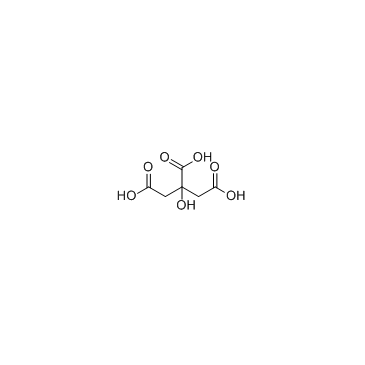

| Precursor 3 | |
|---|---|
| DownStream 9 | |
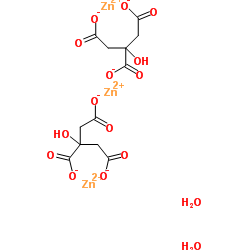


| HS Code | 2918150000 |
|---|---|
| Summary | 2918150000. other salts and esters of citric acid. VAT:17.0%. Tax rebate rate:13.0%. Supervision conditions:4ABXY(export license,certificate of inspection for goods inward,certificate of inspection for goods outwardexport license(processing trade),export license(border small volume trade)). MFN tariff:6.5%. General tariff:30.0% |