Tectorigenin
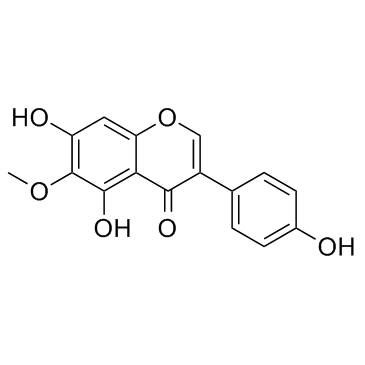
Tectorigenin structure
|
Common Name | Tectorigenin | ||
|---|---|---|---|---|
| CAS Number | 548-77-6 | Molecular Weight | 300.263 | |
| Density | 1.512 | Boiling Point | 601.5±55.0 °C at 760 mmHg | |
| Molecular Formula | C16H12O6 | Melting Point | 225-226° | |
| MSDS | USA | Flash Point | 230.1±25.0 °C | |
Use of TectorigeninTectorigenin is a plant isoflavonoid originally isolated from the dried flower of Pueraria thomsonii Benth. |
Summary: Tectorigenin, Chinese name: 鸢尾黄素, CAS number: 548-77-6, molecular formula: C16H12O6, molecular weight: 300.263. Appearance: white to green powder or crystal,熔点: 225-226°C. For research-use only, not for medical or clinical usage.
This table lists Chinese names, IUPAC names and various aliases of this chemical substance.
| Name | tectorigenin |
|---|---|
| Synonym | More Synonyms |
This table contains bioactivity, target information and biological‑assay experimental data of this compound.
| Description | Tectorigenin is a plant isoflavonoid originally isolated from the dried flower of Pueraria thomsonii Benth. |
|---|---|
| Related Catalog | |
| In Vitro | Tectorigenin is a plant isoflavonoid originally isolated from the dried flower of Pueraria thomsonii Benth. Palmitic acid (PA)-stimulated ROS production is abolished by treatment with Tectorigenin for HUVECs in a dose-dependent manner (0.1, 1, 10 μM). Treatment with Tectorigenin attenuates enhanced IKKβ phosphorylation and effectively blocks NF-κB activation by inhibition of p65 phosphorylation at concentrations ranging from 0.1 to 10 μM. Tectorigenin treatment also effectively inhibits PA-augmented TNF-α and IL-6 production in a concentration dependent manner[1]. The number of viable HepG2 cells treated by Tectorigenin decreases in a concentration- and time-dependent manner. When HepG2 cells are treated with Tectorigenin at 5, 10 and 20 mg/L for 24 h, the viability rate is 91%, 79% and 62%, respectively[2]. |
| Kinase Assay | HUVECs grown to confluence in 24-well plates are pretreated with Tectorigenin (0.1, 1, 10 μM), salicylate (5 mM) or GSH (1 mM) for 30 min, then stimulated with Palmitic acid (PA) (100 μM) for further 12 h in serum-free medium, and the medium is then collected on ice. The levels of TNF-α and IL-6 in the supernatant are assayed with commercial ELISA Kits[1]. |
| Cell Assay | Cell viability is assessed by MTT method. Briefly, cells are seeded in 96-well plate at a density of 1×10⁴ cells/well. After 24 h incubation, Tectorigenin at different concentrations is added to the cells while only DMSO (solvent) is added as a negative control. After growing for 12, 24 and 48 h, cells are incubated with MTT (0.5 mg/mL) for 4 h at 37°C. During this incubation period, water-insoluble formazan crystals are formed, which are dissolved by the addition of 100 μL/well DMSO. The optical densities at 570 nm are measured using an enzyme-linked immunosorbent assay plate reader. Wells containing culture medium and MTT but no cells act as blanks[2]. |
| References |
This table shows physicochemical parameters including melting point, boiling point, density, solubility and optical rotation. Missing data is marked as N/A.
| Density | 1.512 |
|---|---|
| Boiling Point | 601.5±55.0 °C at 760 mmHg |
| Melting Point | 225-226° |
| Molecular Formula | C16H12O6 |
| Molecular Weight | 300.263 |
| Flash Point | 230.1±25.0 °C |
| Exact Mass | 300.063385 |
| PSA | 100.13000 |
| LogP | 2.54 |
| Vapour Pressure | 0.0±1.8 mmHg at 25°C |
| Index of Refraction | 1.697 |
| InChIKey | OBBCRPUNCUPUOS-UHFFFAOYSA-N |
| SMILES | COc1c(O)cc2occ(-c3ccc(O)cc3)c(=O)c2c1O |
| Storage condition | 2-8°C |
This table provides MSDS information including hazard classification, first‑aid, fire‑fighting, spill handling, operation and storage instructions.
This table summarizes toxicological test data, acute & chronic toxicity and ecological hazard parameters for this chemical.
CHEMICAL IDENTIFICATION
HEALTH HAZARD DATAACUTE TOXICITY DATA
MUTATION DATA
|
This table covers safety warnings, protective measures, incompatible substances and disposal guidelines for this compound.
| RIDADR | NONH for all modes of transport |
|---|---|
| RTECS | NR2400000 |
| HS Code | 2914509090 |
This table presents publicly reported synthetic routes, reaction conditions, reactants and product information of the compound.
This table lists upstream starting materials and downstream derivative products related to this chemical.
| Precursor 4 | |
|---|---|
| DownStream 4 | |
 CAS#:2345-17-7
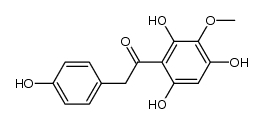 CAS#:27181-83-5
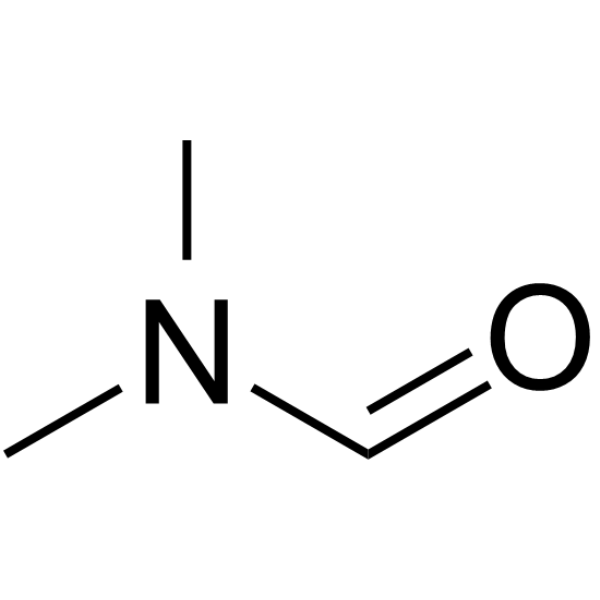 CAS#:68-12-2
 CAS#:14191-95-8
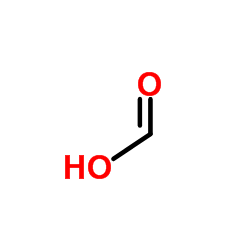 CAS#:64-18-6
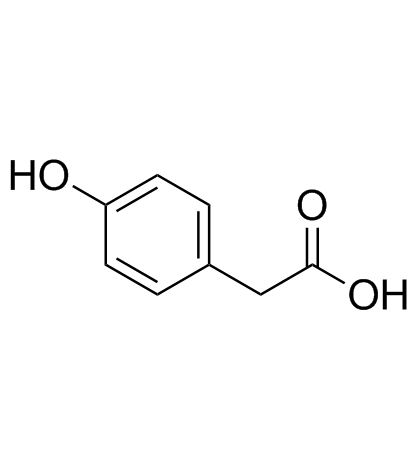 CAS#:156-38-7
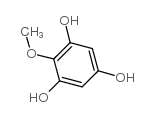 CAS#:487-71-8
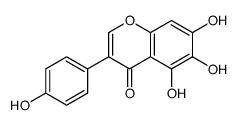 CAS#:13539-26-9
This table shows customs‑related data including HS‑code, tariff and regulatory conditions for import and export.
| HS Code | 2914509090 |
|---|---|
| Summary | HS:2914509090 other ketones with other oxygen function VAT:17.0% Tax rebate rate:9.0% Supervision conditions:none MFN tariff:5.5% General tariff:30.0% |
This table contains target information, in‑vitro & in‑vivo assay data for this compound.
This table collects all English aliases, systematic names and CAS‑related synonyms of the compound.
| 5,7-dihydroxy-3-(4-hydroxyphenyl)-6-methoxychromen-4-one |
| 5,7-Dihydroxy-3-(4-hydroxyphenyl)-6-methoxy-4H-chromen-4-one |
| 5,7-Dihydroxy-3-(4-hydroxyphenyl)-6-methoxy-4H-1-benzopyran-4-one |
| Tectorigenin |
This section contains frequently‑asked‑questions about this compound, including basic parameters, properties, storage conditions and corresponding answers.
| Q: What are the upstream materials of tectorigenin? |
| A: Related upstream materials(CAS) of tectorigenin: 2345-17-7;27181-83-5;68-12-2;14191-95-8. |
| Q: What is the English name of tectorigenin? |
| A: The English name of tectorigenin is tectorigenin. |
| Q: What is the CAS number of tectorigenin? |
| A: CAS number of tectorigenin is 548-77-6. |
| Q: What is the melting point of tectorigenin? |
| A: Melting point of tectorigenin is 225-226°. |
| Q: What is the InChIKey of tectorigenin? |
| A: InChIKey of tectorigenin is OBBCRPUNCUPUOS-UHFFFAOYSA-N. |
| Q: What is the molecular formula of tectorigenin? |
| A: Molecular formula of tectorigenin is C16H12O6. |
| Q: What are the downstream products of tectorigenin? |
| A: Related downstream products(CAS) of tectorigenin: 64-18-6;156-38-7;487-71-8;13539-26-9. |
| Q: What is the molecular weight of tectorigenin? |
| A: Molecular weight of tectorigenin is 300.263. |
| Q: What is the polar surface area (PSA) of tectorigenin? |
| A: Polar surface area (PSA) of tectorigenin is 100.13000. |
| Q: What are the uses of tectorigenin? |
| A: Main uses of tectorigenin: Tectorigenin is a plant isoflavonoid originally isolated from the dried flower of Pueraria thomsonii Benth. |
This table lists manufacturers and suppliers of this compound, including vendor names and product supply reference information.
| Shanghai Nianxing Industrial Co., Ltd |
| BioBioPha |
| Dayang Chem (Hangzhou) Co., Ltd. |
| naturewill |