4-Aminobutanoic acid

4-Aminobutanoic acid structure
|
Common Name | 4-Aminobutanoic acid | ||
|---|---|---|---|---|
| CAS Number | 56-12-2 | Molecular Weight | 103.120 | |
| Density | 1.1±0.1 g/cm3 | Boiling Point | 248.0±23.0 °C at 760 mmHg | |
| Molecular Formula | C4H9NO2 | Melting Point | 195-204ºC | |
| MSDS | Chinese USA | Flash Point | 103.8±22.6 °C | |
Use of 4-Aminobutanoic acidγ-Aminobutyric acid (4-Aminobutyric acid) is a major inhibitory neurotransmitter in the adult mammalian brain[1][2], binding to the ionotropic GABA receptors (GABAA receptors) and metabotropic receptors (GABAB receptors)[2]. |
This table lists Chinese names, IUPAC names and various aliases of this chemical substance.
| Name | γ-aminobutyric acid |
|---|---|
| Synonym | More Synonyms |
This table contains bioactivity, target information and biological‑assay experimental data of this compound.
| Description | γ-Aminobutyric acid (4-Aminobutyric acid) is a major inhibitory neurotransmitter in the adult mammalian brain[1][2], binding to the ionotropic GABA receptors (GABAA receptors) and metabotropic receptors (GABAB receptors)[2]. |
|---|---|
| Related Catalog | |
| Target |
GABA Receptor[1][2] |
| References |
This table shows physicochemical parameters including melting point, boiling point, density, solubility and optical rotation. Missing data is marked as N/A.
| Density | 1.1±0.1 g/cm3 |
|---|---|
| Boiling Point | 248.0±23.0 °C at 760 mmHg |
| Melting Point | 195-204ºC |
| Molecular Formula | C4H9NO2 |
| Molecular Weight | 103.120 |
| Flash Point | 103.8±22.6 °C |
| Exact Mass | 103.063332 |
| PSA | 63.32000 |
| LogP | -0.64 |
| Vapour Pressure | 0.0±1.0 mmHg at 25°C |
| Index of Refraction | 1.465 |
| InChIKey | BTCSSZJGUNDROE-UHFFFAOYSA-N |
| SMILES | NCCCC(=O)O |
| Storage condition | Store at RT. |
| Water Solubility | H2O: 1 M at 20 °C, clear, colorless | SOLUBLE |
This table provides MSDS information including hazard classification, first‑aid, fire‑fighting, spill handling, operation and storage instructions.
This table summarizes toxicological test data, acute & chronic toxicity and ecological hazard parameters for this chemical.
CHEMICAL IDENTIFICATION
HEALTH HAZARD DATAACUTE TOXICITY DATA
|
This table covers safety warnings, protective measures, incompatible substances and disposal guidelines for this compound.
| Personal Protective Equipment | dust mask type N95 (US);Eyeshields;Gloves |
|---|---|
| Hazard Codes | Xi:Irritant |
| Risk Phrases | R36/37/38 |
| Safety Phrases | S26-S36 |
| RIDADR | NONH for all modes of transport |
| WGK Germany | 2 |
| RTECS | ES6300000 |
| HS Code | 29224995 |
This table presents publicly reported synthetic routes, reaction conditions, reactants and product information of the compound.
This table lists upstream starting materials and downstream derivative products related to this chemical.
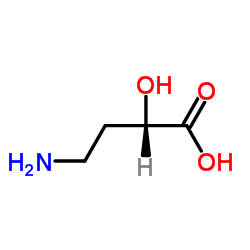
| Precursor 9 | |
|---|---|
| DownStream 10 | |
![1,5-dihydrospiro[benzo[e][1,3]dioxepine-3,1'-cyclopropane]-2'-carbonitrile Structure](https://image.chemsrc.com/caspic/222/100340-10-1.png) CAS#:100340-10-1
CAS#:100340-10-1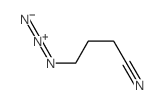 CAS#:21994-40-1
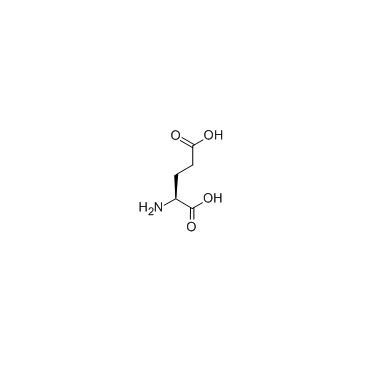 CAS#:56-86-0
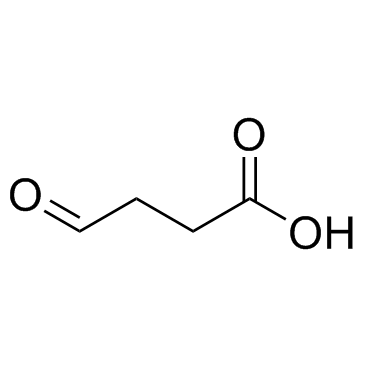 CAS#:692-29-5
 CAS#:57294-38-9
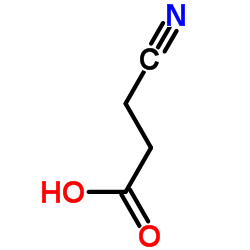 CAS#:16051-87-9
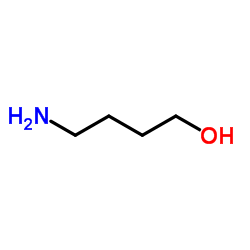 CAS#:13325-10-5
 CAS#:616-45-5
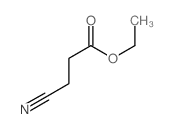 CAS#:10137-67-4
![4-[(2-aminobenzoyl)amino]butanoic acid structure](https://image.chemsrc.com/caspic/151/107466-55-7.png) CAS#:107466-55-7
CAS#:107466-55-7![Butanoic acid,4-[(2,4-dinitrophenyl)amino] structure](https://image.chemsrc.com/caspic/253/10466-75-8.png) CAS#:10466-75-8
CAS#:10466-75-8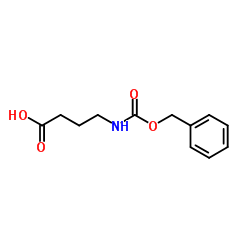 CAS#:5105-78-2
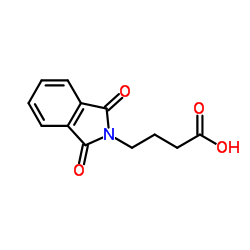 CAS#:3130-75-4
![4-[(2,2,2-trifluoroacetyl)amino]butanoic acid structure](https://image.chemsrc.com/caspic/119/50632-83-2.png) CAS#:50632-83-2
CAS#:50632-83-2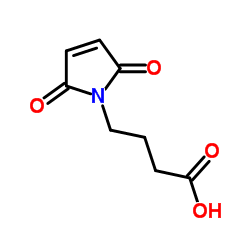 CAS#:57078-98-5
![4-[(1,3-dimethyl-6-nitro-2,4,5-trioxo-8H-pyrido[2,3-d]pyrimidin-7-yl)amino]butanoic acid structure](https://image.chemsrc.com/caspic/214/141985-40-2.png) CAS#:141985-40-2
CAS#:141985-40-2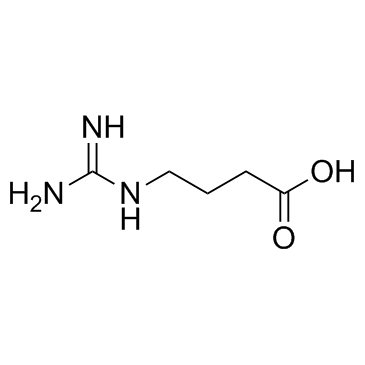 CAS#:463-00-3
 CAS#:13477-53-7
This table shows customs‑related data including HS‑code, tariff and regulatory conditions for import and export.
| HS Code | 2922499990 |
|---|---|
| Summary | HS:2922499990 other amino-acids, other than those containing more than one kind of oxygen function, and their esters; salts thereof VAT:17.0% Tax rebate rate:9.0% Supervision conditions:AB(certificate of inspection for goods inward,certificate of inspection for goods outward) MFN tariff:6.5% General tariff:30.0% |
This table lists relevant public references with title, journal and publication metadata for this compound.
|
Methamidophos alters sperm function and DNA at different stages of spermatogenesis in mice.
Toxicol. Appl. Pharmacol. 279(3) , 391-400, (2014) Methamidophos (MET) is a highly toxic organophosphate (OP) pesticide that is widely used in developing countries. MET has male reproductive effects, including decreased fertility. We evaluated MET eff... |
|
|
Translating clinical findings into knowledge in drug safety evaluation--drug induced liver injury prediction system (DILIps).
J. Sci. Ind. Res. 65(10) , 808, (2006) Drug-induced liver injury (DILI) is a significant concern in drug development due to the poor concordance between preclinical and clinical findings of liver toxicity. We hypothesized that the DILI typ... |
|
|
γ-glutamyl transpeptidase 1 specifically suppresses green-light avoidance via GABAA receptors in Drosophila.
J. Neurochem. 130(3) , 408-18, (2014) Drosophila larvae innately show light avoidance behavior. Compared with robust blue-light avoidance, larvae exhibit relatively weaker green-light responses. In our previous screening for genes involve... |
This table collects all English aliases, systematic names and CAS‑related synonyms of the compound.
| 4-Aminobutanoic acid |
| MFCD00008226 |
| EINECS 200-258-6 |
| g-Aminobutyric acid |
| g-Amino-n-butyric Acid |
| GABA |
| γ-Amino-n-butyric acid |
| gamma-aminobutyric acid |
| 4-Aminobutyric acid |
This section contains frequently‑asked‑questions about this compound, including basic parameters, properties, storage conditions and corresponding answers.
| Q: How is the water solubility of γ-aminobutyric acid? |
| A: Water solubility of γ-aminobutyric acid: H2O: 1 M at 20 °C, clear, colorless | SOLUBLE. |
| Q: What are the uses of γ-aminobutyric acid? |
| A: Main uses of γ-aminobutyric acid: γ-Aminobutyric acid (4-Aminobutyric acid) is a major inhibitory neurotransmitter in the adult mammalian brain[1][2], binding to the ionotropic GABA receptors (GABAA receptors) and metabotropic receptors (GABAB receptors)[2]. |
| Q: What are the storage conditions for γ-aminobutyric acid? |
| A: Storage conditions for γ-aminobutyric acid: Store at RT. |
| Q: What are the upstream materials of γ-aminobutyric acid? |
| A: Related upstream materials(CAS) of γ-aminobutyric acid: 100340-10-1;21994-40-1;56-86-0;692-29-5;57294-38-9;16051-87-9;13325-10-5;616-45-5;10137-67-4. |
| Q: What is the SMILES notation of γ-aminobutyric acid? |
| A: SMILES notation of γ-aminobutyric acid is NCCCC(=O)O. |
| Q: What is the safety information for γ-aminobutyric acid? |
| A: Safety information for γ-aminobutyric acid: S26-S36. |
| Q: What is the CAS number of γ-aminobutyric acid? |
| A: CAS number of γ-aminobutyric acid is 56-12-2. |
| Q: What English synonyms does γ-aminobutyric acid have? |
| A: English synonyms of γ-aminobutyric acid: 4-Aminobutanoic acid, MFCD00008226, EINECS 200-258-6, g-Aminobutyric acid, g-Amino-n-butyric Acid, GABA, γ-Amino-n-butyric acid, gamma-aminobutyric acid, 4-Aminobutyric acid. |
| Q: What are the downstream products of γ-aminobutyric acid? |
| A: Related downstream products(CAS) of γ-aminobutyric acid: 107466-55-7;10466-75-8;5105-78-2;3130-75-4;50632-83-2;57078-98-5;57294-38-9;141985-40-2;463-00-3;13477-53-7. |
| Q: What is the polar surface area (PSA) of γ-aminobutyric acid? |
| A: Polar surface area (PSA) of γ-aminobutyric acid is 63.32000. |
This table lists manufacturers and suppliers of this compound, including vendor names and product supply reference information.
| Dayang Chem (Hangzhou) Co., Ltd. |
| Henan Tianfu Chemical Co., Ltd. |