Tetraethylammonium chloride
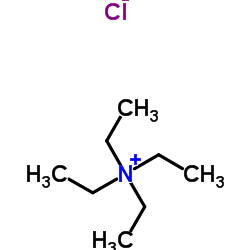
Tetraethylammonium chloride structure
|
Common Name | Tetraethylammonium chloride | ||
|---|---|---|---|---|
| CAS Number | 56-34-8 | Molecular Weight | 165.704 | |
| Density | 1.08 | Boiling Point | N/A | |
| Molecular Formula | C8H20ClN | Melting Point | 39°C | |
| MSDS | Chinese USA | Flash Point | N/A | |
Use of Tetraethylammonium chlorideTetraethylammonium chloride is a non-selective potassium channel blocker. Tetraethylammonium chloride is a good substrate for organic cation transporter (OCTN1). Tetraethylammonium chloride antitumor properties[1][2]. |
| Name | tetraethylammonium chloride |
|---|---|
| Synonym | More Synonyms |
| Description | Tetraethylammonium chloride is a non-selective potassium channel blocker. Tetraethylammonium chloride is a good substrate for organic cation transporter (OCTN1). Tetraethylammonium chloride antitumor properties[1][2]. |
|---|---|
| Related Catalog | |
| In Vitro | Tetraethylammonium (0.2-60 mM; 24-72 hours; C6 and 9L glioma cells) treatment inhibits the proliferation of C6 and 9L cells in a dose- and time-dependent manner[1]. Tetraethylammonium (40 mM; 24-72 hours; C6 and 9L glioma cells) treatment significantly increases apoptosis in cells[1]. Tetraethylammonium (40 mM; 12-48 hours; C6 and 9L glioma cells) treatment significantly elevates Bax/Bcl-2 protein ratio in a time-dependent manner[1]. The generation of intracellular ROS increased in C6 and 9L cells by the addition of 20 and 40 mM Tetraethylammonium[1]. Cell Proliferation Assay[1] Cell Line: Rat C6 and 9L glioma cells Concentration: 0.2 mM, 2 mM, 20 mM, 40 mM and 60 mM Incubation Time: 24 hours, 48 hours and 72 hours Result: Inhibited the proliferation of C6 and 9L cells in a dose- and time-dependent manner. Apoptosis Analysis[1] Cell Line: Rat C6 and 9L glioma cells Concentration: 40 mM Incubation Time: 24 hours, 48 hours and 72 hours Result: Significantly increased apoptosis in cells. Western Blot Analysis[1] Cell Line: Rat C6 and 9L glioma cells Concentration: 40 mM Incubation Time: 12 hours, 24 hours, 48 hours Result: The expression of Bax was markedly increased, while that of Bcl-2 showed a decreasing trend 12, 24 and 48 h. |
| In Vivo | Tetraethylammonium (1 mM, 3 mM, and 5 mM) significantly increases the amplitude and frequency of contractility of colon and rectum from rats in longitudinal and circular direction. Tetraethylammonium at 5 mM and 15 mM concentrations shows no effect on histology of colon and rectum from rats that are administered locally with Tetraethylammonium into colon lumen from anus for 10 days[2]. |
| References |
| Density | 1.08 |
|---|---|
| Melting Point | 39°C |
| Molecular Formula | C8H20ClN |
| Molecular Weight | 165.704 |
| Exact Mass | 165.128433 |
| InChIKey | YMBCJWGVCUEGHA-UHFFFAOYSA-M |
| SMILES | CC[N+](CC)(CC)CC.[Cl-] |
| Storage condition | Store at RT |
| Stability | Stable. Incompatible with strong oxidizing agents. Protect from moisture. |
| Water Solubility | methanol: 0.1 g/mL, clear, colorless |
CHEMICAL IDENTIFICATION
HEALTH HAZARD DATAACUTE TOXICITY DATA
|
| Personal Protective Equipment | dust mask type N95 (US);Eyeshields;Gloves |
|---|---|
| Hazard Codes | Xi:Irritant; |
| Risk Phrases | R36/37/38 |
| Safety Phrases | S26-S36-S37/39 |
| RIDADR | NONH for all modes of transport |
| WGK Germany | 3 |
| RTECS | BS6125000 |
| HS Code | 29239000 |
| Precursor 10 | |
|---|---|
| DownStream 10 | |
 CAS#:2603-10-3
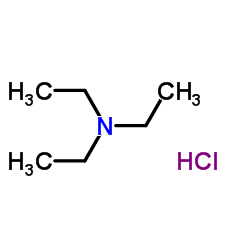 CAS#:554-68-7
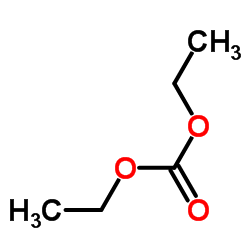 CAS#:105-58-8
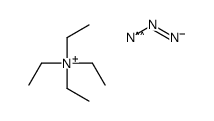 CAS#:993-20-4
 CAS#:506-77-4
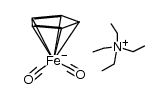 CAS#:57812-16-5
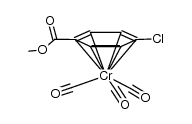 CAS#:12241-54-2
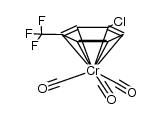 CAS#:114636-07-6
![Chloro{tris[(2-methyl-2-propanyl)oxy]}silane Structure](https://image.chemsrc.com/caspic/324/18105-64-1.png) CAS#:18105-64-1
CAS#:18105-64-1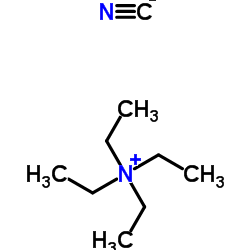 CAS#:13435-20-6
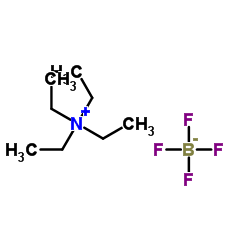 CAS#:429-06-1
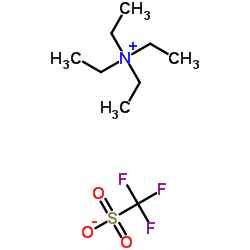 CAS#:35895-69-3
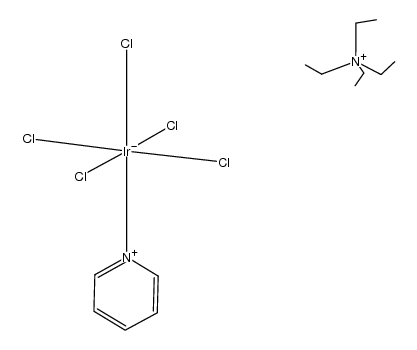 CAS#:118773-91-4
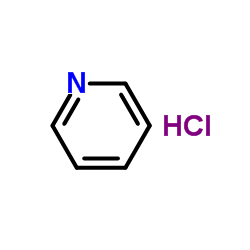 CAS#:628-13-7
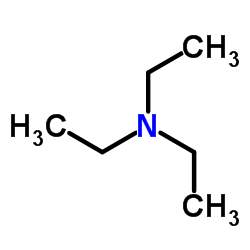 CAS#:121-44-8
 CAS#:680-31-9
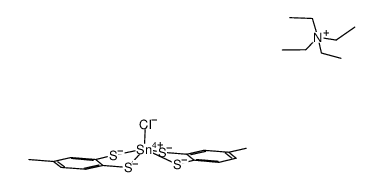 CAS#:80631-19-2
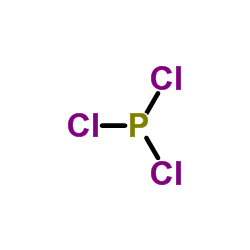 CAS#:7719-12-2
 CAS#:13536-48-6
 CAS#:13550-32-8
| HS Code | 29239000 |
|---|
|
Extracellular quaternary ammonium blockade of transient receptor potential vanilloid subtype 1 channels expressed in Xenopus laevis oocytes.
Mol. Pharmacol. 82(6) , 1129-35, (2012) Transient receptor potential vanilloid subtype 1 (TRPV1) channels are essential nociceptive integrators in primary afferent neurons. These nonselective cation channels are inhibited by local anestheti... |
|
|
Chemical genetics reveals a complex functional ground state of neural stem cells.
Nat. Chem. Biol. 3(5) , 268-273, (2007) The identification of self-renewing and multipotent neural stem cells (NSCs) in the mammalian brain holds promise for the treatment of neurological diseases and has yielded new insight into brain canc... |
|
|
Synthetic ion transporters can induce apoptosis by facilitating chloride anion transport into cells.
Nature Chemistry 6(10) , 885-92, (2014) Anion transporters based on small molecules have received attention as therapeutic agents because of their potential to disrupt cellular ion homeostasis. However, a direct correlation between a change... |
|
Name: Inhibition of neurosphere proliferation of mouse neural precursor cells by MTT assay
Source: ChEMBL
Target: N/A
External Id: CHEMBL1266185
|
|
Name: Primary qHTS assay for inhibitors of alpha-synuclein gene (SNCA) expression
Source: NCGC
External Id: SNCA-p-activity-luciferase
|
|
Name: Fluorescence-based cell-based primary high throughput screening assay to identify ago...
Source: The Scripps Research Institute Molecular Screening Center
Target: muscarinic acetylcholine receptor M1 [Homo sapiens]
External Id: CHRM1_AG_FLUO8_1536_1X%ACT PRUN
|
|
Name: Cytochrome P450 Family 1 Subfamily A Member 2 (CYP1A2) small molecule antagonists: lu...
Source: 824
External Id: CYP273
|
|
Name: Fluorescence-based cell-based primary high throughput screening assay to identify pos...
Source: The Scripps Research Institute Molecular Screening Center
Target: muscarinic acetylcholine receptor M1 [Homo sapiens]
External Id: CHRM1_PAM_FLUO8_1536_1X%ACT PRUN
|
|
Name: qHTS Assay for Small Molecule Inhibitors of the Human hERG Channel Activity
Source: NCGC
External Id: HERG01
|
|
Name: qHTS for Inhibitors of TGF-b: Cytotox Counterscreen
Source: NCGC
Target: N/A
External Id: SMAD3201
|
|
Name: uHTS identification of cystic fibrosis induced NFkb Inhibitors in a fluoresence assay
Source: Burnham Center for Chemical Genomics
Target: cystic fibrosis transmembrane conductance regulator [Homo sapiens]
External Id: SBCCG-A764-CF-PAF-Primary-Assay
|
|
Name: Fluorescence-based cell-based primary high throughput screening assay to identify ant...
Source: The Scripps Research Institute Molecular Screening Center
Target: muscarinic acetylcholine receptor M1 [Homo sapiens]
External Id: CHRM1_ANT_FLUO8_1536_1X%INH PRUN
|
| Tetraethyl ammonium chloride |
| N,N,N,N-Tetraethylammonium chloride |
| Tetraethylammonium chloride |
| TEAC |
| EINECS 200-267-5 |
| Ethanaminium, N,N,N-triethyl-, chloride (1:1) |
| MFCD00011828 |
| N,N,N-Triethylethanaminium chloride |
The content on this webpage is sourced from various professional data sources. If you have any questions or concerns regarding the content, please feel free to contact service1@chemsrc.com.
- Shanghai Nianxing Industrial Co., Ltd
- China
- Product Name: Tetraethylammonium chloride
- Price: Check
- Purity: 99.0%
- Delivery: 10 Day
- Contact: Yang
- Email: sales@echemcloud.com
- Dayang Chem (Hangzhou) Co., Ltd.
- China
- Product Name: Tetraethyl ammonium chloride
- Price: $Inquiry/100g $Inquiry/1kg $Inquiry/100kg $Inquiry/1000kg
- Purity: 98.0%
- Delivery: Inquiry
- Contact: Ms Wang
- Email: enquiry@dycnchem.com
- Henan Tianfu Chemical Co., Ltd.
- China
- Product Name: Tetraethylammonium Chloride
- Price: $Inquiry/1kg $Inquiry/25kg $Inquiry/1000kg $Inquiry/10ton
- Purity: 99.0%
- Delivery: Inquiry
- Contact: Anson
- Email: info@tianfuchem.com
- Zhongshan Xingrui Chemical Co. , Ltd.
- China
- Product Name: Tetraethylammonium chloride
- Price: ¥Inquiry/25kg
- Purity: 99.0%
- Delivery: Inquiry
- Contact: Wang Jie

- Email: 3096638339@qq.com
Get all suppliers and price by the below link:
Tetraethylammonium chloride suppliers
Reference only. check more Tetraethylammonium chloride price