Pentachloronitrobenzene
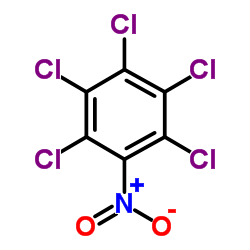
Pentachloronitrobenzene structure
|
Common Name | Pentachloronitrobenzene | ||
|---|---|---|---|---|
| CAS Number | 82-68-8 | Molecular Weight | 295.335 | |
| Density | 1.8±0.1 g/cm3 | Boiling Point | 328.0±0.0 °C at 760 mmHg | |
| Molecular Formula | C6Cl5NO2 | Melting Point | 140-143 °C(lit.) | |
| MSDS | Chinese USA | Flash Point | 161.6±26.5 °C | |
| Symbol |


GHS02, GHS06, GHS08, GHS09 |
Signal Word | Danger | |
This table lists Chinese names, IUPAC names and various aliases of this chemical substance.
| Name | pentachloronitrobenzene |
|---|---|
| Synonym | More Synonyms |
This table shows physicochemical parameters including melting point, boiling point, density, solubility and optical rotation. Missing data is marked as N/A.
| Density | 1.8±0.1 g/cm3 |
|---|---|
| Boiling Point | 328.0±0.0 °C at 760 mmHg |
| Melting Point | 140-143 °C(lit.) |
| Molecular Formula | C6Cl5NO2 |
| Molecular Weight | 295.335 |
| Flash Point | 161.6±26.5 °C |
| Exact Mass | 292.837158 |
| PSA | 45.82000 |
| LogP | 4.16 |
| Vapour Pressure | 0.0±0.6 mmHg at 25°C |
| Index of Refraction | 1.630 |
| InChIKey | LKPLKUMXSAEKID-UHFFFAOYSA-N |
| SMILES | O=[N+]([O-])c1c(Cl)c(Cl)c(Cl)c(Cl)c1Cl |
| Stability | Stable. Incompatible with strong bases, strong oxidizing agents. |
| Water Solubility | Insoluble |
This table provides MSDS information including hazard classification, first‑aid, fire‑fighting, spill handling, operation and storage instructions.
This table summarizes toxicological test data, acute & chronic toxicity and ecological hazard parameters for this chemical.
CHEMICAL IDENTIFICATION
HEALTH HAZARD DATAACUTE TOXICITY DATA
MUTATION DATA
|
This table covers safety warnings, protective measures, incompatible substances and disposal guidelines for this compound.
| Symbol |
GHS02, GHS06, GHS08, GHS09 |
|---|---|
| Signal Word | Danger |
| Hazard Statements | H225-H301 + H311 + H331-H370-H411 |
| Precautionary Statements | P210-P260-P273-P280-P301 + P310-P311 |
| Personal Protective Equipment | dust mask type N95 (US);Eyeshields;Faceshields;Gloves |
| Hazard Codes | Xi:Irritant;N:Dangerousfortheenvironment; |
| Risk Phrases | R43;R50/53 |
| Safety Phrases | S13-S24-S37-S60-S61-S45-S36/37 |
| RIDADR | UN 3077 9/PG 3 |
| WGK Germany | 2 |
| RTECS | DA6650000 |
| Hazard Class | 9.0 |
| HS Code | 2904909013 |
This table presents publicly reported synthetic routes, reaction conditions, reactants and product information of the compound.
This table lists upstream starting materials and downstream derivative products related to this chemical.
| Precursor 9 | |
|---|---|
| DownStream 10 | |
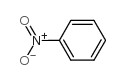 CAS#:98-95-3
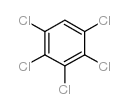 CAS#:608-93-5
 CAS#:527-20-8
 CAS#:544-92-3
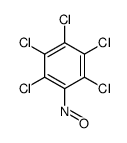 CAS#:13665-49-1
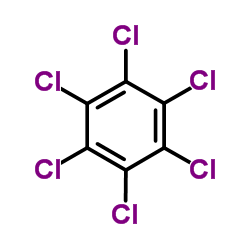 CAS#:118-74-1
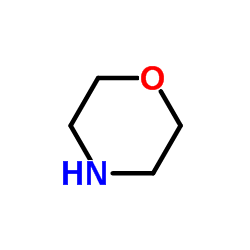 CAS#:110-91-8
 CAS#:781-15-7
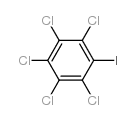 CAS#:16478-18-5
 CAS#:22876-48-8
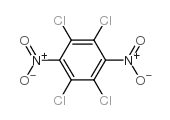 CAS#:20098-38-8
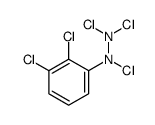 CAS#:30332-27-5
 CAS#:87-86-5
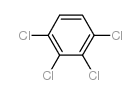 CAS#:634-66-2
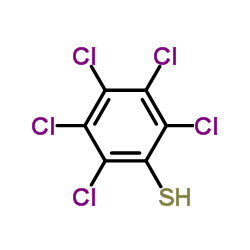 CAS#:133-49-3
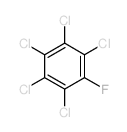 CAS#:319-87-9
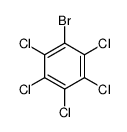 CAS#:13074-96-9
This table shows customs‑related data including HS‑code, tariff and regulatory conditions for import and export.
| HS Code | 2904909013 |
|---|---|
| Summary | 2904909013 1,2,3,4,5-pentachloro-6-nitrobenzene。supervision conditions:s(import or export registration certificate for pesticides)。VAT:17.0%。tax rebate rate:0.0%。MFN tarrif:5.5%。general tariff:30.0% |
This table lists relevant public references with title, journal and publication metadata for this compound.
|
Distribution and uptake pathways of organochlorine pesticides in greenhouse and conventional vegetables.
Sci. Total Environ. 505 , 1142-7, (2014) The application of greenhouse vegetable cultivation has dramatically expanded worldwide during the last several decades. However, little information is available on the distribution and uptake of pest... |
|
|
Fusarium verticillioides: evaluation of fumonisin production and effect of fungicides on in vitro inhibition of mycelial growth.
Mycopathologia 171 , 77-84, (2011) The objectives of this study were to evaluate the fumonisin production by 16 F. verticillioides strains on corn cultures and the effect of quintozene and fludioxonil + metalaxyl-M fungicides on "in vi... |
|
|
Effect of waxy (Low Amylose) on Fungal Infection of Sorghum Grain.
Phytopathology 105 , 786-96, (2015) Loss of function mutations in waxy, encoding granule bound starch synthase (GBSS) that synthesizes amylose, results in starch granules containing mostly amylopectin. Low amylose grain with altered sta... |
This table contains target information, in‑vitro & in‑vivo assay data for this compound.
|
Name: Luminescence-based cell-based primary high throughput screening assay to identify ago...
Source: The Scripps Research Institute Molecular Screening Center
Target: mu-type opioid receptor isoform MOR-1 [Homo sapiens]
External Id: OPRM1-OPRD1_AG_LUMI_1536_1X%ACT PRUN
|
|
Name: Fluorescence-based cell-based primary high throughput screening assay to identify ago...
Source: The Scripps Research Institute Molecular Screening Center
Target: muscarinic acetylcholine receptor M1 [Homo sapiens]
External Id: CHRM1_AG_FLUO8_1536_1X%ACT PRUN
|
|
Name: Cytochrome P450 Family 1 Subfamily A Member 2 (CYP1A2) small molecule antagonists: lu...
Source: 824
External Id: CYP273
|
|
Name: Fluorescence-based cell-based primary high throughput screening assay to identify pos...
Source: The Scripps Research Institute Molecular Screening Center
Target: muscarinic acetylcholine receptor M1 [Homo sapiens]
External Id: CHRM1_PAM_FLUO8_1536_1X%ACT PRUN
|
|
Name: Fluorescence polarization-based biochemical high throughput primary assay to identify...
Source: The Scripps Research Institute Molecular Screening Center
Target: RecName: Full=Sialate O-acetylesterase; AltName: Full=H-Lse; AltName: Full=Sialic acid-specific 9-O-acetylesterase; Flags: Precursor [Homo sapiens]
External Id: SIAE_INH_FP_1536_1X%INH PRUN
|
|
Name: p53 small molecule agonists, cell-based qHTS assay: qHTS cell viability counter scree...
Source: 824
Target: N/A
External Id: P53600
|
|
Name: p53 small molecule agonists, cell-based qHTS assay with rat liver microsomes: qHTS ce...
Source: 824
Target: N/A
External Id: P53MS958
|
|
Name: p53 small molecule agonists, cell-based qHTS assay with rat liver microsomes: Summary
Source: 824
External Id: P53MS482
|
|
Name: p53 small molecule agonists, cell-based qHTS assay with human liver microsomes
Source: 824
Target: tumor suppressor p53 [Homo sapiens]
External Id: P53MS233
|
This table collects all English aliases, systematic names and CAS‑related synonyms of the compound.
| Folosan (VAN) |
| Brassicol |
| PCNB |
| Batrilex |
| 2,3,4,5,6-pentachloronitrobenzene |
| terraclor |
| Benzene,pentachloronitro |
| EINECS 201-435-0 |
| Quintozene |
| Terrachlor |
| Quintozen |
| MFCD00007065 |
| Pentachloronitrobenzene |
| 1,2,3,4,5-Pentachloro-6-nitrobenzene |
This section contains frequently‑asked‑questions about this compound, including basic parameters, properties, storage conditions and corresponding answers.
| Q: What are the upstream materials of pentachloronitrobenzene? |
| A: Related upstream materials(CAS) of pentachloronitrobenzene: 98-95-3;608-93-5;527-20-8;544-92-3;13665-49-1;118-74-1;110-91-8;781-15-7;16478-18-5. |
| Q: How is the water solubility of pentachloronitrobenzene? |
| A: Water solubility of pentachloronitrobenzene: Insoluble. |
| Q: What English synonyms does pentachloronitrobenzene have? |
| A: English synonyms of pentachloronitrobenzene: Folosan (VAN), Brassicol, PCNB, Batrilex, 2,3,4,5,6-pentachloronitrobenzene, terraclor, Benzene,pentachloronitro, EINECS 201-435-0, Quintozene, Terrachlor, Quintozen, MFCD00007065, Pentachloronitrobenzene, 1,2,3,4,5-Pentachloro-6-nitrobenzene. |
| Q: What are the downstream products of pentachloronitrobenzene? |
| A: Related downstream products(CAS) of pentachloronitrobenzene: 527-20-8;22876-48-8;20098-38-8;30332-27-5;87-86-5;634-66-2;133-49-3;319-87-9;16478-18-5;13074-96-9. |
| Q: What is the CAS number of pentachloronitrobenzene? |
| A: CAS number of pentachloronitrobenzene is 82-68-8. |
| Q: What is the InChIKey of pentachloronitrobenzene? |
| A: InChIKey of pentachloronitrobenzene is LKPLKUMXSAEKID-UHFFFAOYSA-N. |
| Q: What is the molecular formula of pentachloronitrobenzene? |
| A: Molecular formula of pentachloronitrobenzene is C6Cl5NO2. |
| Q: What is the boiling point of pentachloronitrobenzene? |
| A: Boiling point of pentachloronitrobenzene is 328.0±0.0 °C at 760 mmHg. |
| Q: What is the melting point of pentachloronitrobenzene? |
| A: Melting point of pentachloronitrobenzene is 140-143 °C(lit.). |
| Q: What is the safety information for pentachloronitrobenzene? |
| A: Safety information for pentachloronitrobenzene: S13-S24-S37-S60-S61-S45-S36/37. |
This table lists manufacturers and suppliers of this compound, including vendor names and product supply reference information.
| Shanghai Nianxing Industrial Co., Ltd |
| Dayang Chem (Hangzhou) Co., Ltd. |
| Henan Tianfu Chemical Co., Ltd. |