1,3-Diphenylpropane-1,3-dione
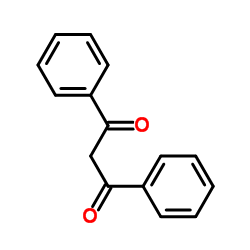
1,3-Diphenylpropane-1,3-dione structure
|
Common Name | 1,3-Diphenylpropane-1,3-dione | ||
|---|---|---|---|---|
| CAS Number | 120-46-7 | Molecular Weight | 224.255 | |
| Density | 1.1±0.1 g/cm3 | Boiling Point | 357.4±0.0 °C at 760 mmHg | |
| Molecular Formula | C15H12O2 | Melting Point | 77-79 °C(lit.) | |
| MSDS | Chinese USA | Flash Point | 146.9±20.2 °C | |
Use of 1,3-Diphenylpropane-1,3-dioneDibenzoylmethane, a minor ingredient in licorice, activates Nrf2 and prevents various cancers and oxidative damage. Dibenzoylmethane, an analog of curcumin, results in dissociation from Keap1 and nuclear translocation of Nrf2[1]. |
| Name | dibenzoylmethane |
|---|---|
| Synonym | More Synonyms |
| Description | Dibenzoylmethane, a minor ingredient in licorice, activates Nrf2 and prevents various cancers and oxidative damage. Dibenzoylmethane, an analog of curcumin, results in dissociation from Keap1 and nuclear translocation of Nrf2[1]. |
|---|---|
| Related Catalog | |
| In Vitro | Dibenzoylmethane (10, 20, 30, 40, 50 μM; 6 hours) treatment concentration-dependently increases the mRNA level of HO-1 but has no effect on the mRNA level of Nrf2 in HepG2 cells. Dibenzoylmethane induces HO-1 and Nrf2 protein expression, and the induction diminishes after 12 h[1]. Dibenzoylmethane (10, 20, 30, 40, 50 μM; 2 hours) concentration-dependently increases the phosphorylated protein levels of Erk1/2, p38MAPK, JNK, AMPK, and Akt in HepG2 cells.Dibenzoylmethane does not show significant cytotoxicity[1]. |
| In Vivo | Dibenzoylmethane (200, 500 mg/kg/day; ip; for three consecutive days) pretreatment significantly reduces both the area and the severity of necrosis, as well as the leukocyte infiltration, at a dose of 200 mg/kg in wild-type and Nrf2 knockout mice[1]. Dibenzoylmethane protectes against CCl4-induced (1:49,v/v, 10 ml/kg) liver damage in wild-type mice[1]. |
| References |
| Density | 1.1±0.1 g/cm3 |
|---|---|
| Boiling Point | 357.4±0.0 °C at 760 mmHg |
| Melting Point | 77-79 °C(lit.) |
| Molecular Formula | C15H12O2 |
| Molecular Weight | 224.255 |
| Flash Point | 146.9±20.2 °C |
| Exact Mass | 224.083725 |
| PSA | 34.14000 |
| LogP | 3.04 |
| Vapour Pressure | 0.0±0.8 mmHg at 25°C |
| Index of Refraction | 1.584 |
| InChIKey | NZZIMKJIVMHWJC-UHFFFAOYSA-N |
| SMILES | O=C(CC(=O)c1ccccc1)c1ccccc1 |
| Storage condition | Store at RT. |
| Stability | Stable. Incompatible with strong oxidizing agents. |
CHEMICAL IDENTIFICATION
HEALTH HAZARD DATAACUTE TOXICITY DATA
|
| Personal Protective Equipment | Eyeshields;Gloves;type N95 (US);type P1 (EN143) respirator filter |
|---|---|
| Hazard Codes | Xi: Irritant; |
| Risk Phrases | R36/37/38 |
| Safety Phrases | S22-S24/25 |
| RIDADR | NONH for all modes of transport |
| WGK Germany | 3 |
| RTECS | TZ1930000 |
| HS Code | 2914399090 |
| Precursor 10 | |
|---|---|
| DownStream 8 | |
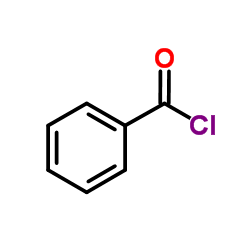 CAS#:98-88-4
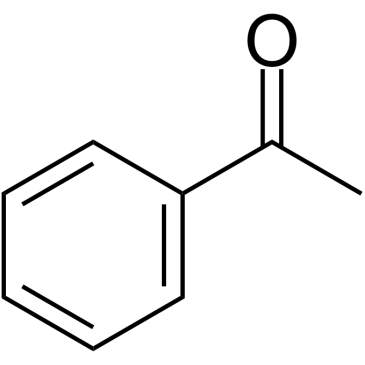 CAS#:98-86-2
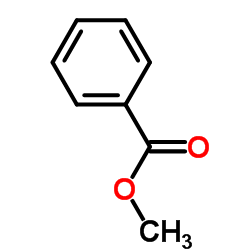 CAS#:93-58-3
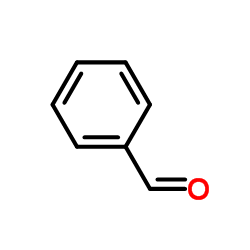 CAS#:100-52-7
 CAS#:70-11-1
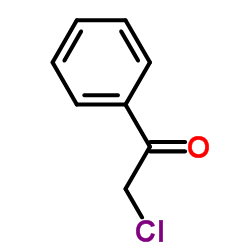 CAS#:532-27-4
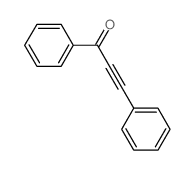 CAS#:7338-94-5
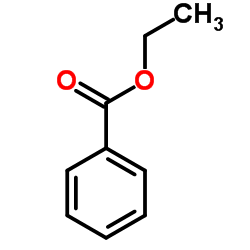 CAS#:93-89-0
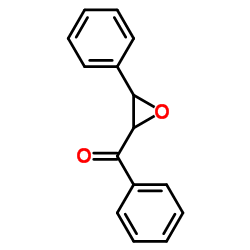 CAS#:5411-12-1
 CAS#:611-91-6
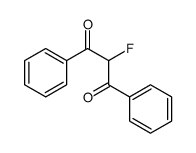 CAS#:109801-24-3
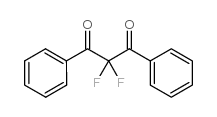 CAS#:365-00-4
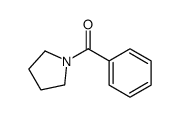 CAS#:3389-54-6
 CAS#:109028-59-3
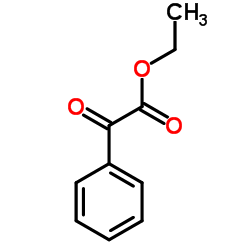 CAS#:1603-79-8
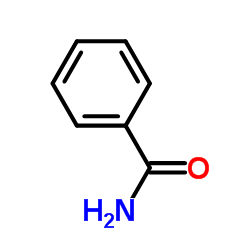 CAS#:55-21-0
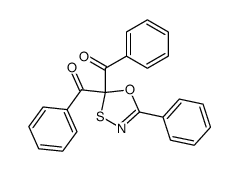 CAS#:85078-58-6
| HS Code | 2914399090 |
|---|---|
| Summary | 2914399090. other aromatic ketones without other oxygen function. VAT:17.0%. Tax rebate rate:13.0%. . MFN tariff:5.5%. General tariff:30.0% |
|
Identification and characterization of novel benzil (diphenylethane-1,2-dione) analogues as inhibitors of mammalian carboxylesterases.
J. Med. Chem. 48 , 2906-15, (2005) Carboxylesterases (CE) are ubiquitous enzymes responsible for the metabolism of xenobiotics. Because the structural and amino acid homology among esterases of different classes, the identification of ... |
|
|
A glimpse of the inner workings of the templated site.
Chem. Commun. (Camb.) (2) , 165-7, (2009) This is the first direct experimental probe, using EXAFS, of the active site within molecularly imprinted polymers and paves the way to a more detailed understanding of the inner workings of molecular... |
|
|
Combining ligand-based pharmacophore modeling, quantitative structure-activity relationship analysis and in silico screening for the discovery of new potent hormone sensitive lipase inhibitors.
J. Med. Chem. 51 , 6478-94, (2008) Hormone sensitive lipase (HSL) has been recently implicated in diabetes and obesity, prompting attempts to discover new HSL inhibitors. Toward this end, we explored the pharmacophoric space of HSL inh... |
|
Name: Luminescence-based cell-based primary high throughput screening assay to identify ago...
Source: The Scripps Research Institute Molecular Screening Center
Target: mu-type opioid receptor isoform MOR-1 [Homo sapiens]
External Id: OPRM1-OPRD1_AG_LUMI_1536_1X%ACT PRUN
|
|
Name: Fluorescence-based cell-based primary high throughput screening assay to identify ago...
Source: The Scripps Research Institute Molecular Screening Center
Target: muscarinic acetylcholine receptor M1 [Homo sapiens]
External Id: CHRM1_AG_FLUO8_1536_1X%ACT PRUN
|
|
Name: Cytochrome P450 Family 1 Subfamily A Member 2 (CYP1A2) small molecule antagonists: lu...
Source: 824
External Id: CYP273
|
|
Name: Inhibition constant against human Acetylcholinesterase (hAcChE) using acetylthiocholi...
Source: ChEMBL
Target: Acetylcholinesterase
External Id: CHEMBL829841
|
|
Name: Primary Screen Inhibitors of CD40 Signaling in BL2 Cells Measured in Cell-Based Syste...
Source: Broad Institute
Target: N/A
External Id: 7124-01_Inhibitor_SinglePoint_HTS_Activity
|
|
Name: Fluorescence-based cell-based primary high throughput screening assay to identify pos...
Source: The Scripps Research Institute Molecular Screening Center
Target: muscarinic acetylcholine receptor M1 [Homo sapiens]
External Id: CHRM1_PAM_FLUO8_1536_1X%ACT PRUN
|
|
Name: Fluorescence polarization-based biochemical high throughput primary assay to identify...
Source: The Scripps Research Institute Molecular Screening Center
Target: RecName: Full=Sialate O-acetylesterase; AltName: Full=H-Lse; AltName: Full=Sialic acid-specific 9-O-acetylesterase; Flags: Precursor [Homo sapiens]
External Id: SIAE_INH_FP_1536_1X%INH PRUN
|
|
Name: p53 small molecule agonists, cell-based qHTS assay: qHTS cell viability counter scree...
Source: 824
Target: N/A
External Id: P53600
|
|
Name: p53 small molecule agonists, cell-based qHTS assay with rat liver microsomes: qHTS ce...
Source: 824
Target: N/A
External Id: P53MS958
|
|
Name: p53 small molecule agonists, cell-based qHTS assay with rat liver microsomes: Summary
Source: 824
External Id: P53MS482
|
| 1,3-Diphenyl-1,3-propanedione |
| 1,3-diphenylpropane-1,3-dione |
| Dibenzoylmethane |
| MFCD00003085 |
| phenacyl phenyl ketone |
| EINECS 204-398-9 |
The content on this webpage is sourced from various professional data sources. If you have any questions or concerns regarding the content, please feel free to contact service1@chemsrc.com.
- Shanghai Nianxing Industrial Co., Ltd
- China
- Product Name: 1,3-Diphenylpropane-1,3-dione
- Price: Check
- Purity: 99.0%
- Delivery: 10 Day
- Contact: Yang
- Email: sales@echemcloud.com
- Dayang Chem (Hangzhou) Co., Ltd.
- China
- Product Name: Dibenzoylmethane
- Price: $Inquiry/100g $Inquiry/1kg $Inquiry/100kg $Inquiry/1000kg
- Purity: 98.0%
- Delivery: Inquiry
- Contact: Ms Wang
- Email: enquiry@dycnchem.com
- Henan Tianfu Chemical Co., Ltd.
- China
- Product Name: TIANFU-CHEM CAS:120-46-7 Dibenzoylmethane
- Price: $Inquiry/1kg $Inquiry/25kg $Inquiry/1000kg $Inquiry/10ton
- Purity: 99.0%
- Delivery: Inquiry
- Contact: Anson
- Email: info@tianfuchem.com
- Zhongshan Xingrui Chemical Co. , Ltd.
- China
- Product Name: 1,3-Diphenylpropane-1,3-dione
- Price: ¥Inquiry/25kg
- Purity: 99.0%
- Delivery: Inquiry
- Contact: Wang Jie

- Email: 3096638339@qq.com
Get all suppliers and price by the below link:
1,3-Diphenylpropane-1,3-dione suppliers
Reference only. check more 1,3-Diphenylpropane-1,3-dione price