Kaempferitrin

Kaempferitrin structure
|
Common Name | Kaempferitrin | ||
|---|---|---|---|---|
| CAS Number | 482-38-2 | Molecular Weight | 578.519 | |
| Density | 1.7±0.1 g/cm3 | Boiling Point | 908.6±65.0 °C at 760 mmHg | |
| Molecular Formula | C27H30O14 | Melting Point | N/A | |
| MSDS | N/A | Flash Point | 302.8±27.8 °C | |
Use of KaempferitrinKaempferitrin is a natural flavonoid, possesses antinociceptive, anti-inflammatory, anti-diabetic, antitumoral and chemopreventive effects, and activates insulin signaling pathway. |
This table lists Chinese names, IUPAC names and various aliases of this chemical substance.
| Name | kaempferol 3-O-α-L-rhamnopyranosyl-7-O-α-L-rhamnopyranoside |
|---|---|
| Synonym | More Synonyms |
This table contains bioactivity, target information and biological‑assay experimental data of this compound.
| Description | Kaempferitrin is a natural flavonoid, possesses antinociceptive, anti-inflammatory, anti-diabetic, antitumoral and chemopreventive effects, and activates insulin signaling pathway. |
|---|---|
| Related Catalog | |
| Target |
Insulin Receptor[1] |
| In Vitro | Kaempferitrin activates insulin signaling pathway. Kaempferitrin causes survival rates higher than 90% at 1-20 μM in matured 3T3-L1 adipocyte, and the survival rates decline rapidly at 25 and 50 μM. Kaempferitrin (15 μM) increases insulin receptor beta tyrosine phosphorylation and tyrosine phosphorylation of the insulin receptor substrate 1, and such effects are similar to that of 10 nM insulin. Kaempferitrin (15 μM) also stimulates akt phosphorylation on ser473, and the stimulation can be blocked by a PI3-K inhibitor wortmannin. Kaempferitrin potently exerts the translocation of GLUT4 to the membrane of adipocytes at 15 μM, and this is suppressed by wortmannin. In addition, Kaempferitrin increases the total levels of Glu4 protein in differentiated cells and secreted adiponectin in mature 3T3-L1 adipocytes[1]. Kaempferitrin is cytotoxic to human cancer cells such as HeLa and MDA-MB231 cells, with IC50s of 45 ± 2.6 and 65 ± 2.6 μM, and shows low toxic effects on non-tumorigenic cells. Kaempferitrin (45 μM) induces apoptosis of HeLa cells after treatment for 24 and 48 h, and causes reactive oxygen species (ROS) generation in HeLa cells. Furthermore, Kaempferitrin (45 μM) exerts G1 arrest, causes the expression of proteins associated with intrinsic pathway of apoptosis and activates caspase 3 in HeLa cells[2]. |
| In Vivo | Kaempferitrin (2.5, 10 and 25 mg/kg, i.p.) markedly suppresses the growth of tumor by 40%, 87% and 97%, and decreases tumor weight by 37%, 81% and 95%, respectively in nu/nu mice bearing HeLa tumor. Kaempferitrin also inhibits cell proliferation and extends life span in mice bearing tumor[2]. |
| Cell Assay | Viability assay is carried out by MTT assay. Preconfluent 3T3-L1 preadipocytes are seeded to reach confluence. Kaempferitrin is added in replacement of insulin immediately after confluence (day 0), and the viability is measured 3 h after addition of the compound. Another cell viability assay is performed at day 8. For kaempferitrin combined with insulin treatment, various concentrations of kaempferitrin are added simultaneously with 0.2 nM insulin from day 0 to day 8. Cells without insulin or kaempferitrin treatment during differentiation (day 0 to day 8) are used as control. Finally, to verify the cell viability in matured 3T3-L1 cells treated with insulin or kaempferitrin for 24-48 h, MTT are incubated for 3 h at the end of the 24 h and 48 h period of compound treatments, and survival rates calculated and compared to that without insulin or kaempferitrin[1]. |
| Animal Admin | The nu/nu mice are injected subcutaneously in their backs with HeLa cells (1.5 × 10⁶). Four hours after tumor implantation, groups of five mice receive doses of Kaempferitrin between 2.5 to 25 mg/kg, dissolved in 0.1 mL of 0.9% saline solution, cisplatin (CDDP) 1 mg/kg or paclitaxel (PCX) 1 mg/kg injected intraperitoneally daily over a period of 32 days. The animal control group received 0.1 mL of vehicle solution. Tumors are measured using a vernier caliper, and their size in mm3 is calculated Tumor volume = lenght × width × height2. At the end of the experiments, animals are sacrificed and their tumors are excised and weighed[2]. |
| References |
This table shows physicochemical parameters including melting point, boiling point, density, solubility and optical rotation. Missing data is marked as N/A.
| Density | 1.7±0.1 g/cm3 |
|---|---|
| Boiling Point | 908.6±65.0 °C at 760 mmHg |
| Molecular Formula | C27H30O14 |
| Molecular Weight | 578.519 |
| Flash Point | 302.8±27.8 °C |
| Exact Mass | 578.163574 |
| PSA | 228.97000 |
| LogP | 1.66 |
| Vapour Pressure | 0.0±0.3 mmHg at 25°C |
| Index of Refraction | 1.725 |
| InChIKey | PUPKKEQDLNREIM-QNSQPKOQSA-N |
| SMILES | CC1OC(Oc2cc(O)c3c(=O)c(OC4OC(C)C(O)C(O)C4O)c(-c4ccc(O)cc4)oc3c2)C(O)C(O)C1O |
| Storage condition | -20C |
This table summarizes toxicological test data, acute & chronic toxicity and ecological hazard parameters for this chemical.
CHEMICAL IDENTIFICATION
HEALTH HAZARD DATAACUTE TOXICITY DATA
MUTATION DATA
|
This table covers safety warnings, protective measures, incompatible substances and disposal guidelines for this compound.
| Safety Phrases | 24/25 |
|---|
This table presents publicly reported synthetic routes, reaction conditions, reactants and product information of the compound.
This table lists upstream starting materials and downstream derivative products related to this chemical.
| Precursor 4 | |
|---|---|
| DownStream 6 | |
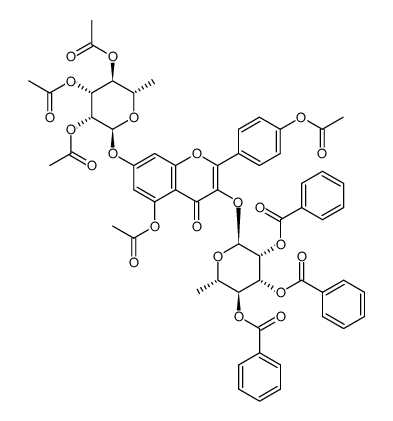 CAS#:1374991-37-3
 CAS#:55317-02-7
 CAS#:108-73-6
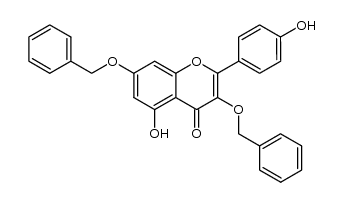 CAS#:1254191-99-5
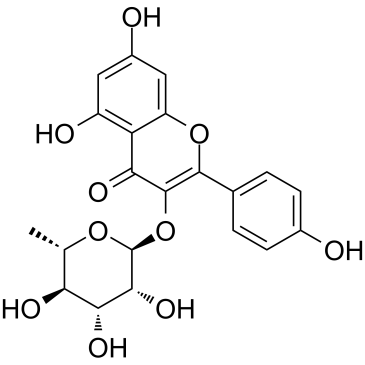 CAS#:482-39-3
 CAS#:520-18-3
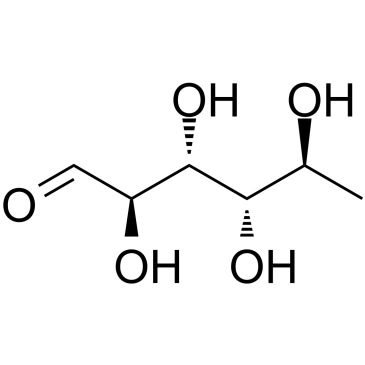 CAS#:3615-41-6
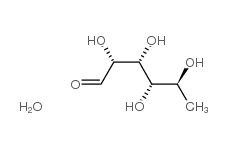 CAS#:6014-42-2
 CAS#:14917-55-6
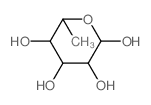 CAS#:73-34-7
This table contains target information, in‑vitro & in‑vivo assay data for this compound.
This table collects all English aliases, systematic names and CAS‑related synonyms of the compound.
| kaempferol 3-O-alpha-L-rhamnopyranosyl-7-O-alpha-L-rhamnopyranoside |
| 3-[(6-Deoxy-α-L-mannopyranosyl)oxy]-5-hydroxy-2-(4-hydroxyphenyl)-4-oxo-4H-chromen-7-yl 6-deoxy-α-L-mannopyranoside |
| kaempferol 3,7-di-O-α-L-rhamnoside |
| 5-hydroxy-2-(4-hydroxyphenyl)-3,7-bis[[(2S,3R,4R,5R,6S)-3,4,5-trihydroxy-6-methyloxan-2-yl]oxy]chromen-4-one |
| Kaempferol 3,7-L-dirhamnoside |
| Kaemferitrin |
| Kaempferol 3,7-dirhamnoside |
| lespenefril |
| kaempferol-3,7-O-α-L-dirhamnoside |
| Lespenephryl |
| Kaempferol-3,7-O-bis-α-L-rhamnoside |
| Kaempferitrin |
| Kaempferol 3,7-bisrhamnoside |
| Lespedin |
This section contains frequently‑asked‑questions about this compound, including basic parameters, properties, storage conditions and corresponding answers.
| Q: What is the polar surface area (PSA) of kaempferol 3-O-α-L-rhamnopyranosyl-7-O-α-L-rhamnopyranoside? |
| A: Polar surface area (PSA) of kaempferol 3-O-α-L-rhamnopyranosyl-7-O-α-L-rhamnopyranoside is 228.97000. |
| Q: What is the LogP of kaempferol 3-O-α-L-rhamnopyranosyl-7-O-α-L-rhamnopyranoside? |
| A: LogP of kaempferol 3-O-α-L-rhamnopyranosyl-7-O-α-L-rhamnopyranoside is 1.66. |
| Q: What is the InChIKey of kaempferol 3-O-α-L-rhamnopyranosyl-7-O-α-L-rhamnopyranoside? |
| A: InChIKey of kaempferol 3-O-α-L-rhamnopyranosyl-7-O-α-L-rhamnopyranoside is PUPKKEQDLNREIM-QNSQPKOQSA-N. |
| Q: What are the storage conditions for kaempferol 3-O-α-L-rhamnopyranosyl-7-O-α-L-rhamnopyranoside? |
| A: Storage conditions for kaempferol 3-O-α-L-rhamnopyranosyl-7-O-α-L-rhamnopyranoside: -20C. |
| Q: What is the molecular weight of kaempferol 3-O-α-L-rhamnopyranosyl-7-O-α-L-rhamnopyranoside? |
| A: Molecular weight of kaempferol 3-O-α-L-rhamnopyranosyl-7-O-α-L-rhamnopyranoside is 578.519. |
| Q: What are the downstream products of kaempferol 3-O-α-L-rhamnopyranosyl-7-O-α-L-rhamnopyranoside? |
| A: Related downstream products(CAS) of kaempferol 3-O-α-L-rhamnopyranosyl-7-O-α-L-rhamnopyranoside: 482-39-3;520-18-3;3615-41-6;6014-42-2;14917-55-6;73-34-7. |
| Q: What is the safety information for kaempferol 3-O-α-L-rhamnopyranosyl-7-O-α-L-rhamnopyranoside? |
| A: Safety information for kaempferol 3-O-α-L-rhamnopyranosyl-7-O-α-L-rhamnopyranoside: 24/25. |
| Q: What is the SMILES notation of kaempferol 3-O-α-L-rhamnopyranosyl-7-O-α-L-rhamnopyranoside? |
| A: SMILES notation of kaempferol 3-O-α-L-rhamnopyranosyl-7-O-α-L-rhamnopyranoside is CC1OC(Oc2cc(O)c3c(=O)c(OC4OC(C)C(O)C(O)C4O)c(-c4ccc(O)cc4)oc3c2)C(O)C(O)C1O. |
| Q: What is the CAS number of kaempferol 3-O-α-L-rhamnopyranosyl-7-O-α-L-rhamnopyranoside? |
| A: CAS number of kaempferol 3-O-α-L-rhamnopyranosyl-7-O-α-L-rhamnopyranoside is 482-38-2. |
| Q: What are the uses of kaempferol 3-O-α-L-rhamnopyranosyl-7-O-α-L-rhamnopyranoside? |
| A: Main uses of kaempferol 3-O-α-L-rhamnopyranosyl-7-O-α-L-rhamnopyranoside: Kaempferitrin is a natural flavonoid, possesses antinociceptive, anti-inflammatory, anti-diabetic, antitumoral and chemopreventive effects, and activates insulin signaling pathway. |
This table lists manufacturers and suppliers of this compound, including vendor names and product supply reference information.
| Shanghai Nianxing Industrial Co., Ltd |
| BioBioPha |
| Dayang Chem (Hangzhou) Co., Ltd. |
| naturewill |
| Henan Tianfu Chemical Co., Ltd. |