Colchicine

Colchicine structure
|
Common Name | Colchicine | ||
|---|---|---|---|---|
| CAS Number | 64-86-8 | Molecular Weight | 399.437 | |
| Density | 1.3±0.1 g/cm3 | Boiling Point | 726.0±60.0 °C at 760 mmHg | |
| Molecular Formula | C22H25NO6 | Melting Point | 150-160 °C (dec.)(lit.) | |
| MSDS | Chinese USA | Flash Point | 392.9±32.9 °C | |
| Symbol |


GHS05, GHS06, GHS08 |
Signal Word | Danger | |
Use of ColchicineColchicine is a tubulin inhibitor and a microtubule disrupting agent. Colchicine inhibits microtubule polymerization with an IC50 of 3 nM. |
This table lists Chinese names, IUPAC names and various aliases of this chemical substance.
| Name | N-[(7S)-1,2,3,10-tetramethoxy-9-oxo-6,7-dihydro-5H-benzo[a]heptalen-7-yl]acetamide |
|---|---|
| Synonym | More Synonyms |
This table contains bioactivity, target information and biological‑assay experimental data of this compound.
| Description | Colchicine is a tubulin inhibitor and a microtubule disrupting agent. Colchicine inhibits microtubule polymerization with an IC50 of 3 nM. |
|---|---|
| Related Catalog | |
| Target |
Microtubule/Tubulin[1] |
| In Vitro | Exposure to 1μM Colchicine, a microtubule disrupting agent, triggered apoptosis in rat cerebellar granule cells (CGC). Colchicine treatment also causes alterations in Ca2+ responses to chemical depolarization and a moderate, but progressive, increase in the resting intracellular Ca2+ concentration[1]. Colchicine exerts its biological effects through binding to the soluble tubulin heterodimer, the major component of the microtubule. The Colchicine binding abilities of tubulins from a variety of sources are summarized, and the mechanism of Colchicine binding to brain tubulin is explored in depth. The relationship between colchicinoid structure and tubulin binding activity provides insight into the structural features of Colchicine responsible for high affinity binding to tubulin and is reviewed for analogs in the Colchicine series. The thermodynamic and kinetic aspects of the association are described and evaluated in terms of the binding mechanism. Colchicine binding to tubulin results in unusual alterations in the low energy electronic spectra of Colchicine. The spectroscopic features of Colchicine bound to tubulin are discussed in terms of the nature of the Colchicine-tubulin complex. Attempts to locate the high affinity Colchicine binding site on tubulin are presented[2]. Colchicine treatment inhibits indomethacin-induced small intestinal injury by 86% (1 mg/kg) and 94% (3 mg/kg) as indicated by the lesion index 24 h after indomethacin administration. Colchicine inhibits the protein expression of cleaved caspase-1 and mature IL-1β, without affecting the mRNA expression of NLRP3 and IL-1β[3]. |
| In Vivo | Vehicle or Colchicine (1 mg/kg) is administered orally 30 min prior to indomethacin administration. The lesions stained with Evans blue in the small intestine are smaller in Colchicine-treated mice than those in vehicle-treated mice 24 h after indomethacin administration. In addition, histological examination shows that Colchicine-treated mice have less mucosal inflammation and ulceration and a decrease in the size and numbers of lesions compared with vehicle-treated mice. Colchicine treatment significantly reduces the lesion index at doses of 1 mg/kg and 3 mg/kg (by 86% and 94%, respectively) compared with vehicle treatment. Colchicine treatment significantly inhibits the protein levels of mature IL-1β at doses of 1 mg/kg and 3 mg/kg (by 56% and 69%, respectively) without affecting those of pro-IL-1β. Colchicine treatment also significantly inhibits the protein levels of cleaved caspase-1 at doses of 1 mg/kg and 3 mg/kg (by 26% and 39%, respectively) without affecting those of pro-caspase-1[3]. |
| Animal Admin | Mice[3] Specific-pathogen-free 8-week-old male mice are used. Wild-type C57BL/6 mice and NLRP3−/− mice on a C57BL/6 background are used. To examine the effects of Colchicine on NSAID-induced small intestinal injury, vehicle or Colchicine (1 or 3 mg/kg) is administered orally 30 min prior to indomethacin administration. Mice received intraperitoneal injections of sterilized phosphate buffered saline or mouse recombinant IL-1β (0.1 μg/kg) 3 h after indomethacin treatment. Vehicle or Colchicine (1 or 3 mg/kg) is also administered to NLRP3−/− mice before indomethacin administration. The lesion index is evaluated 24 h after indomethacin administration, and examined mRNA and protein expression of inflammasome components 6 h after indomethacin administration. |
| References |
[2]. Hastie SB. Interactions of colchicine with tubulin. Pharmacol Ther. 1991;51(3):377-401 |
This table shows physicochemical parameters including melting point, boiling point, density, solubility and optical rotation. Missing data is marked as N/A.
| Density | 1.3±0.1 g/cm3 |
|---|---|
| Boiling Point | 726.0±60.0 °C at 760 mmHg |
| Melting Point | 150-160 °C (dec.)(lit.) |
| Molecular Formula | C22H25NO6 |
| Molecular Weight | 399.437 |
| Flash Point | 392.9±32.9 °C |
| Exact Mass | 399.168182 |
| PSA | 83.09000 |
| LogP | 0.92 |
| Vapour Pressure | 0.0±2.4 mmHg at 25°C |
| Index of Refraction | 1.585 |
| InChIKey | IAKHMKGGTNLKSZ-INIZCTEOSA-N |
| SMILES | COc1cc2c(c(OC)c1OC)-c1ccc(OC)c(=O)cc1C(NC(C)=O)CC2 |
| Water Solubility | 45 g/L (20 ºC) |
This table provides MSDS information including hazard classification, first‑aid, fire‑fighting, spill handling, operation and storage instructions.
This table summarizes toxicological test data, acute & chronic toxicity and ecological hazard parameters for this chemical.
CHEMICAL IDENTIFICATION
HEALTH HAZARD DATAACUTE TOXICITY DATA
MUTATION DATA
|
This table covers safety warnings, protective measures, incompatible substances and disposal guidelines for this compound.
| Symbol |
GHS05, GHS06, GHS08 |
|---|---|
| Signal Word | Danger |
| Hazard Statements | H300 + H330-H318-H340 |
| Precautionary Statements | Missing Phrase - N15.00950417-P201-P280-P304 + P340 + P310-P305 + P351 + P338 + P310-P308 + P313 |
| Personal Protective Equipment | Eyeshields;Faceshields;full-face particle respirator type N100 (US);Gloves;respirator cartridge type N100 (US);type P1 (EN143) respirator filter;type P3 (EN 143) respirator cartridges |
| Hazard Codes | T+:Verytoxic; |
| Risk Phrases | R26/28 |
| Safety Phrases | S13-S45 |
| RIDADR | UN 1544 6.1/PG 1 |
| WGK Germany | 3 |
| RTECS | GH0700000 |
| Packaging Group | I |
| Hazard Class | 6.1 |
This table presents publicly reported synthetic routes, reaction conditions, reactants and product information of the compound.
This table lists upstream starting materials and downstream derivative products related to this chemical.
| Precursor 9 | |
|---|---|
| DownStream 10 | |
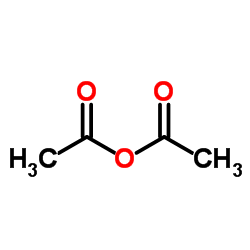 CAS#:108-24-7
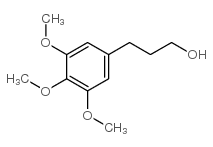 CAS#:53560-26-2
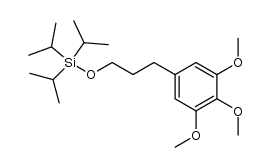 CAS#:327025-17-2
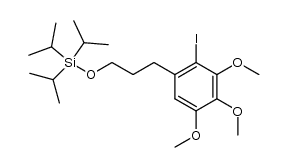 CAS#:327025-04-7
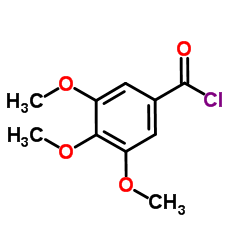 CAS#:4521-61-3
![(2S)-methyl-[2-tert-butoxycarbonylamino-4-oxo-4-(3,4,5-trimethoxyphenyl)]butanoate Structure](https://image.chemsrc.com/caspic/276/327025-09-2.png) CAS#:327025-09-2
CAS#:327025-09-2 CAS#:327024-99-7
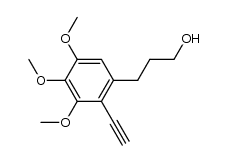 CAS#:206195-25-7
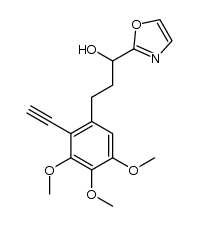 CAS#:206195-28-0
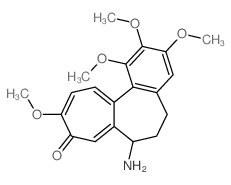 CAS#:3476-50-4
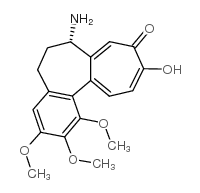 CAS#:3482-37-9
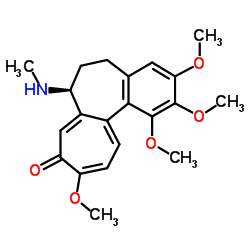 CAS#:477-30-5
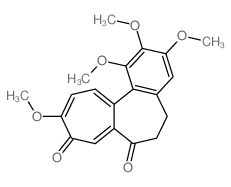 CAS#:1850-57-3
![Acetamide,N-[(7S)-5,6,7,9-tetrahydro-1,2,3-trimethoxy-10-(methylamino)-9-oxobenzo[a]heptalen-7-yl] structure](https://image.chemsrc.com/caspic/078/2826-80-4.png) CAS#:2826-80-4
CAS#:2826-80-4![Acetamide,N-[(7S)-4-formyl-5,6,7,9-tetrahydro-1,2,3,10-tetramethoxy-9-oxobenzo[a]heptalen-7-yl] structure](https://image.chemsrc.com/caspic/443/2730-82-7.png) CAS#:2730-82-7
CAS#:2730-82-7![Benzo[a]heptalen-9(5H)-one,7-amino-6,7-dihydro-1,2,3-trimethoxy-10-(methylthio)-, (7S) structure](https://image.chemsrc.com/caspic/394/2731-16-0.png) CAS#:2731-16-0
CAS#:2731-16-0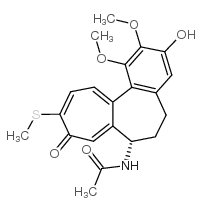 CAS#:87424-25-7
 CAS#:518-11-6
![Acetamide,N-[(7S)-10-amino-5,6,7,9-tetrahydro-1,2,3-trimethoxy-9-oxobenzo[a]heptalen-7-yl] structure](https://image.chemsrc.com/caspic/355/3123-89-5.png) CAS#:3123-89-5
CAS#:3123-89-5This table lists relevant public references with title, journal and publication metadata for this compound.
|
Deacetyl-mycoepoxydiene, isolated from plant endophytic fungi Phomosis sp. demonstrates anti-microtubule activity in MCF-7 cells.
Biomed. Pharmacother. 69 , 82-9, (2015) Deacetyl-mycoepoxydiene (DM), a novel secondary metabolite produced by the plant endophytic fungi Phomosis sp., induced the reorganization of cytoskeleton in actively growing MCF-7 cells by promoting ... |
|
|
Motesanib (AMG706), a potent multikinase inhibitor, antagonizes multidrug resistance by inhibiting the efflux activity of the ABCB1.
Biochem. Pharmacol. 90(4) , 367-78, (2014) Cancer cells often become resistant to chemotherapy through a phenomenon known as multidrug resistance (MDR). Several factors are responsible for the development of MDR, preeminent among them being th... |
|
|
Microtubule disruption synergizes with oncolytic virotherapy by inhibiting interferon translation and potentiating bystander killing.
Nat. Commun. 6 , 6410, (2015) In this study, we show that several microtubule-destabilizing agents used for decades for treatment of cancer and other diseases also sensitize cancer cells to oncolytic rhabdoviruses and improve ther... |
This table collects all English aliases, systematic names and CAS‑related synonyms of the compound.
| Colchineos |
| (S)-colchicine |
| N-[(7S)-1,2,3,10-Tetramethoxy-9-oxo-5,6,7,9-tetrahydrobenzo[a]heptalen-7-yl]acetamide |
| Colchicin |
| Condylon |
| EINECS 200-598-5 |
| Colchicina |
| colchicinum |
| (1E)-N-[(7S)-1,2,3,10-Tetramethoxy-9-oxo-5,6,7,9-tetrahydrobenzo[a]heptalen-7-yl]ethanimidic acid |
| Colcin |
| Colchisol |
| MFCD00078484 |
| (-)-N-[(7S,12a5)-1,2,3,10-tetramethoxy-9-oxo-5,6,7,9-tetrahydrobenzo[a]heptalen-7-yl]-acetamide |
| Colchicine |
| (S)-N-(5,6,7,9-tetrahydro-1,2,3,10-tetramethoxy-9-oxobenzo[a]heptalen-7-yl) acetamide |
| [3H]-Colchicine |
| Colsaloid |
This section contains frequently‑asked‑questions about this compound, including basic parameters, properties, storage conditions and corresponding answers.
| Q: What is the polar surface area (PSA) of N-[(7S)-1,2,3,10-tetramethoxy-9-oxo-6,7-dihydro-5H-benzo[a]heptalen-7-yl]acetamide? |
| A: Polar surface area (PSA) of N-[(7S)-1,2,3,10-tetramethoxy-9-oxo-6,7-dihydro-5H-benzo[a]heptalen-7-yl]acetamide is 83.09000. |
| Q: What is the InChIKey of N-[(7S)-1,2,3,10-tetramethoxy-9-oxo-6,7-dihydro-5H-benzo[a]heptalen-7-yl]acetamide? |
| A: InChIKey of N-[(7S)-1,2,3,10-tetramethoxy-9-oxo-6,7-dihydro-5H-benzo[a]heptalen-7-yl]acetamide is IAKHMKGGTNLKSZ-INIZCTEOSA-N. |
| Q: What is the SMILES notation of N-[(7S)-1,2,3,10-tetramethoxy-9-oxo-6,7-dihydro-5H-benzo[a]heptalen-7-yl]acetamide? |
| A: SMILES notation of N-[(7S)-1,2,3,10-tetramethoxy-9-oxo-6,7-dihydro-5H-benzo[a]heptalen-7-yl]acetamide is COc1cc2c(c(OC)c1OC)-c1ccc(OC)c(=O)cc1C(NC(C)=O)CC2. |
| Q: What are the downstream products of N-[(7S)-1,2,3,10-tetramethoxy-9-oxo-6,7-dihydro-5H-benzo[a]heptalen-7-yl]acetamide? |
| A: Related downstream products(CAS) of N-[(7S)-1,2,3,10-tetramethoxy-9-oxo-6,7-dihydro-5H-benzo[a]heptalen-7-yl]acetamide: 3476-50-4;3482-37-9;477-30-5;1850-57-3;2826-80-4;2730-82-7;2731-16-0;87424-25-7;518-11-6;3123-89-5. |
| Q: What is the boiling point of N-[(7S)-1,2,3,10-tetramethoxy-9-oxo-6,7-dihydro-5H-benzo[a]heptalen-7-yl]acetamide? |
| A: Boiling point of N-[(7S)-1,2,3,10-tetramethoxy-9-oxo-6,7-dihydro-5H-benzo[a]heptalen-7-yl]acetamide is 726.0±60.0 °C at 760 mmHg. |
| Q: What is the molecular formula of N-[(7S)-1,2,3,10-tetramethoxy-9-oxo-6,7-dihydro-5H-benzo[a]heptalen-7-yl]acetamide? |
| A: Molecular formula of N-[(7S)-1,2,3,10-tetramethoxy-9-oxo-6,7-dihydro-5H-benzo[a]heptalen-7-yl]acetamide is C22H25NO6. |
| Q: What is the molecular weight of N-[(7S)-1,2,3,10-tetramethoxy-9-oxo-6,7-dihydro-5H-benzo[a]heptalen-7-yl]acetamide? |
| A: Molecular weight of N-[(7S)-1,2,3,10-tetramethoxy-9-oxo-6,7-dihydro-5H-benzo[a]heptalen-7-yl]acetamide is 399.437. |
| Q: What is the English name of N-[(7S)-1,2,3,10-tetramethoxy-9-oxo-6,7-dihydro-5H-benzo[a]heptalen-7-yl]acetamide? |
| A: The English name of N-[(7S)-1,2,3,10-tetramethoxy-9-oxo-6,7-dihydro-5H-benzo[a]heptalen-7-yl]acetamide is N-[(7S)-1,2,3,10-tetramethoxy-9-oxo-6,7-dihydro-5H-benzo[a]heptalen-7-yl]acetamide. |
| Q: What is the safety information for N-[(7S)-1,2,3,10-tetramethoxy-9-oxo-6,7-dihydro-5H-benzo[a]heptalen-7-yl]acetamide? |
| A: Safety information for N-[(7S)-1,2,3,10-tetramethoxy-9-oxo-6,7-dihydro-5H-benzo[a]heptalen-7-yl]acetamide: S13-S45. |
| Q: What are the upstream materials of N-[(7S)-1,2,3,10-tetramethoxy-9-oxo-6,7-dihydro-5H-benzo[a]heptalen-7-yl]acetamide? |
| A: Related upstream materials(CAS) of N-[(7S)-1,2,3,10-tetramethoxy-9-oxo-6,7-dihydro-5H-benzo[a]heptalen-7-yl]acetamide: 108-24-7;53560-26-2;327025-17-2;327025-04-7;4521-61-3;327025-09-2;327024-99-7;206195-25-7;206195-28-0. |
This table lists manufacturers and suppliers of this compound, including vendor names and product supply reference information.
| Shanghai Nianxing Industrial Co., Ltd |
| naturewill |
| Henan Tianfu Chemical Co., Ltd. |